
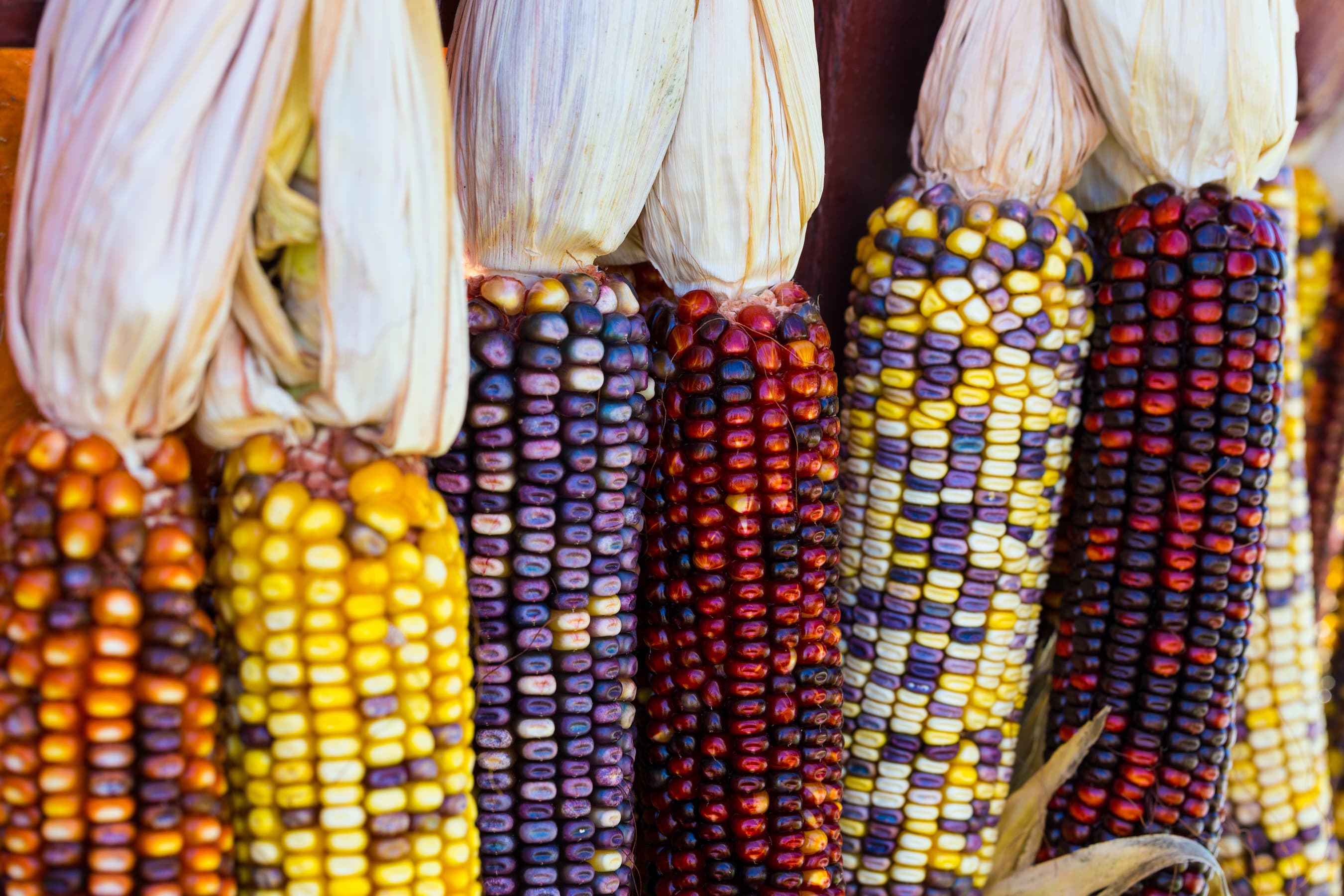
Crop genetic diversity is a phrase that refers to the sum total of diversity in inheritable traits that we find in a particular crop species – like in corn, maise or potatoes – or it refers more generally to the diversity in those traits that we see across all crops. There’s a wealth of crop genetic diversity globally. It’s important because it’s a fundamental part of the material resources that plant breeders and other scientists use to develop the crop varieties that we rely on in agricultural production. The very stuff that ends up on our dinner plates is the product of people working with some of the world’s diverse varieties of crops to produce ones that will be stable and productive in agriculture from year to year.
Why care about crop diversity?
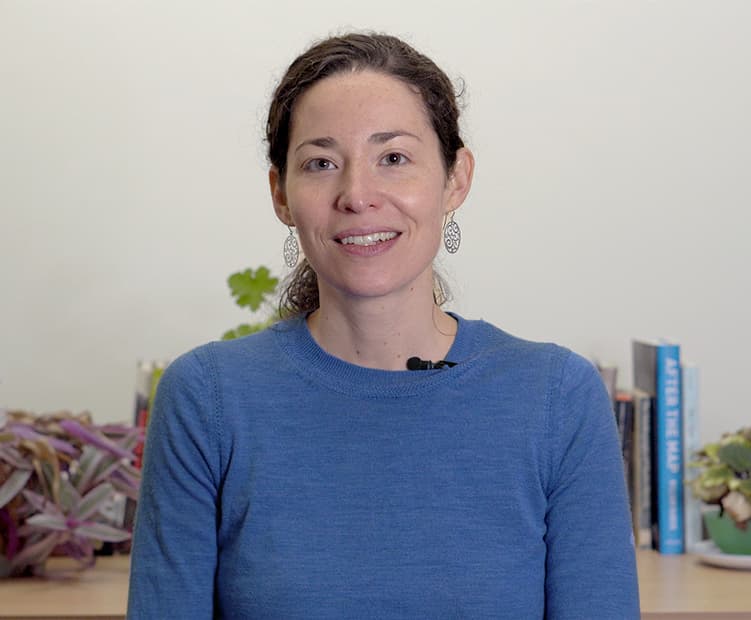
Helen Anne Curry, Peter Lipton Lecturer at the University of Cambridge, explains crop genetic diversity and approaches to maintaining it.
Melvin Kranzberg Professor in the History of Technology
11 Sept 2021
Citation-ready summary
Helen Anne Curry, Peter Lipton Lecturer at the University of Cambridge, explains crop genetic diversity and approaches to maintaining it.
Author: Helen Anne Curry
Last updated: 11 Sept 2021
Key Points
- Crop genetic diversity is diminishing as farmers abandon earlier varieties in favour of those developed by professional breeders.
- Different systems and tools have been put in place to preserve crop genetic diversity for the future, including seed or gene banks.
- An early emphasis on off-site storage in seed and gene banks as means of conserving crop genetic diversity is now increasingly accompanied by interest in maintaining diversity on farms.
The sum total of diversity
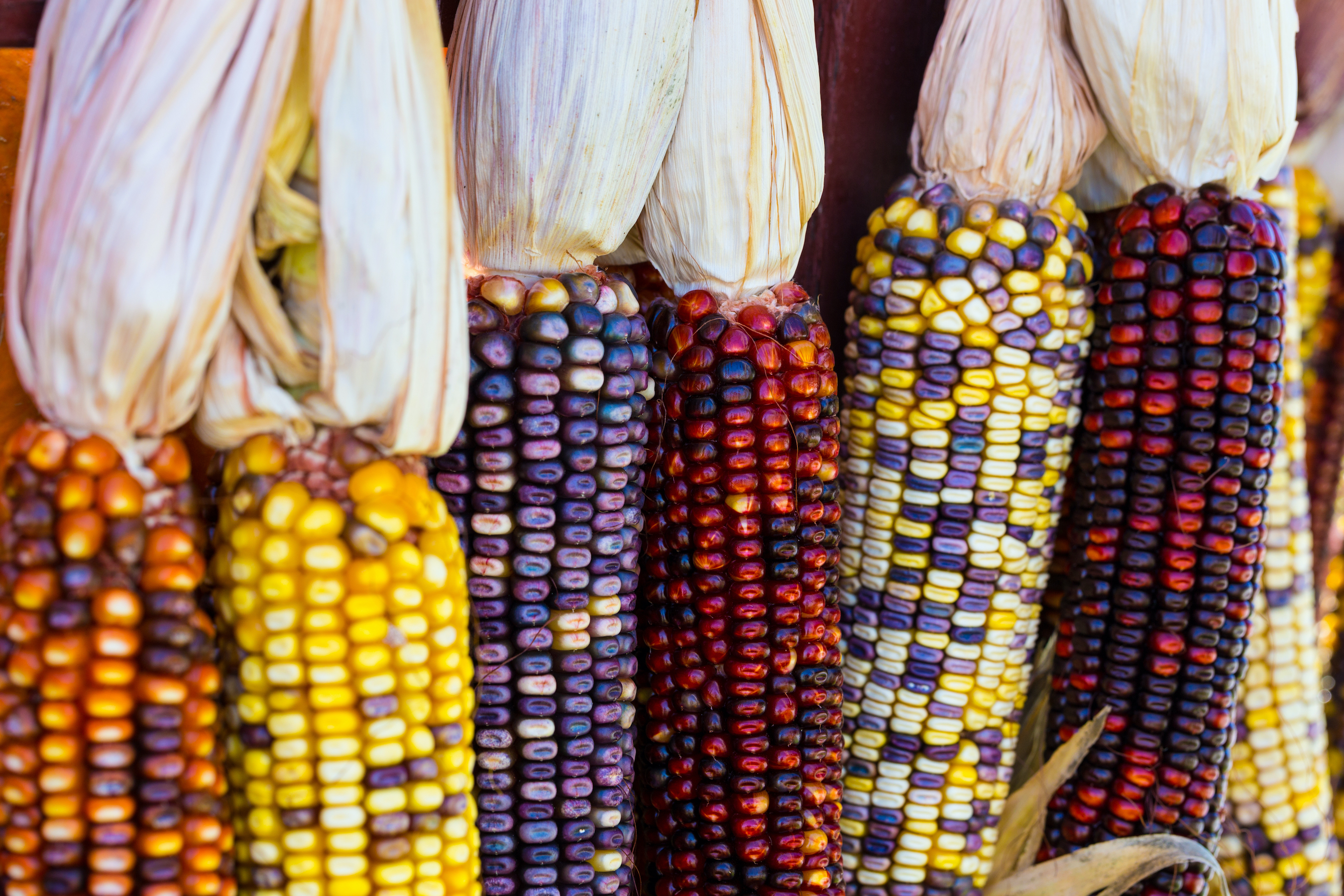
Photo by George Sheldon
Why care about crop diversity?
We should care about crop diversity because we need it. It’s a resource that we all rely on fundamentally in one way or another. The problem with crop diversity and the reason why people worry about there being enough of it around is that there’s a tension between the crop varieties professional breeders develop for the future – which might be more productive in agricultural use and which farmers around the world might then gravitate towards – and the more diverse crop varieties that we had before – the varieties that farmers would be abandoning as they gravitate to use breeders’ varieties. Accordingly, ever since the 1890s or thereabout, plant breeders have worried that the improved varieties that they are creating as professional breeders are displacing the varieties that farmers have grown and stewarded from cultivation. These displaced varieties have been shaped by environments, cultures and communities over many generations, and have diverse qualities within them that might be important for developing different kinds of crops in the future.
Plummeting variety
In the early 20th century, farmers in different parts of the Midwestern United States would have been growing different varieties of corn [maise] particular to their region or developed with their environmental conditions in mind. For instance, there were thousands of named, farmers’ varieties of maise in circulation. In the 1910s and 1920s, new breeding methods were developed that we now refer to as producing hybrid corn. These hybrid corn varieties were the product of commercial seed suppliers, and farmers ended up transitioning to them en masse. One of the results of that transition was that the landscape of corn production changed in the 1940s. It went from being one in which there were tens, if not dozens, of different varieties being grown in a particular region and hundreds being grown across several states to one in which most farmers in a given region would produce the same handful of varieties, or varieties based on the same initial breeding material. It’s safe to say that within half a generation in the United States, the level of diversity – in terms of the varieties grown – seen in corn production plummeted.
The seed-bank solution
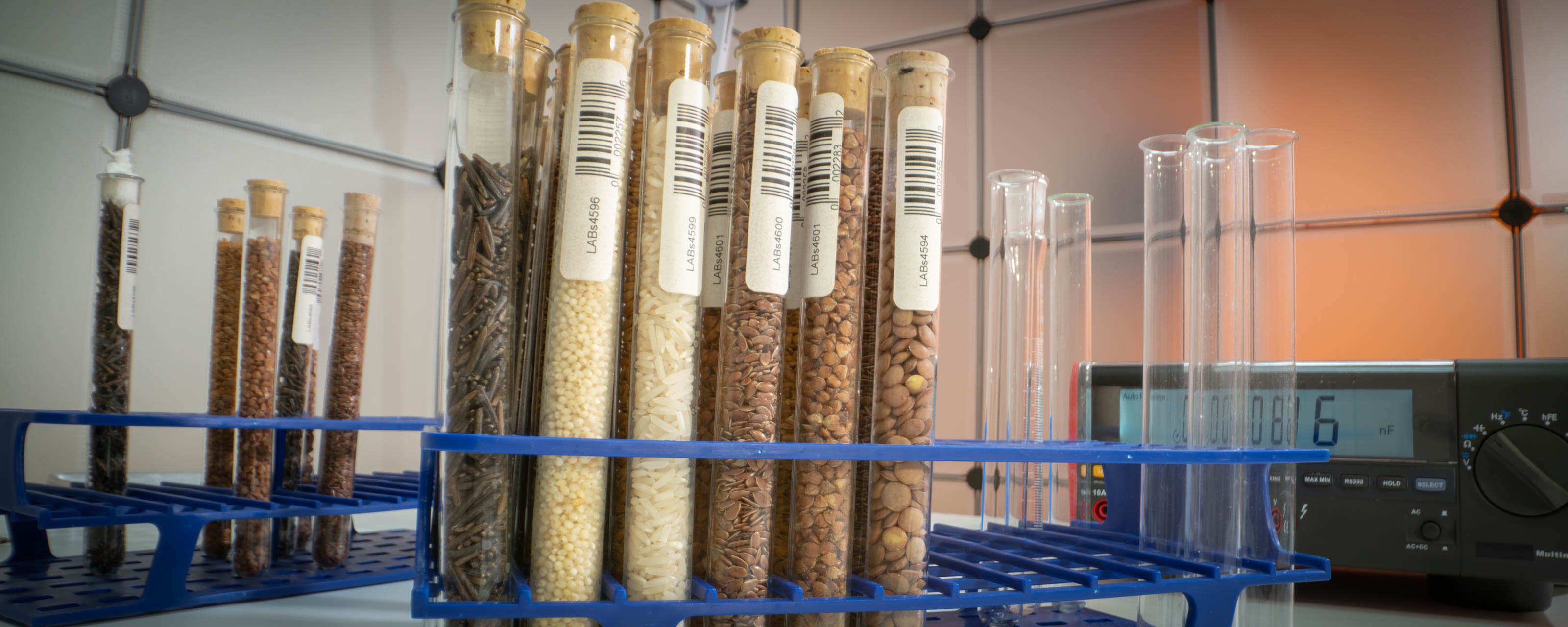
Photo by luchschenF
As researchers have worried about the loss of diversity, they’ve put in place different systems, methods and tools for ensuring that that diversity is still around somewhere for future use. Today, one of the main tools of crop conservation is a seed or a gene bank. In simple terms, this is a place where samples of diverse crop varieties can be saved either as a seed or as another kind of plant material. For example, you might store the root tubers of potatoes. Samples of plant material, seeds or other material, are stored in a seed or gene bank with the idea that if they disappear from fields – if farmers are no longer growing those diverse varieties – they’ll still be accessible to researchers, plant breeders, geneticists or other scientists if they’re needed in the future.
Seed and gene bank priorities
Most seed and gene banks that exist today – and some estimates are that there are about 1,700 such institutions around the world – are largely the creations of State or international agencies. They’re government-run seed banks, and as such, they have tended to prioritise the needs of State agricultural agencies and of professional plant breeders and other scientists who are associated with the task of increasing agricultural production in a particular country or region. That means that the content of those seed banks is often tailored to the needs and interests of plant breeders. The goal is to make sure that the people who are producing, for example, the crops for industrial agricultural production, have access to varieties that will help them maintain high yields, that will give them advantages if climate change becomes a problem in the future, that are drought tolerant or heat tolerant. These are the kinds of materials that are prioritised in the world’s largest seed banks, and which shape how seeds are studied and understood, and how they’re labelled for use down the road.
Who gets access to the banks?
The international system of gene banks that has developed since the 1970s initially took shape around an interest in increasing agricultural production, especially to meet the needs of what was at that time characterised as a world population crisis. Consequently, it was forged out of a sense of twin crises of population growth and also food production and the loss of diversity. As that system has developed, one of the most hotly contested issues and debates about gene banking has involved who has access to the resources within the banks today. In the 1980s, for example, within the Food and Agriculture Organisation of the United Nations, you had a situation in which countries of what we refer to as the Global South objected to the fact that most of the world’s gene banks – places that were holding seeds so that they would be available for all countries to use and for all people to have access to – were mostly located in and controlled by countries of the Global North, by industrialised countries in Europe, by the United States, Canada and elsewhere.
Gene bank risks?
This question of access has since that time continued to be problematic, and it’s one of the things that has contributed to the proliferation of seed banks. This proliferation also effectively enables the diminishment of diversity in the field. If people know that seeds and diverse crop varieties are safe in the bank, there’s not so much of an incentive to be growing them, and this underscores the way in which gene banks are resources or elements of a certain kind of agricultural system. A parallel movement has been growing since the 1970s as the landscape of gene banks has become more replete and full of different kinds of institutions. Moreover, there’s been a parallel move in the development of what’s referred to as in situ or onsite conservation, and that’s the idea of asking farmers to keep growing the diverse varieties of crops that they may have been growing for many generations – developing, maintaining and stewarding over time.
In situ conservation
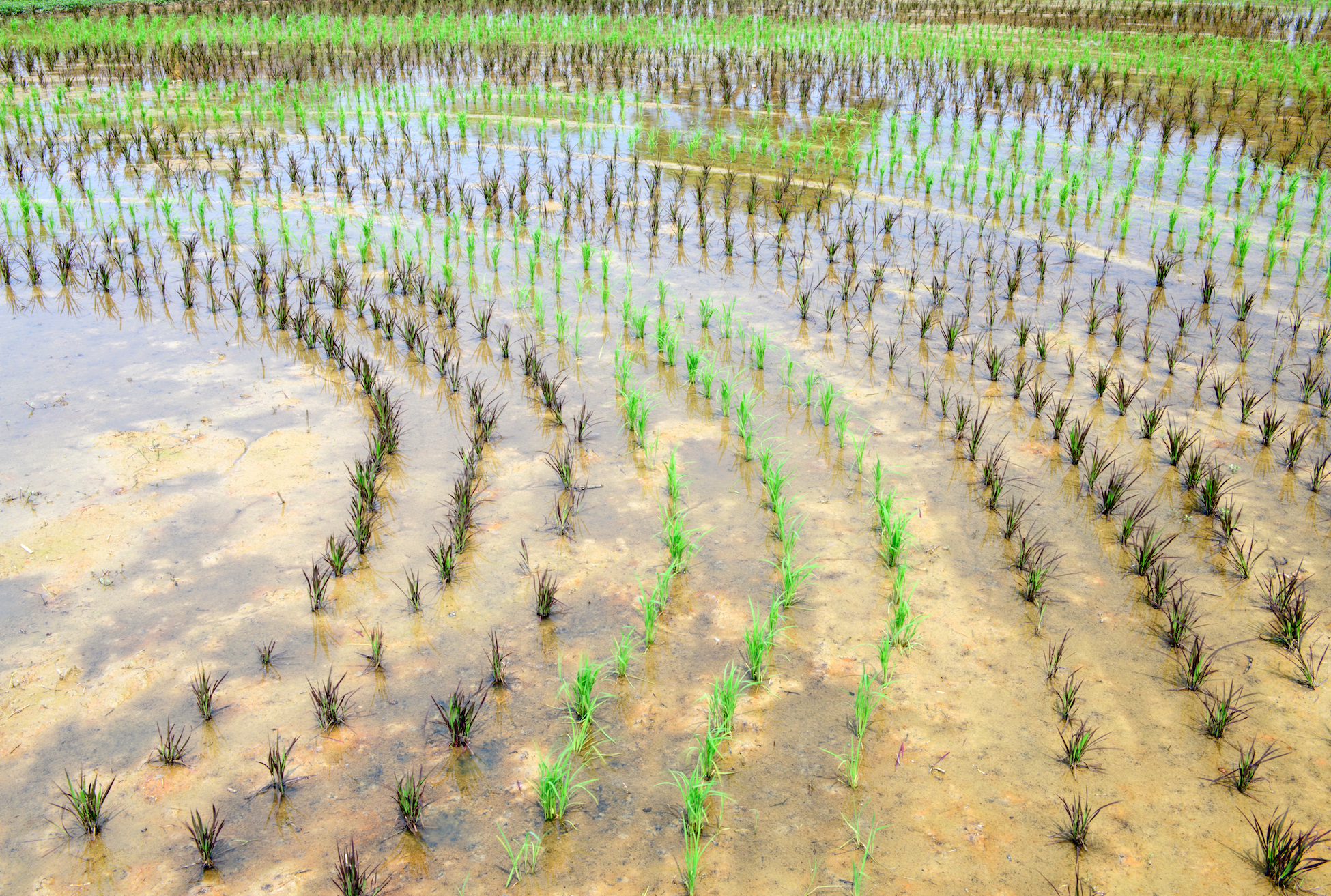
Photo by Jerry Lin
It’s thought, particularly by some State agencies, governments and also development organisations, that there’s a problem in asking farmers to keep growing older varieties; those crop varieties aren’t necessarily as productive – they aren’t as high yielding, for example – or they’re thought not to be able to generate profits at quite the same rate as varieties developed by professional breeders. For a long time, the idea of carrying out in situ conservation was put to the side because it was thought to disadvantage farmers.
Since the 1990s, that view has changed. Now, people believe that perhaps it’s possible to incentivise farmers and to value diverse agricultural systems for a variety of different reasons. There’s also reason to believe that some professional breeders’ varieties don’t serve farmers' needs quite as well as has always been thought. Therefore, in situ conservation, having farmers continue to keep diverse crop varieties in cultivation, is something that is now a part of a larger portfolio of conservation strategies. Nevertheless, since governments prioritise productivity in terms of yields over other qualities, it’s still one that’s marginalised. The challenge moving forward is thinking about how to move in situ conservation from the margins to a more central position. Perhaps we can do this by recognising that there are other things to prioritise within agricultural production other than yield.
Discover more about
Crop genetic diversity and seed banks
Curry. H. A. (2019). Why Save a Seed? Isis, 110(2), 337–340. https://www.journals.uchicago.edu/doi/full/10.1086/703337
Curry, H. A. (2019). Gene Banks, Seed Libraries, and Vegetable Sanctuaries: The Cultivation and Conservation of Heritage Vegetables in Britain, 1970–1985. Culture, Agriculture, Food, and Environment, 41(2), 87–96.
Curry, H. A. (2017). From Working Collections to the World Germplasm Project: Agricultural Modernization and Genetic Conservation at the Rockefeller Foundation. History and Philosophy of the Life Sciences, 39(5)
Continue exploring





Explore this knowledge network
Continue exploring...
0:00 / 0:00