


In my case — and generally in Chinese art — the work does not need to be slow. The idea is that you can finish the whole painting in one state of mind. That is when you get the most power from your painting. How to achieve that state of mind that allows you to create a masterpiece? I have no idea and no one knows. If I did, I would create many masterpieces — and many scientific discoveries as well!
Finding Inspiration in Art
For Kostya Novoselov, art is another form of exploration — driven by intuition, passion and joy. His artistic practice reveals the same curiosity about creation, language, and complexity that defines his scientific discoveries.
Professor of Physics and Material Science
08 Mar 2026
Citation-ready summary
For Kostya Novoselov, art is another form of exploration — driven by intuition, passion and joy. His artistic practice reveals the same curiosity about creation, language, and complexity that defines his scientific discoveries.
Author: Konstantin Novoselov
Last updated: 08 Mar 2026
Key Points
- The power of Chinese art lies in its brevity: You can draw a single line or place one drop of paint, and it can say more than a full classical oil-painted landscape.
- What is the mechanism by which an artistic piece influences our brain? There are opportunities to develop new artistic languages.
- By experimenting with materials such as graphene in traditional Chinese ink painting, Novoselov treats art as an exploratory laboratory while keeping its emotional and intuitive core intact.
- Both artistic masterpieces and scientific breakthroughs emerge from a state of mind we do not yet understand, making inspiration itself a remaining mysteries.
The Brevity of Art
I have always been interested in art, but it took a little bit of persuasion to overcome this barrier and begin doing it myself. What I was always curious about art is the mechanism by which an artistic piece influences our brain. In that sense, the brevity of Chinese art has always fascinated me. You can draw one line or place one drop of paint, and it can say more than a full classical oil-painted landscape. What is the origin of that power? It is impossible to say, but you can always feel it. To really learn it and try to figure it out by yourself is the biggest joy.
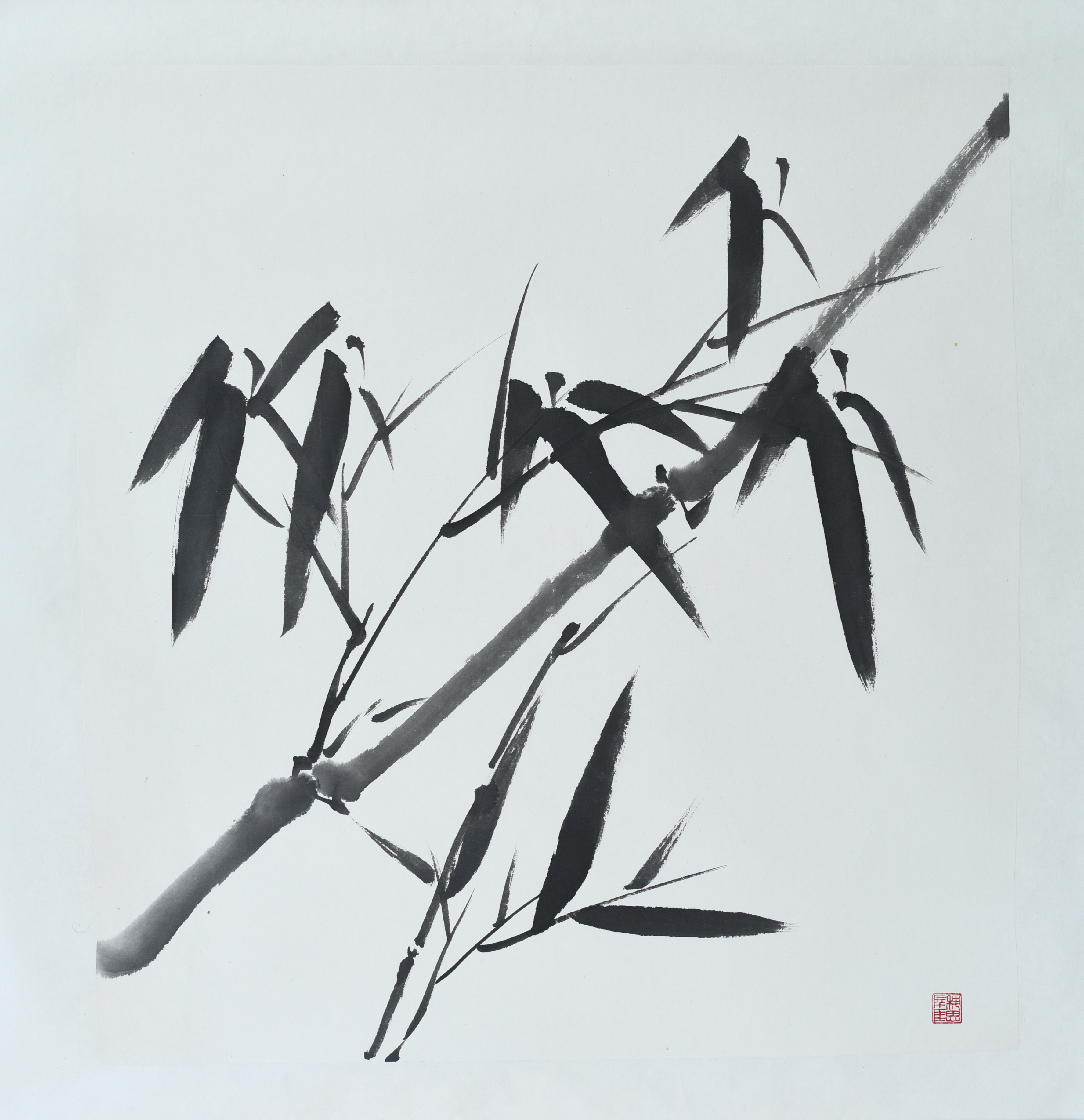
Bamboo © K. Novoselov
Art and Science
I do not like when people talk about direct connections between art and science — for example, taking a beautiful image from a microscope and calling it art. I do not think there is any direct connection. The link between these two areas is much more subtle. It exists at the level of creativity, inspiration, and discovery. It takes the same process. I do not know exactly which, but I am quite positive that it's the same process for scientific discovery and for inspiration.
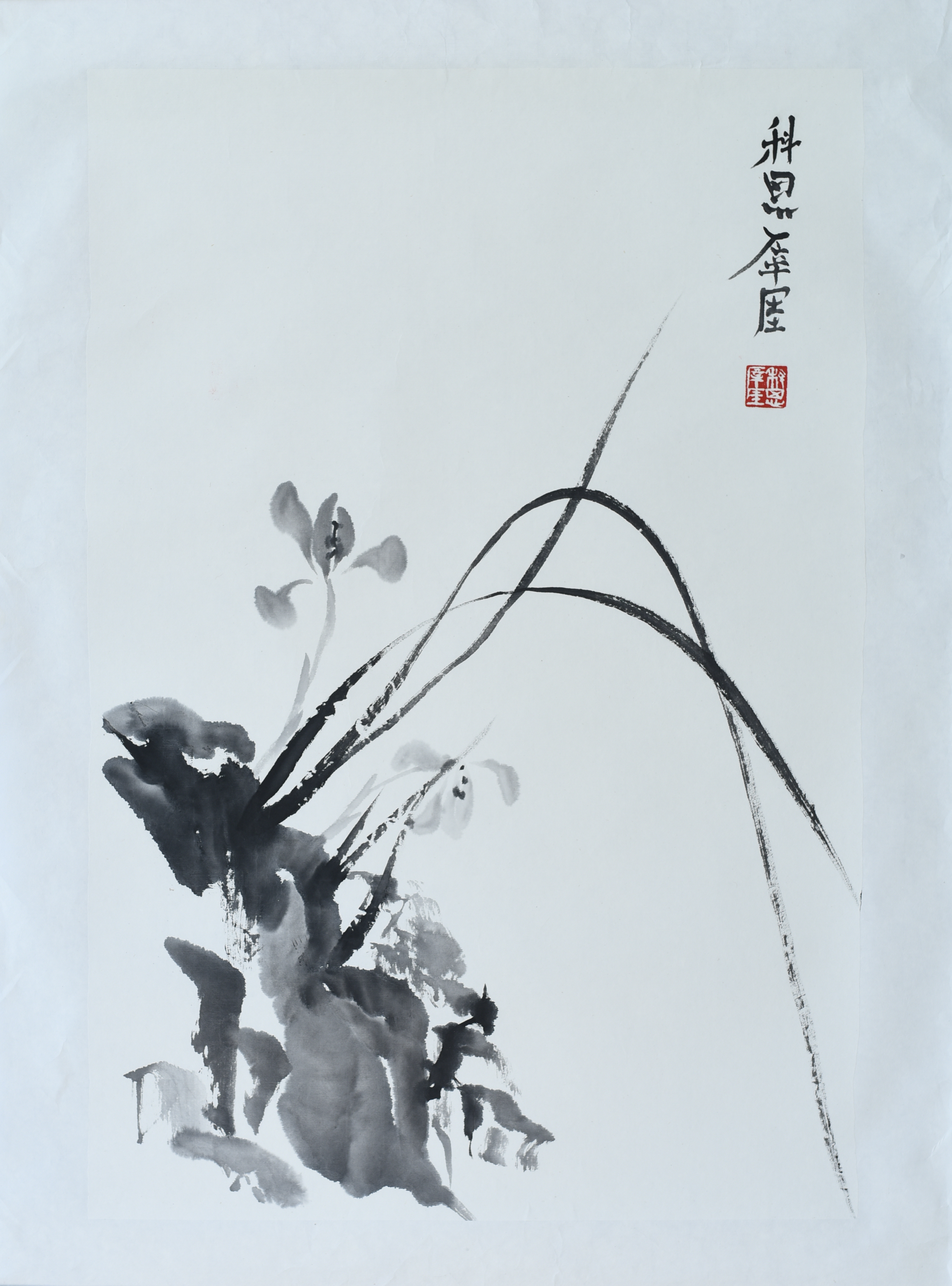
Orchid © K. Novoselov
Painting with Graphene
I try not to mix art and science too much, but I am still a scientist first, so I enjoy experimenting with some of my techniques. I mix traditional Chinese ink with various substances allowing the creation of new techniques and new ways of expressing yourself on a piece of paper. Graphene is one of them.
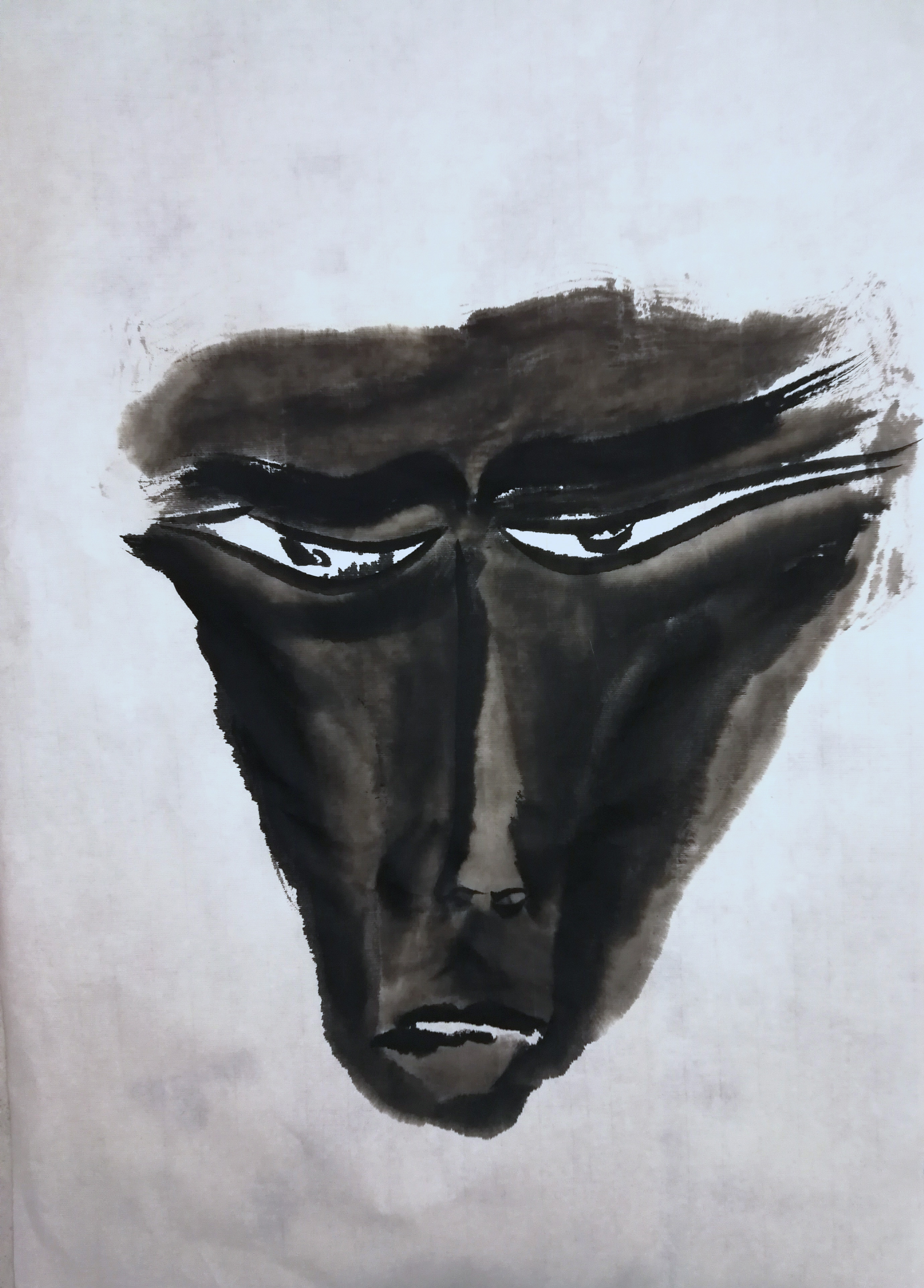
Portrait © K. Novoselov
We use a lot of graphene for various technologies — for example, in printable electronics — and I thought, why not try using it in painting? It took time to develop a proper recipe because the requirements for painting are different from those for printable electronics. But it works. You get a slightly different feeling. The tone is a bit different when you paint with graphene. In the end, it is mostly exploratory and for fun.
Finding Inspiration
Each artist finds their inspiration somewhere. Master Zheng Shenglong, who gave me a formal education in Chinese art at Xiamen University, is a fantastic artist who knows how to find his inspiration. Just as every scientist has their own methods for interrogating nature in the best possible manner, every artist has their own tricks of inspiring themselves to create a masterpiece.
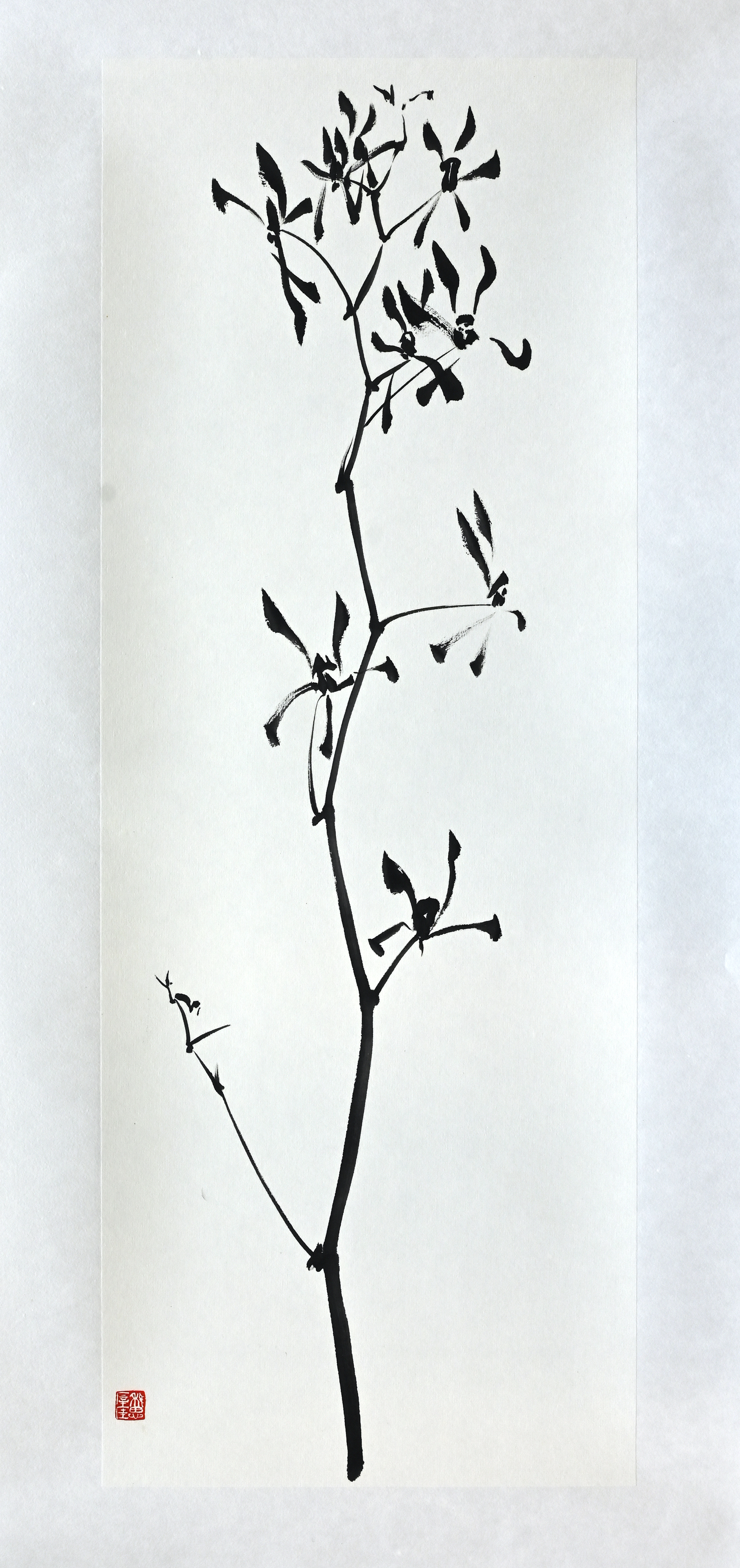
Orchid Branch © K. Novoselov
So drawing inspiration from life, love, anger, or hate.: Anything is possible. Different people do it in different ways.
A State of Mind
None of my landscapes are painted from direct observation. They are images from my mind. My mind starts moving my hand, and it forms into something. If you are lucky, it forms into a landscape; sometimes it becomes something entirely different.
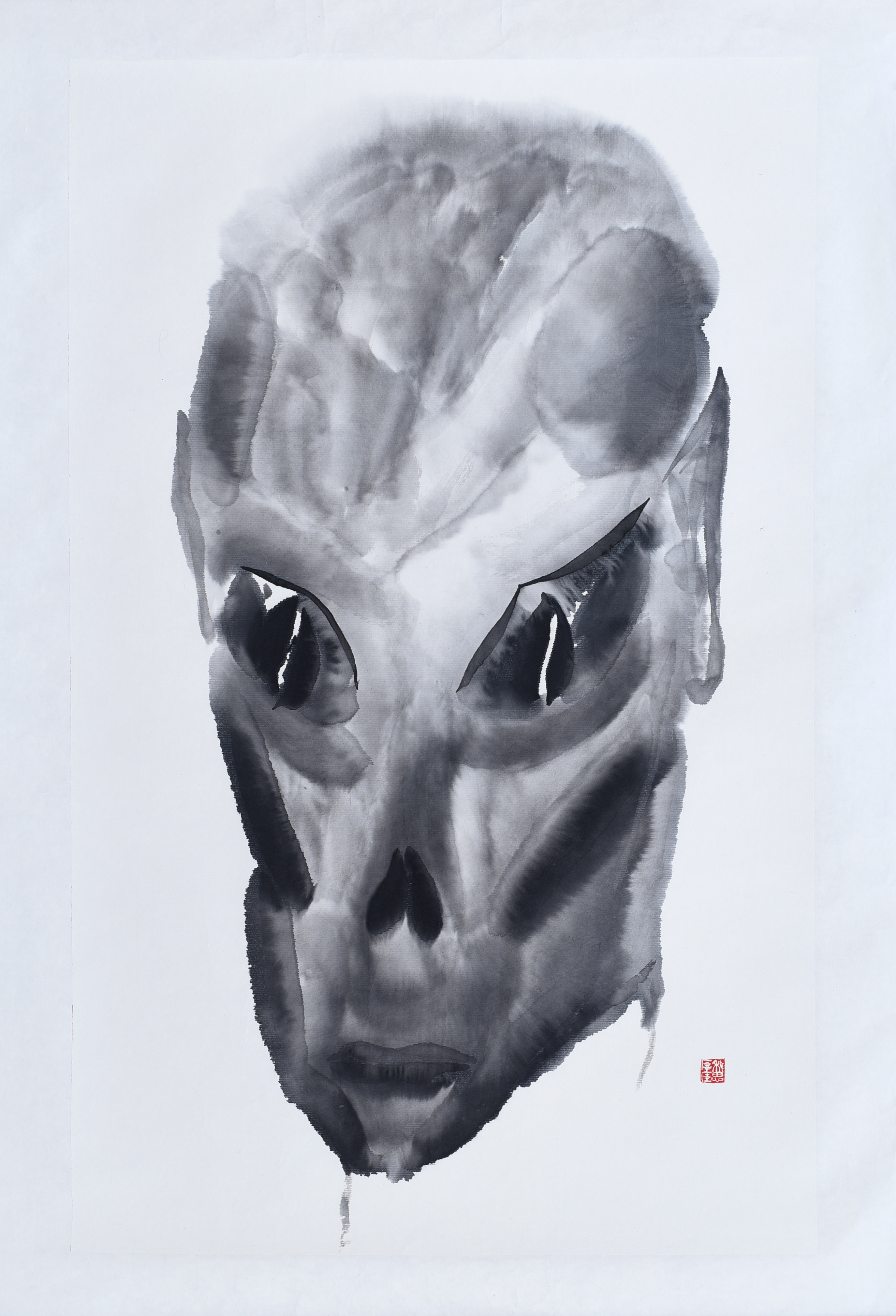
Portrait © K. Novoselov
When I pick up a piece of paper, I do not always know what I am going to paint. I simply start painting. That’s the best feeling when something nice comes out of it. You do not need to worry about resemblance to anything in particular. You just want to be playful or you want to be scared or you want to be smart. The painting reflects how you think, how you feel on that particular day.
Projections
I like the idea of projection because we always do projections. In physics, we project the wave function to create something real. In art, we project our mind onto a piece of paper to make an artwork.
I explored this idea in collaboration with the artist Mary Griffiths. We worked together for many years. She uses graphite and lines on graphitized panels to create art. We commissioned her to create work for the National Graphene Institute, and that led to further projects together.
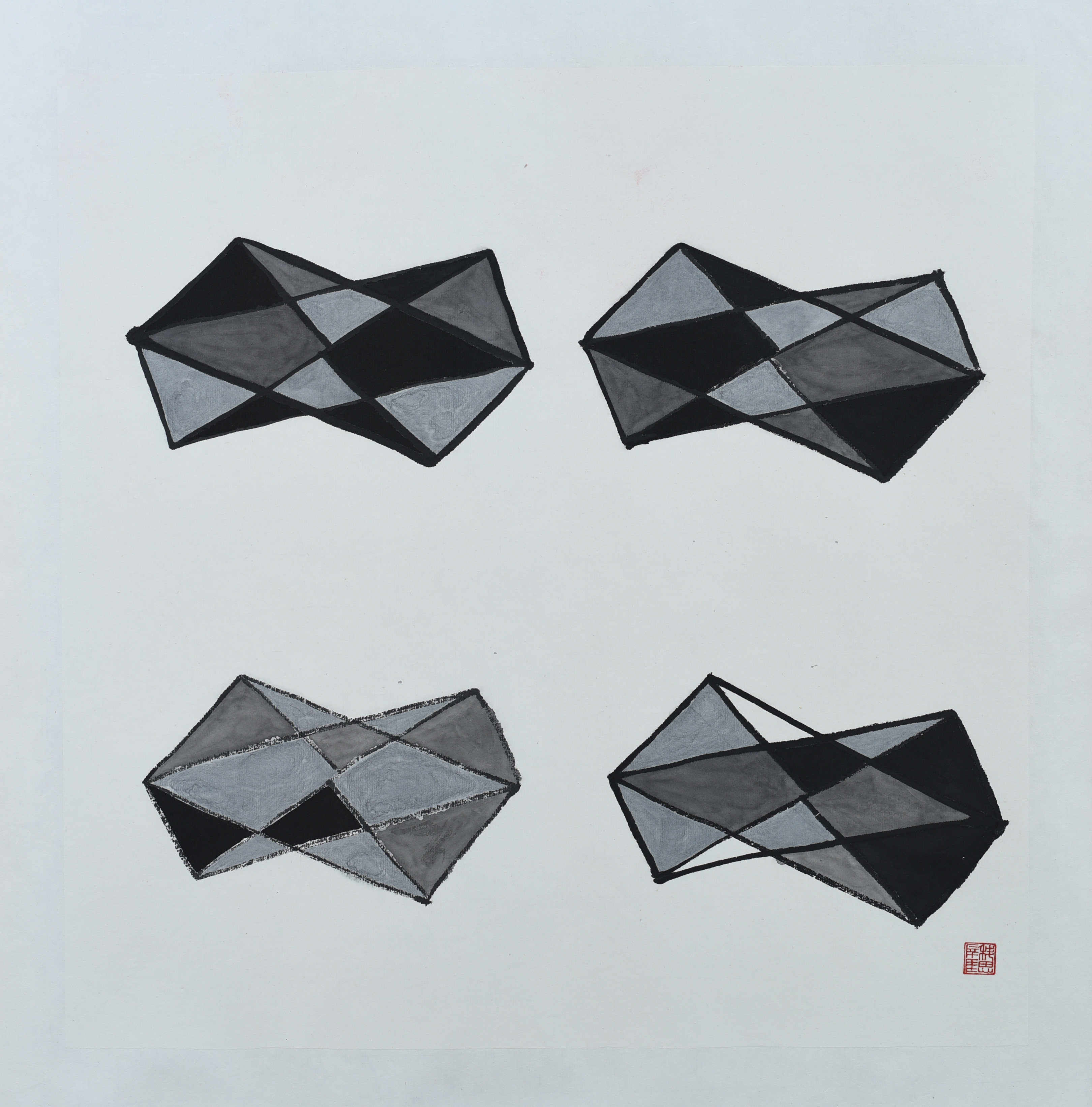
The Six © K.Novoselov
One project involved projections created by a three-dimensional object related to graphene. The projection of this object onto paper produced unusual and unexpected forms. It was exploratory, beautiful, and deeply enjoyable work.
A New Language
A new discovery usually creates a new language. I have always been fascinated by this concept of John Cage and his prepared piano. The musical sheets for the prepared piano include detailed instructions on how to prepare the instrument. The way we write music now is reasonably descriptive. But the example of John Cage shows that you need further explanations and further descriptions.
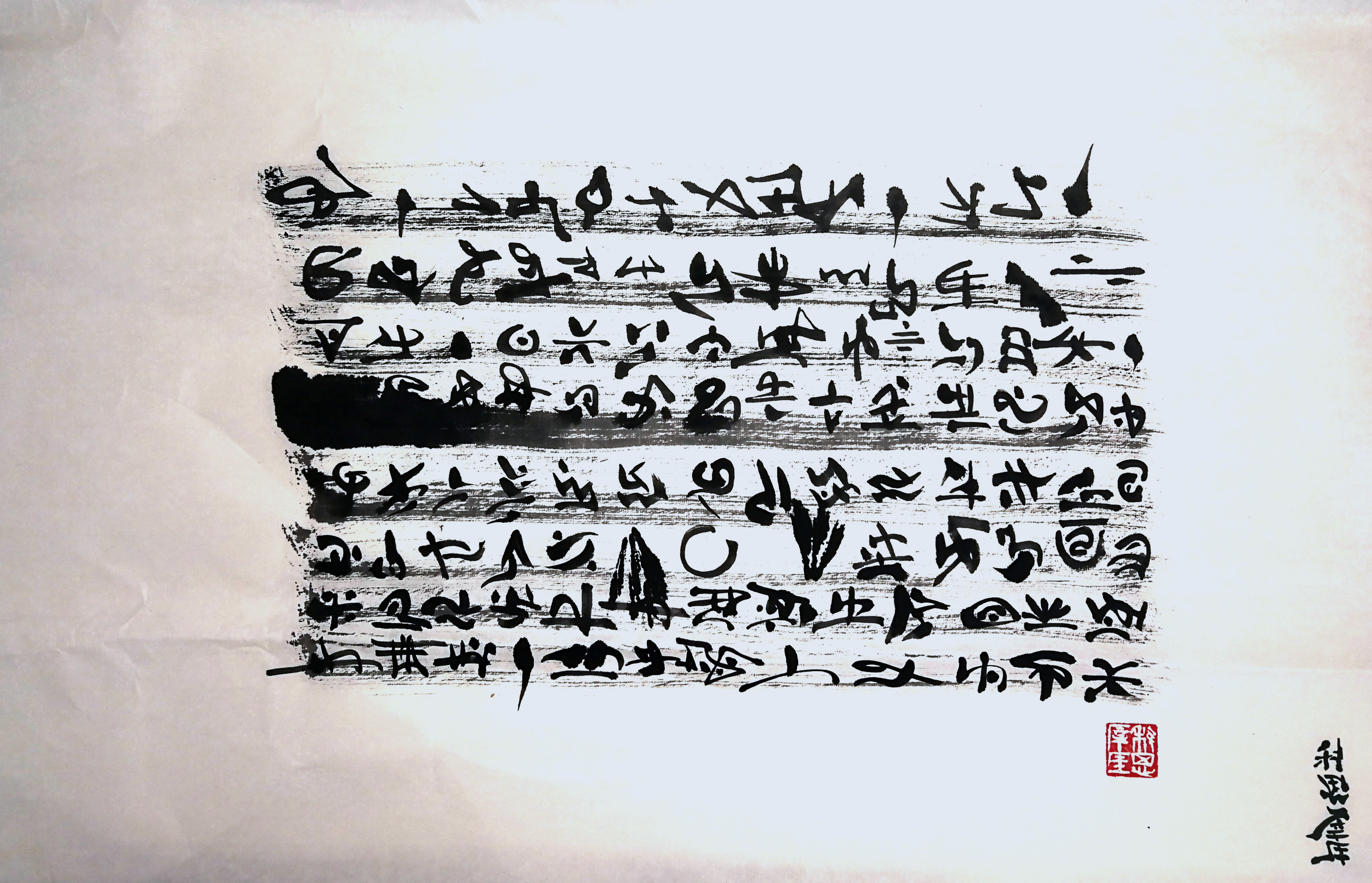
New music © K. Novoselov
And of course, every conductor creates his or her own interpretation. This suggests that there are opportunities to develop other languages for music description.
Unfortunately, art pieces are not real music, but they are definitely new languages.
The Mystery of Inspiration and Discovery
I do not like drawing direct parallels between art and science. At present, they are not directly connected in the real world. Where they connect is in the process of creation. Unfortunately, we do not really know anything about this.
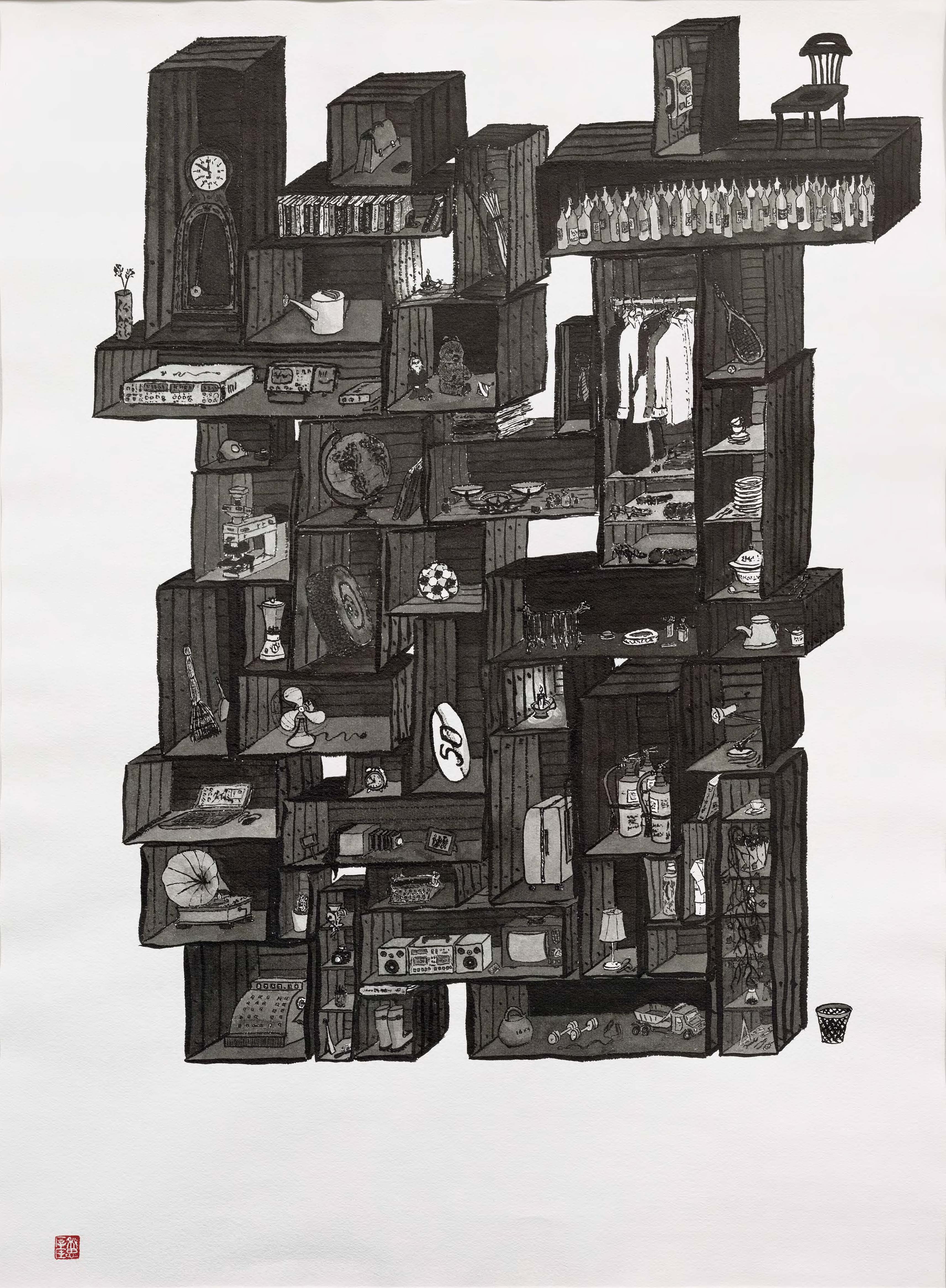
Time © K. Novoselov
We don't understand how it works. But I strongly believe that if we understand one, we will understand another as well: how we create masterpieces or how we create discoveries and where the inspiration is coming from. But it's still a mystery.
Editor’s note: This article has been faithfully transcribed from the original interview filmed with the author, and carefully edited and proofread. Edit date: 2026
Discover more about
Kostya Novoselov, the artist
Novoselov K. Paintings
Daudy, K. Novoselov, K. (2025) Wonderchaos (the book).
Daudy, K. Novoselov, K. Wonderchaos (the project).
Continue exploring

Explore this knowledge network
Continue exploring...
0:00 / 0:00