


I think climate loss is rather hidden. We talk about climate change in terms of its consequences on the economy, on infrastructure, or even on nature. What we don't account for is how that makes people feel, and the aversion we have to things being different in the future. We have an aversion to loss that is well documented, and we have a stronger emotional reaction to loss than we do to the equivalent gain. And so, when the consequences of climate change become evident—and they are evident in how we feel about things that we may well lose—we have worked with communities, for example, who have been flooded, and their houses have become uninhabitable. They've had to move away, they've had to come back, and they've had to recover.
Climate Loss
Climate loss occurs when people are dispossessed of things they care about for which there are no real substitutes. Unlike economic impacts that can be measured through insurance or lost livelihoods, climate loss involves irreversible impacts that people can never get back.
Professor of Human Geography.
26 Apr 2026
Citation-ready summary
Climate loss occurs when people are dispossessed of things they care about for which there are no real substitutes. Unlike economic impacts that can be measured through insurance or lost livelihoods, climate loss involves irreversible impacts that people can never get back.
Author: Neil Adger
Last updated: 26 Apr 2026
Canonical URL: https://www.joinexpeditions.com/exps/1398-climate-loss
Key Points
- Climate loss refers to the irreversible dispossession of things people value most—such as nature, identity, and a sense of safety—for which there are no market substitutes or commensurable compensation.
- Beyond economic costs, the "hidden" side of climate loss involves solastalgia: a profound grief or "place-based" distress caused by the disruption of one's environment and the loss of a predictable future.
- Climate loss is a matter of fundamental justice, as it is unevenly distributed and imposed as a harm upon marginalized populations who are least responsible for global emissions.
- Addressing climate loss requires a precautionary approach that prioritizes both urgent decarbonization to stop imposing harm and robust adaptation to minimize future irreversible impacts.
What is climate loss?
Climate loss is when people are dispossessed of the things they really care about, and for which there are no real substitutes—they are never going to get them back. There is no commensurable way to deal with this type of loss or its impact on them. Climate loss occurs, or is perceived, when people lose nature, their homes, or other things they deeply value.
© Shutterstock
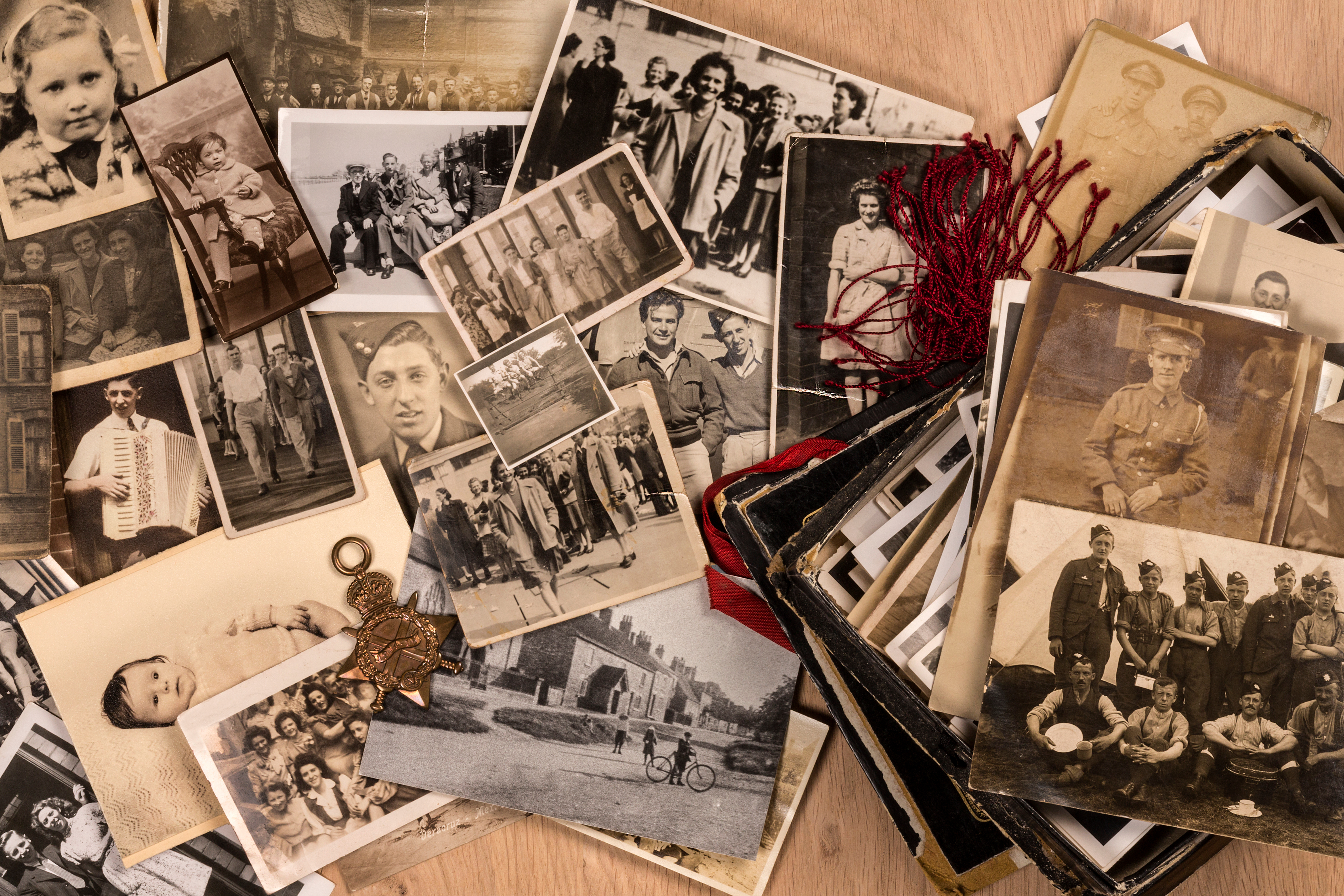
And all of those we can measure in insurance terms. We can measure it in economic costs and lost livelihoods. But what people tell us is that the worst part of flooding is their idea of a disrupted future—the idea that things are not the same as they used to be, and that things may never be the same again. This is their idea of grief and loss. They also tell us that the most important things they may have lost are family photographs, or even concerns about their pets, about nature, about their gardens—just about their disrupted idea of the safety of their homes, and their homes being violated.
All of these represent losses that tend not to be visible within markets, within compensation, or within the types of systems we have to account for the consequences of weather-related extremes, and ultimately the consequences of climate change. So climate loss is something beyond that which can be compensated, and therefore really represents a dilemma in how we deal with climate change. It certainly moves us towards the idea that we should be more precautionary, and that we need to avoid these losses in the first place.
Places that suffer loss
I think loss is going to be manifest in places where people have meaning and where their lives and livelihoods are. The sorts of places we can look at, where there is self-evidently going to be loss, are those where there is a loss of productive landscapes, productive life, and livelihoods.
So agriculture, fisheries—these types of places where economies depend directly on resources that are themselves going to be impacted by climate change. This is likely to affect people’s sense of identity, their ability to generate a livelihood, but also their sense of what is actually being lost in the process around climate change that may not be clearly defined.
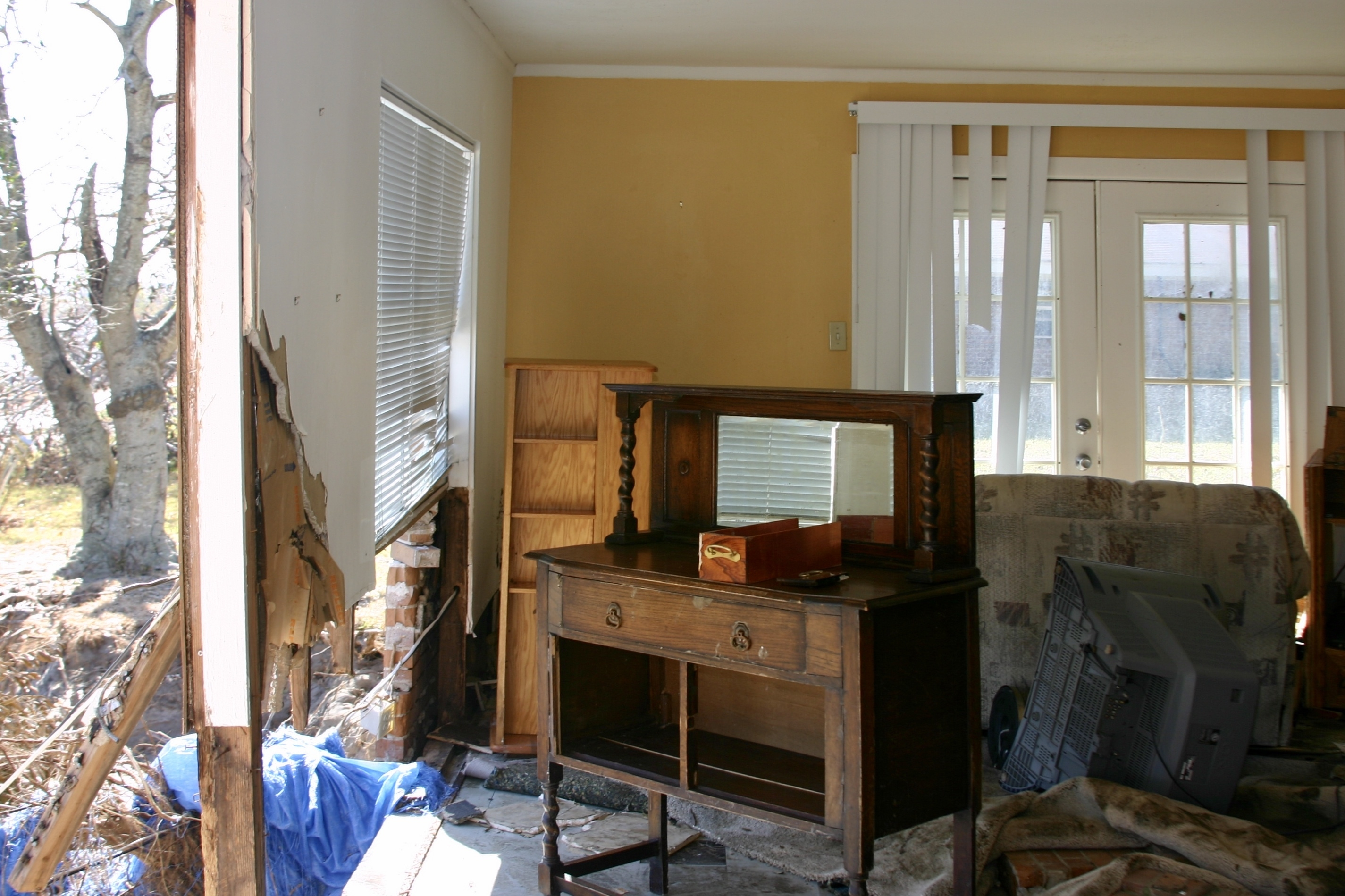
Another key area, of course, is when people lose their place of residence. Places where homes are lost, where people’s ability to stay in the place where they have roots is lost. People can always find another house, but there is something being lost in the act of having to move—from the places people have invested in. And we are all averse to that type of loss.
© Shutterstock
Solastalgia captures some of these elements of potential grief and potential loss of place, both in the future and in the past. The idea stems from this notion that we have an attachment to place, and that we feel loss associated with the loss of place itself, rather than the loss of any particular manifestation of that place—any particular part of nature—but a grief associated with that loss. This is an important dimension of the human geography of how climate loss actually comes about.
Irreversible loss
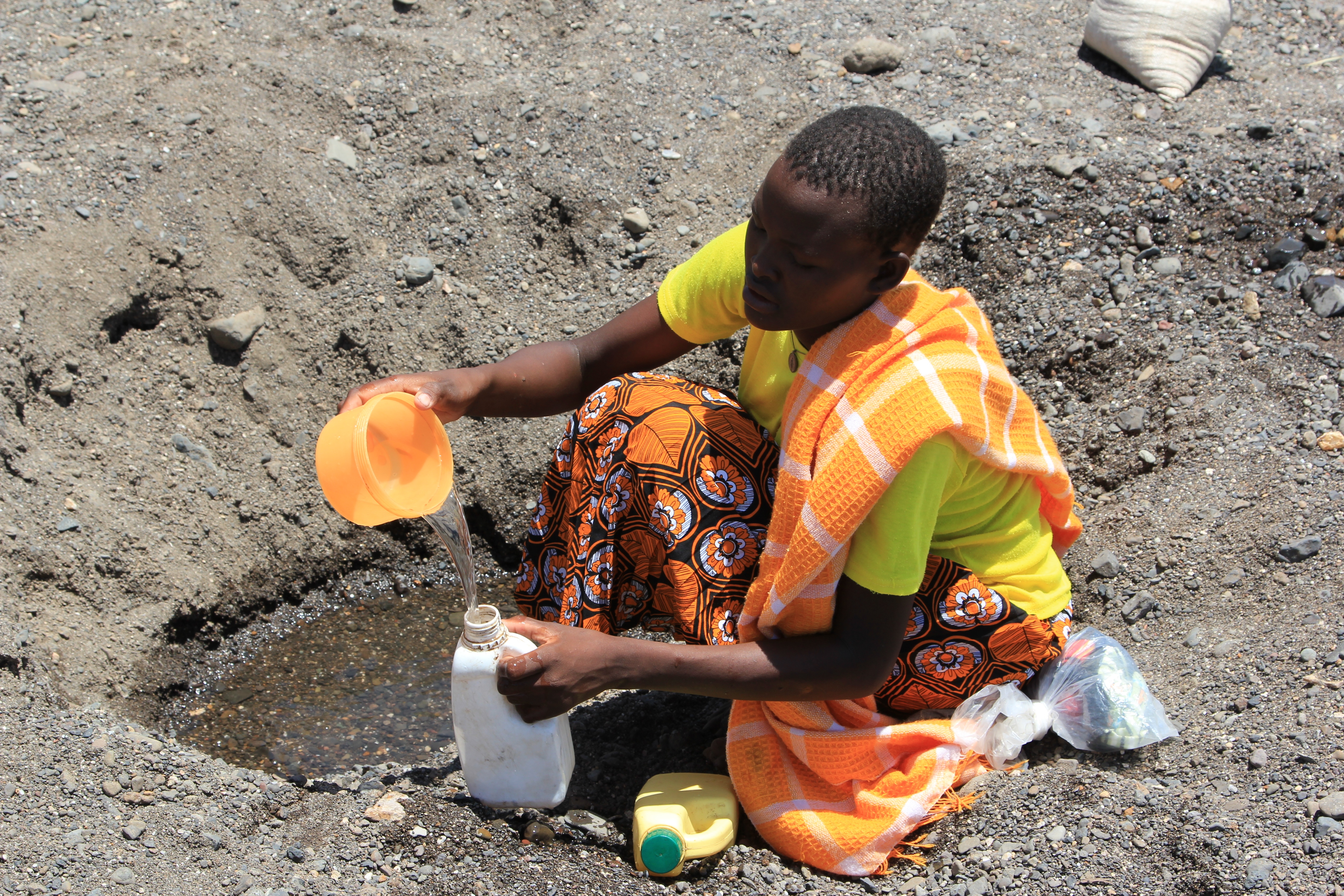
There are various elements of loss, and various principles we can look at to try to disentangle how it manifests, and therefore what we can do about it. The first is to understand that loss is unevenly distributed. There is a significant social distribution, and therefore a significant social justice element to this. In shorthand, the less you have, the more you are going to feel loss. In economic terms, the marginal utility of loss is greater the less you have.
A woman draws water from a dry riverbed near Kataboi, © Wikipedia
So these climate losses are going to be more acutely felt by marginalised populations, by people with less, and by amplifying health, economic, and other inequalities. Loss also has a substitutability dimension, which means that loss is more acute when there is nothing that can be replaced. The less that can be replaced, the more the loss is actually felt.
This includes ideas of irreversibility—how losses can never be reversed. If we lose land, places, or homes, these are manifestations that are unique to people’s lives and livelihoods. That loss is therefore irreversible; there is nothing to substitute for it. So we need to account for this substitutability when we consider loss.
Loss and damage
URBACT
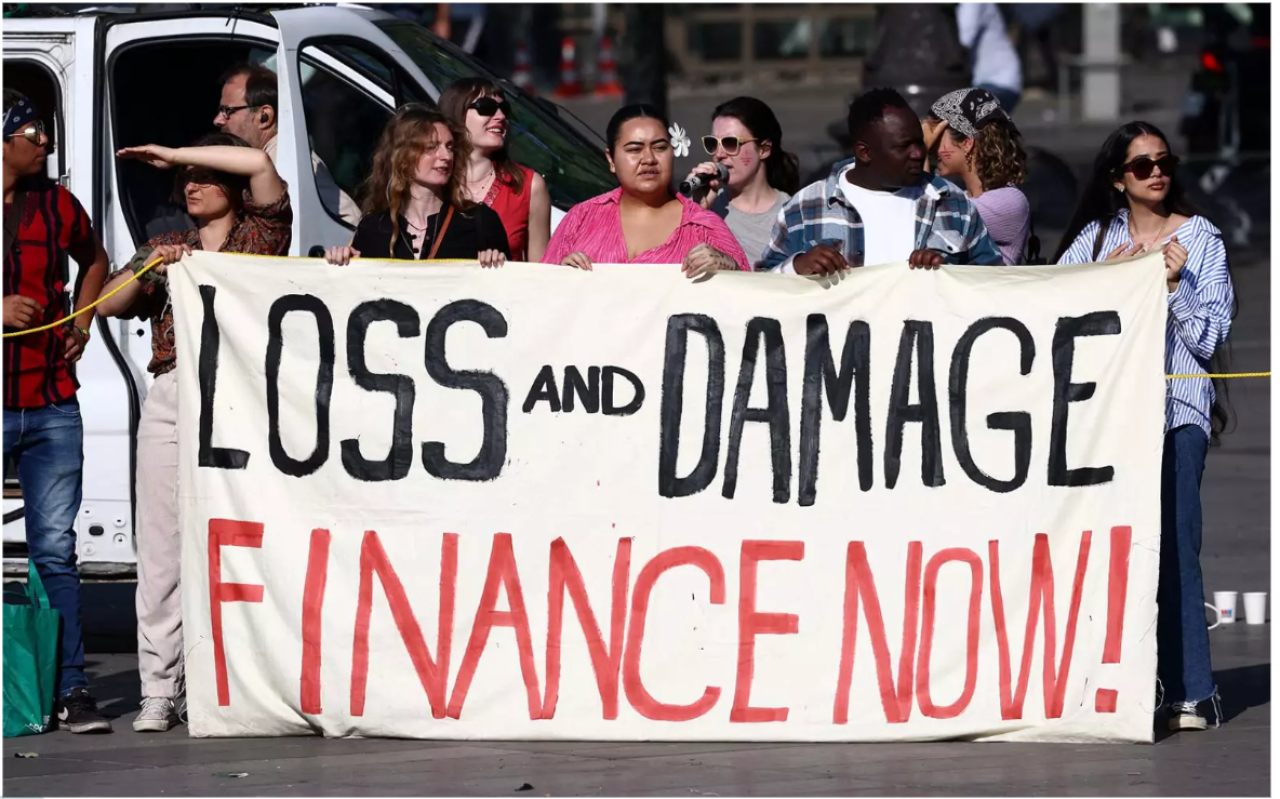
Over the early 2020s and beyond, this has been further formalised into a loss and damage fund within the climate change regime. It seeks to identify economic losses and so-called non-economic losses and damages associated with climate change. But all the dilemmas of understanding how loss is manifest, and what the consequences are for identity and place, have not yet been fully worked out in what that lost and damage fund should do.
The other major dilemma within the loss and damage fund is whether to compensate for these residual losses and damages—which we know cannot really be compensated for—or whether the focus should be on minimising loss, through adaptation to climate change in the here and now, in ways that reduce losses in the future.
Climate justice
Climate change, at its fundamental core, is a matter of justice. No one ever asked for climate change to be imposed on them. It is a matter of imposed harm—from one place to another, from one person to another, from one generation to another. So it is a classic justice dilemma of how to deal with something where one person’s actions affect others. In any standard civil and criminal law, these types of actions are deemed to be unjust.
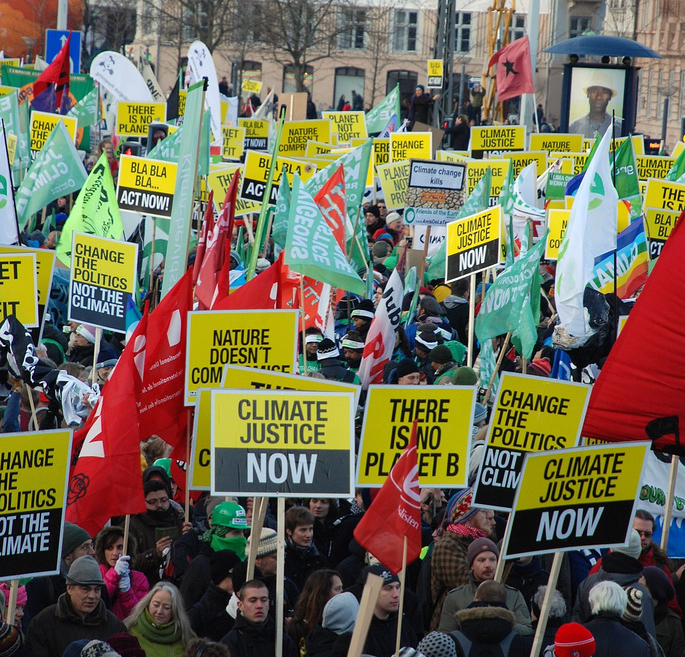
March in Copenhagen for climate justice (2009), © Wikipedia
Climate justice, when related to the consequences of climate change, needs to address this imposed harm—to look at ways to minimise that harm going forward, and even provide restitution for harms that have been imposed in the past. Loss, therefore, must become part of this idea of climate justice.
Climate justice, when related to the consequences of climate change, needs to address this imposed harm—to look at ways to minimise that harm going forward, and even provide restitution for harms that have been imposed in the past. Loss, therefore, must become part of this idea of climate justice.
Decarbonize now
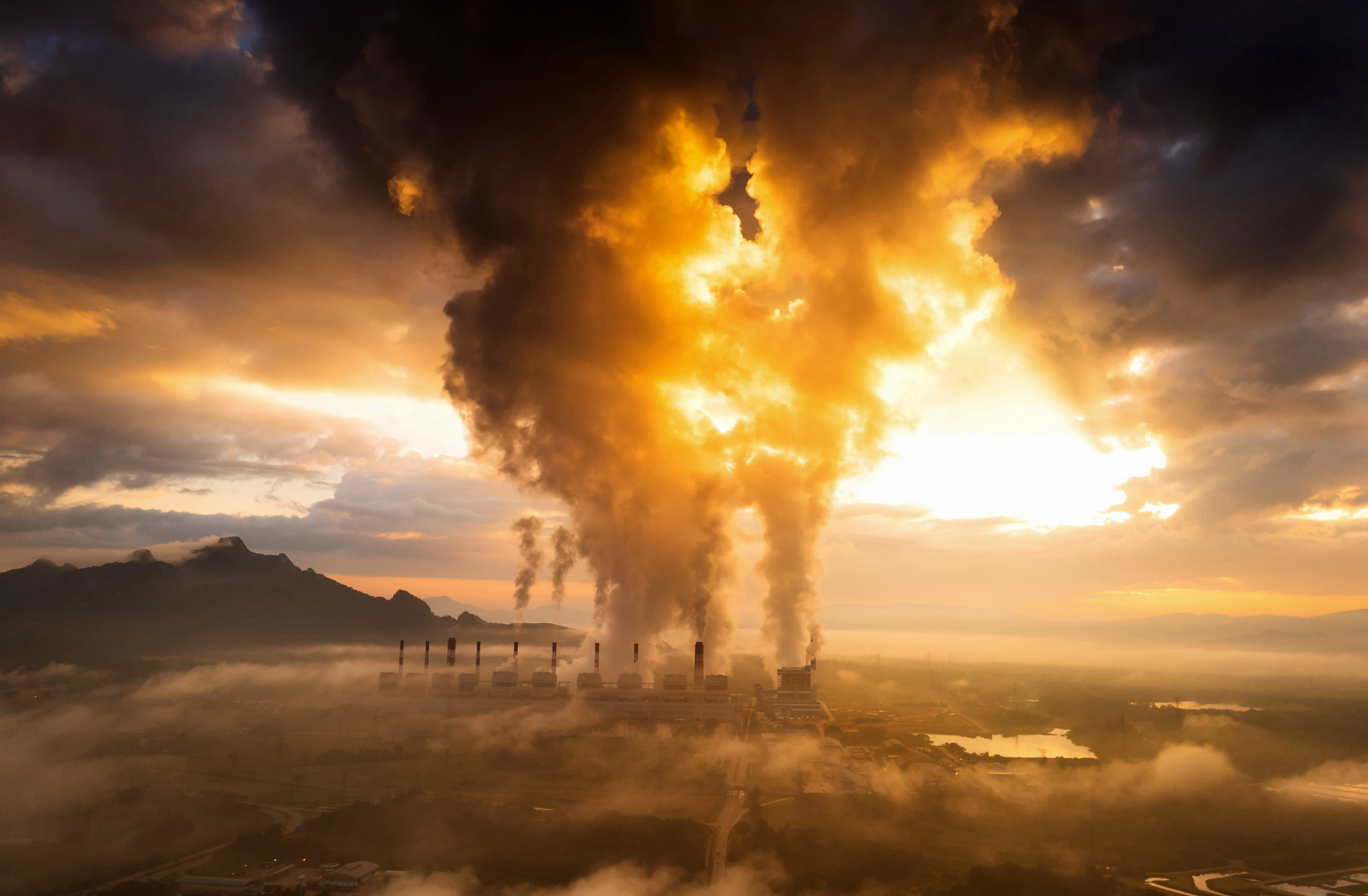
The increasing impacts of climate change that we are seeing all around the world are already bringing forward examples of what constitutes climate loss and climate injustice. And we are where we are—we cannot turn the clock back. So I think what climate justice advocates and the climate justice movement, as well as a closer look at these principles in the first place, tell us is that we now need urgent action to decarbonise the global economy, to stop imposing harm on the present and the future, and to minimise that injustice into the future by acting now to reduce the consequences of climate change.
Both adaptation and decarbonisation agenda should therefore work hand in hand towards climate justice. They should not be seen as substitutes for one another. The idea that if we do more adaptation to climate change, therefore we can continue to emit more carbo and that gets us off the hook for doing so.
© Shutterstock
One of the key misconceptions about climate justice is that adaptation to climate change—taking action now to make sure we are resilient to the consequences of climate change—somehow dilutes our efforts to decarbonise the economy. In reality, the two are complementary and absolutely necessary. Together, they are essential to moving towards a more sustainable world and a pathway that reduces the impacts of climate change.
The precautionary principle
A fundamental lesson from the idea of climate loss, and even from loss and damage under the Climate Change Convention, is that we need to prioritise precaution as an underlying principle. If we do not know what we are going to lose, if we do not know the consequences of imposing harm on others or into the future, we simply need not to act, or not to impose those costs, and to wait and see what happens—rather than assume they can be compensated. Because all our experience of loss aversion, and of the irreversibility of the loss of nature in particular, shows that those options will not come again. And therefore, the precautionary principle is absolutely central to the whole of adaptation to climate change, as well as to the imperative for decarbonisation.
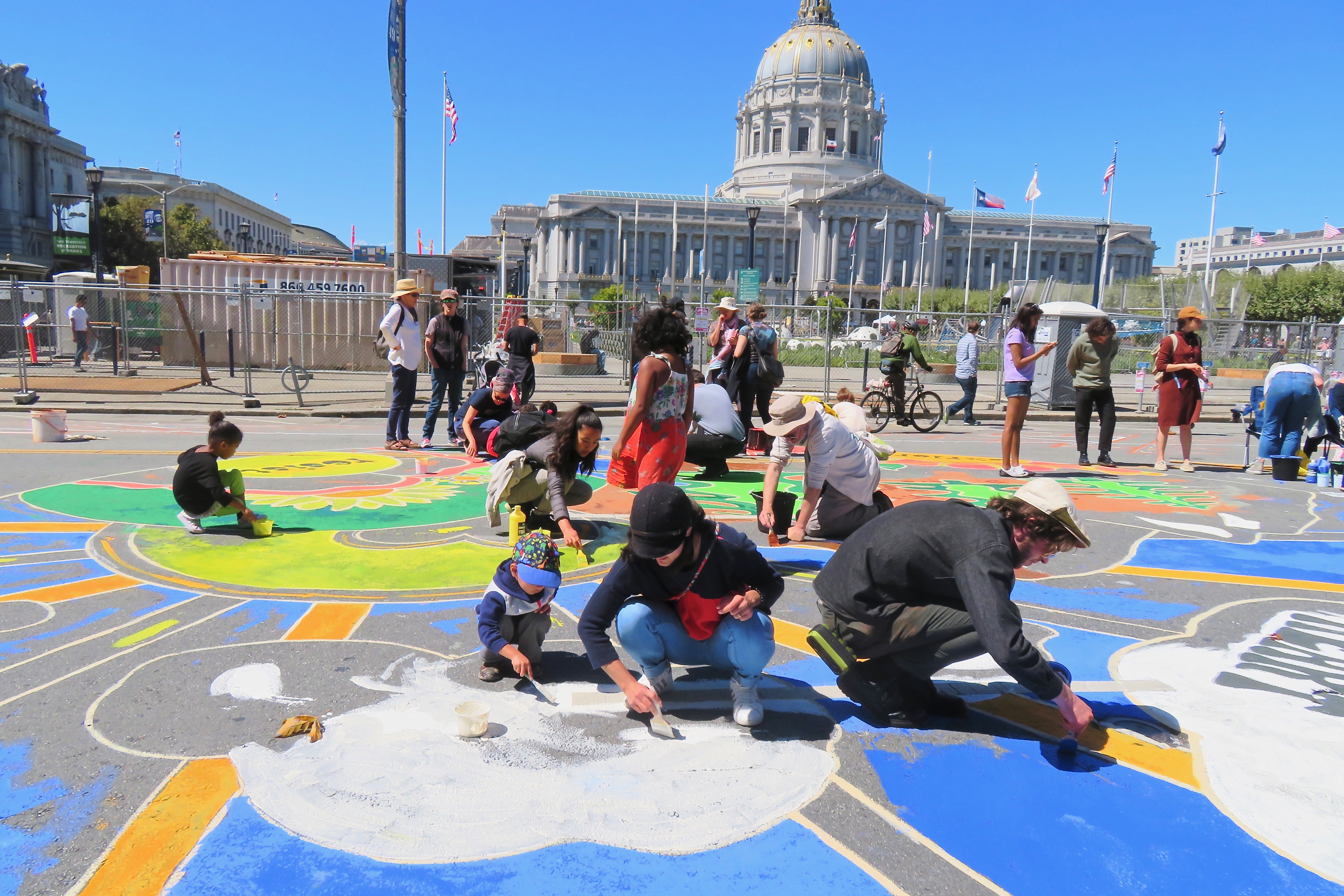
Mural created at the Climate Action March in San Francisco (2018), © Wikipedia
I think, fundamentally, we do not account for the cultural, identity, nature, and other unaccounted-for impacts of climate change within our calculus of its consequences of this global dilemma. And I think that we perhaps do not yet have the architecture and the tools—certainly not within policy-making. We have cultural expression and artistic expression of what that loss, what that solastalgia, might look like. But we have yet to translate that into a democratic politics of climate loss, and to ensure that we move in a precautionary way towards adapting to the consequences of climate change, in a way that seeks to minimise those types of losses.
Editor’s note: This article has been faithfully transcribed from the original interview filmed with the author, and carefully edited and proofread. Edit date: 2026
Discover more about
Climate loss and climate justice
Walker-Springett, K., Butler, C. and Adger, W.N. (2017) Wellbeing in the aftermath of floods. Health and Place, 43, 66-74.
Adger, W. N., Pulhin, J. M., Barnett, J., Dabelko, G. D., Hovelsrud, G. K., Levy, M., Oswald Spring, Ú., & Vogel, C. H. (2014) Human security. IPCC AR5 Working Group II Report. Cambridge University Press.
Adger, W. N., Butler, C., & Walker-Springett, K. (2017) Moral reasoning in adaptation to climate change.. Environmental Politics, 26(3), 371–390
Adger, W. N., Paavola, J., Huq, S., & Mace, M. J. (Eds.). (2006) Fairness in Adaptation to Climate Change.. Cambridge, MA: MIT Press.
Continue exploring

Explore this knowledge network
Continue exploring...
0:00 / 0:00