


And I think, like every scientist that gets diagnosed with a condition, I probably nerded out on the papers a bit too much and read more and more about the literature in endometriosis, but also realized that a lot of the questions that came up from this reading were not answered by further papers. There was this understanding that there's lots we don't understand and don't know.
Cyclana Bio, a discovery science company
Cyclana Bio is an innovative company building the whole discovery pipeline for endometriosis until the development of therapies. Its unique tissue biology approach should be crucial to cure chronic inflammatory diseases.
Cyclana Bio
27 Apr 2026
Citation-ready summary
Cyclana Bio is an innovative company building the whole discovery pipeline for endometriosis until the development of therapies. Its unique tissue biology approach should be crucial to cure chronic inflammatory diseases.
Author: Léa Wenger
Last updated: 27 Apr 2026
Key Points
- Cyclana Bio was co-founded by a scientist diagnosed with endometriosis who realized that current literature failed to answer fundamental questions about the root causes of the disease.
- The company’s mission is to build a complete discovery pipeline by collecting patient data, creating accurate human lab models, and developing multidisciplinary therapies.
- In a commercial setting, scientific success requires a delicate balance between asking profound basic science questions and maintaining a focus on translation into a drug.
- The ultimate goal is a disease-reversing cure that addresses chronic inflammatory conditions through a holistic approach involving both cellular biology and the laws of physics.
About Cyclana
I actually myself was diagnosed with endometriosis. I remember very much being in the lab, and my periods would come on and, effectively, I'd have about 15 minutes to finish whatever I was doing before I was so crippled with pain that I had to sit in a ball by the toilet and basically not move until it passed.
And at the same time, I was really exploring this idea of how you actually create, for a given disease, a therapeutic pipeline that's going to really get to the root cause when you know nothing necessarily about it. And I really believed at the time, and I still believe, that the important thing when you know nothing about a disease is first: what does that disease look like in humans?
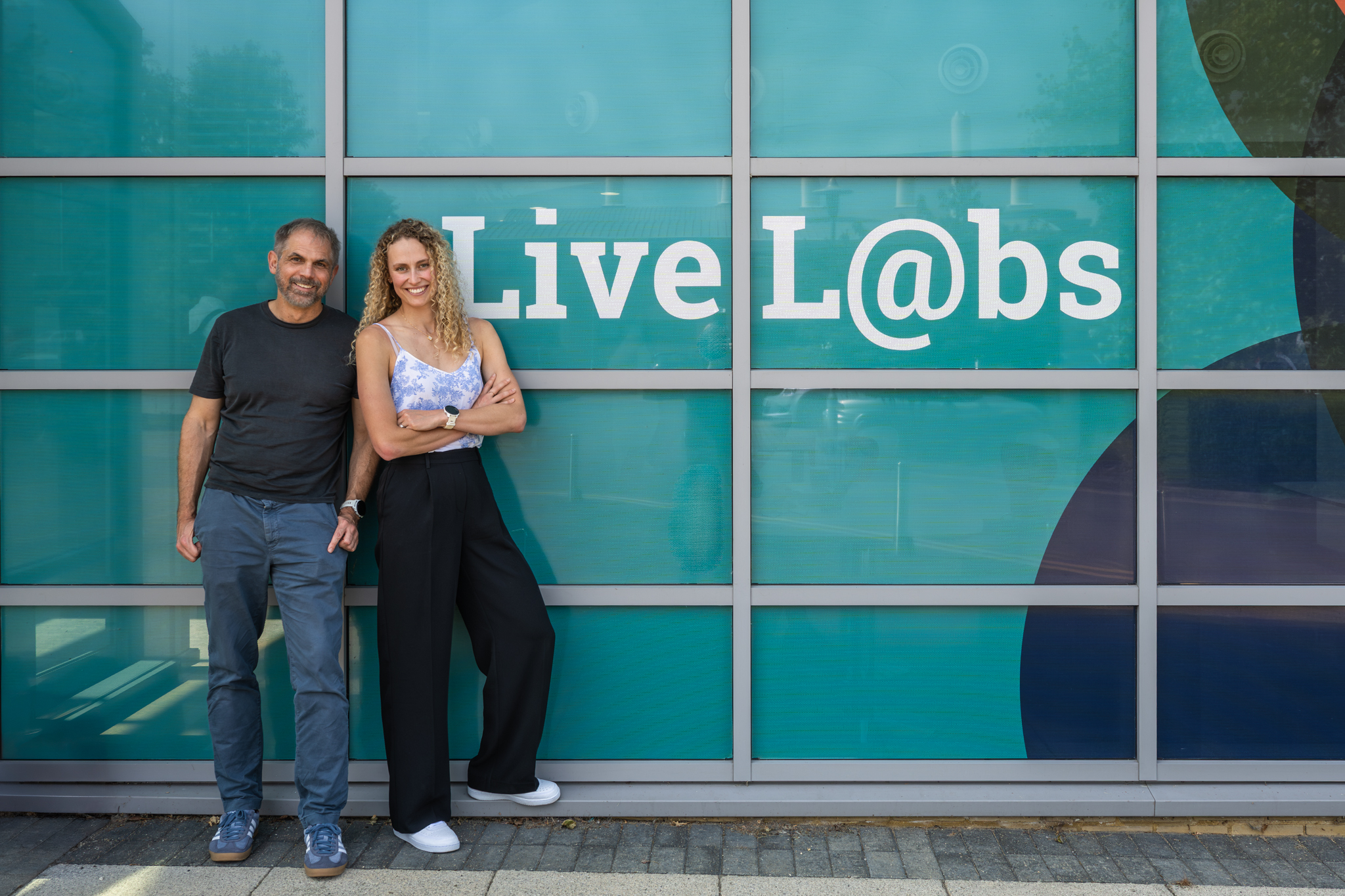
Kevin Chalut and Léa Wenger, co-founders of Cyclana Bio © Cyclana Bio
So Cyclana has quite a bold mission in that we're almost trying to build the whole discovery pipeline for endometriosis. That means collecting the data to understand the disease, but also understanding patients—who is affected, how are they affected differently, is this multiple diseases? Building the models that aren't good enough yet in the disease—so how can we actually, in the lab, in a dish, build what would look like endometriosis in humans versus control to test drugs and then develop therapies.
And to add a layer of multidisciplinarity, we're considering not just cells, but also the stuff that's around the cells, called the extracellular matrix, which is effectively governed by the laws of physics rather than biology.
A discovery company
Cyclana is a discovery company. So doing discovery science means we don't necessarily have one very well understood mechanism where we've patented all our knowledge and the company's mission is basically taking that knowledge and trying to see if it works in clinical trials.
It's very much building from the principles of: if we do the right science, the right targets will come and they will present themselves. And then it's about choosing which ones are worth taking forward.
© Cyclana Bio
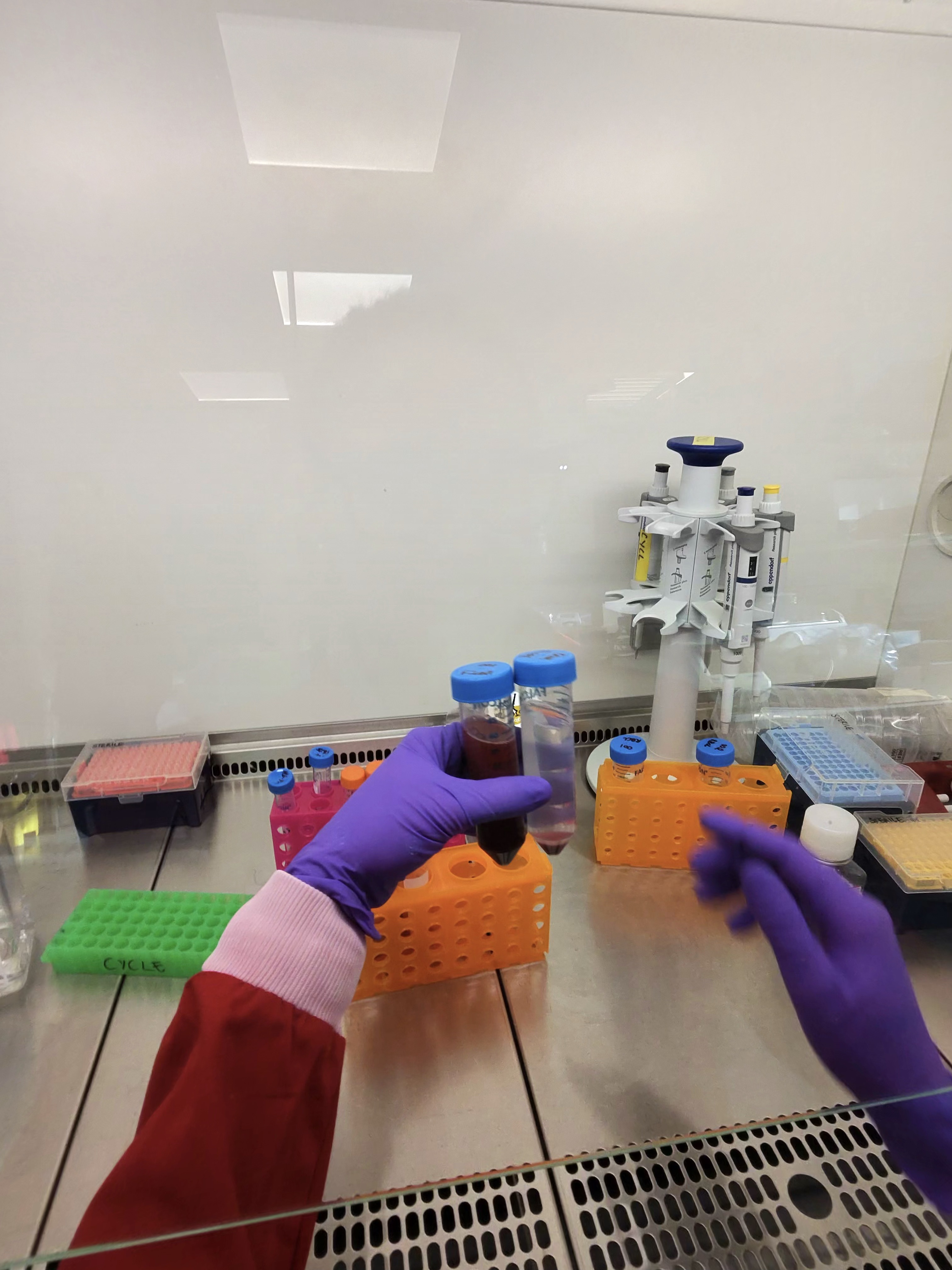
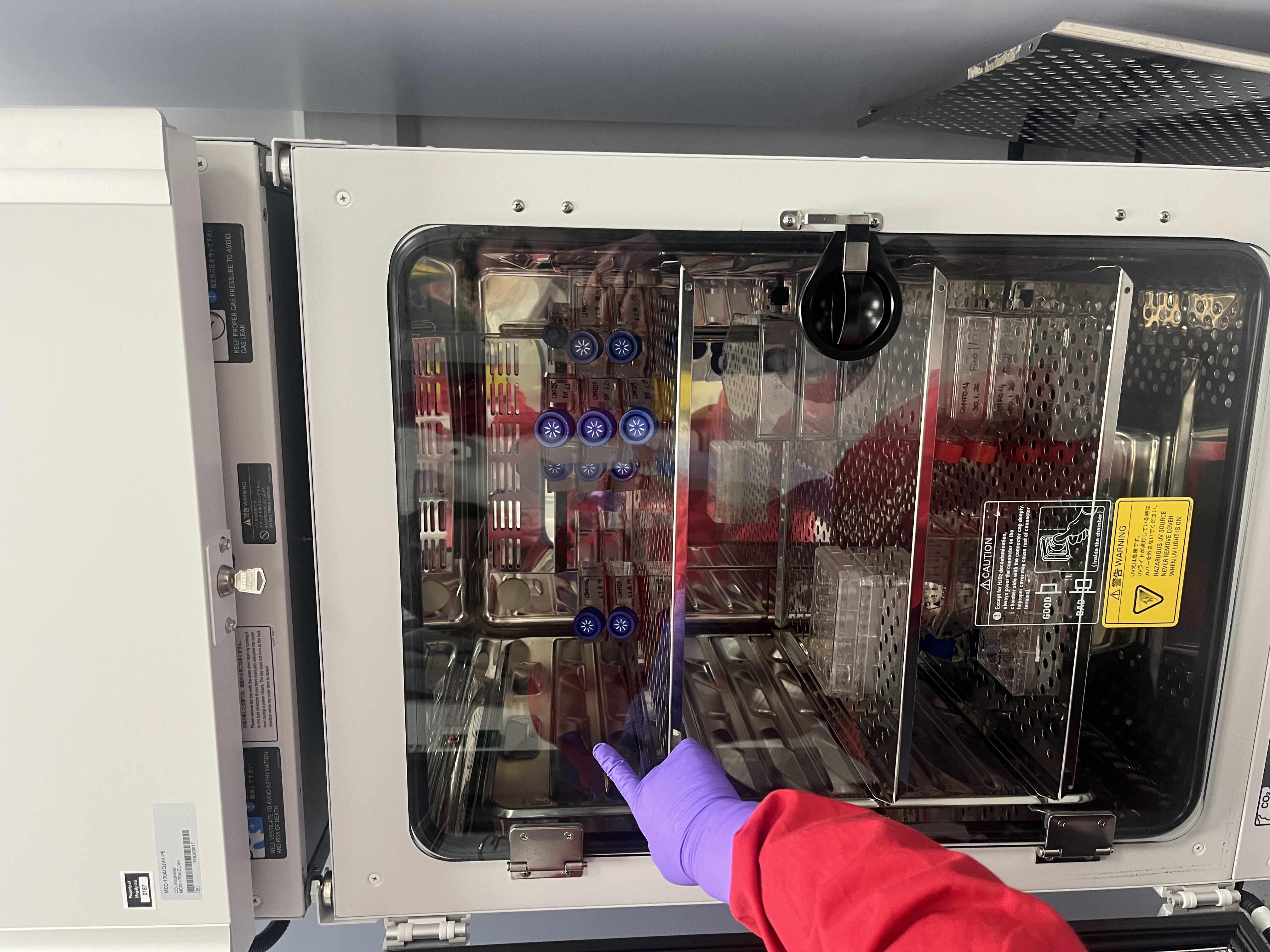
That means we are still doing a lot of discovery science—collecting data in the disease, building the models, understanding the disease process, and still testing what are the best ways of measuring it.
It's come from a desire of making sure we find something that works rather than necessarily taking one bet, because it's a disease that we understand so little about that building that profound understanding is absolutely necessary before we can commit to a given treatment and think: yes, this is the one mechanism and this is the one population in which I'm going to test it, because we still just don't know this information.
Doing science differently
There's lots of interesting questions we could ask about the data we generate, but it's also about making sure that those interesting questions we ask—which cost money and time—are really going to give us more information that can lead us to translation.
So if there's something where this is a process that could be cool, but probably won't lead to a drug for another 15 years, then we try to engage with academic partners and say: this is actually a very good problem to ask in academia. Because I do think there is huge value in asking questions that don't seem to initially have translation.
But in a company, it's about finding that balance between really doing the basic science that makes your ideas strong and makes your products and development strong, but not losing sight of that translation. Because at the end of the day, if you don't develop a drug based on your research, you're going to fail.
© Cyclana Bio
A breakthrough for us is finding a drug, a compound, something—an intervention—where women actually feel like their disease is going away, not necessarily being masked. That's what we're going after.
I think it requires a new understanding of the disease and the biology, and potentially targets that have never been targeted before—mechanisms that we've never tried to drug before. And that's really the kind of thing that we're going after for that breakthrough.
And in a way, that breakthrough also means that if we are successful, it shows that we can get disease-reversing drugs in women's health, in endometriosis, and hopefully pave the way for many more—for us to do and for others to do as well.
Facing challenges and bridging gaps
We've built the company in a way to address three major gaps in the development of a treatment for endometriosis: the data—understanding who is affected and why; the modeling—if you have a drug, do you have a way of testing if it works; and then the drug and the development of the drug itself.
How we are seeing them is effectively all fitting in with each other and really bringing a holistic approach to building those three pillars within the company. Whilst some people might be more focused on specific aspects, everyone is involved in bringing them together, because actually the data we collect—for instance motifs or backgrounds of the extracellular matrix—are going to inform the models we build, because we are almost trying to reverse engineer.
So the biggest challenge facing Cyclana today is getting to the drug. But I do think we are progressing very well with the models. We've got some really good candidates.
© Cyclana Bio
I think there are still some very wide-scale problems in developing a drug in endometriosis that we hope not to have to solve all by ourselves.
So I do think we need to have a better path to the clinic, which means a better understanding of how to select people for trials, but also how to assess how these people are responding. So adding to pain other clinical primary outcomes, or substituting it for something where we know we're getting into the real causes of the disease—can we find ways of doing that?
I think that's a difficulty that all therapeutic companies in endometriosis are facing or will face. And I hope that's something we can solve together, because solving it together will give us the best benefit.
Making a difference in the disease
We're truly driven by the desire to make a difference in the disease. It probably helps that I have the disease and I really want to find a therapy because I understand how crippling it can be.
So despite being a for-profit company, we probably have quite a strong moral compass in that everyone has joined to make a difference and to get a drug to the clinic. Hopefully we can convey that in the discussions that we have with people.
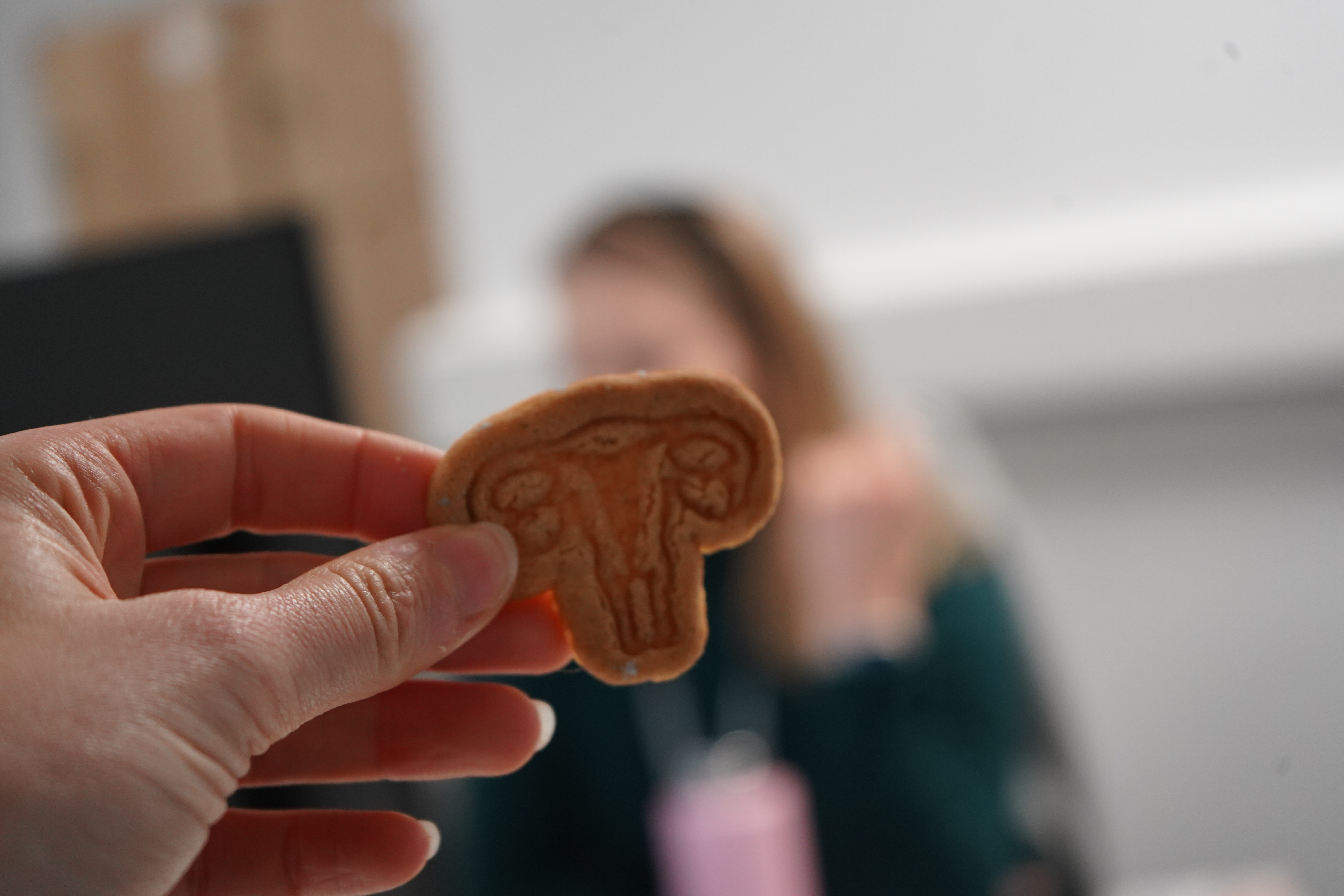
© Cyclana Bio
It's a space that is very unexplored, which means there aren't many solutions. The more solutions, hopefully the more it attracts excitement, funding, and opportunity—and then the more we all benefit from it.
I think that's the way we have to treat it, because there are already limited resources and limited funding. If we start fighting each other to get to therapy, then the people who suffer are the patients who don't get the solutions.
Changing patients' lives
So what would change for a patient? I believe, and I hope, that in the meantime diagnosis also improves, whether driven by us or by others.
That someone who is diagnosed with endometriosis isn't necessarily faced with this inevitable progression towards possibly a hysterectomy in the worst cases, but actually is able to have a treatment option that addresses and cures the disease.

© Shutterstock
I think a big worry is that these lesions are there—what happens to them in the future? So I really hope we can get to a treatment that means people feel like they're healthy again, not like they have something chronic that they have to manage, but that they can go about their lives and not worry about it.
I definitely personally felt this worry: there is this huge proportion of infertility associated with the disease. My whole career and children plan was that of a healthy person—I have to rethink that completely as someone with endometriosis.
And I want to remove not just the pain that women feel, but also all these other symptoms that come with having a chronic, incurable condition. So get to a cure. Disease-reversing.
So that's the number one goal. Hopefully that will be in less than ten years.
A better society with healthier people
The startup is really a system where you can put everyone on an equal footing and really get the best out of the team.
Everyone's voice is listened to equally, and people can work in a real team without necessarily worrying about hierarchy. And that's where I think a lot of the best discoveries come from—where people don't think about ego or self-promotion, but say: a victory for someone else is also a victory for me.

© Shutterstock
I think what makes us strong as a team at Cyclana is truly how great a basic science we're doing in tissue-level biology more broadly. And I hope that this can shed light beyond endometriosis.
So even if we do successfully get a drug for endometriosis, what can we do next? What other diseases can we address? How can we leverage this understanding we've built about tissue biology to cure other chronic inflammatory diseases and other diseases that are crippling people more broadly?
So I hope we keep doing the really groundbreaking science that is leading us to making a better society with healthier people.
Editor’s note: This article has been faithfully transcribed from the original interview filmed with the author, and carefully edited and proofread. Edit date: 2025
Discover more about
Cyclana Bio
Drory, O, 2025, Why NFX Invested in Cyclana Bio: A Bioplatform Building Physiologically Accurate Human Tissue Models.
Quinney, B, 2025, Cyclana Bio raises £5 million to develop endometriosis treatment. Drug Discovery World.
Coker, J, 2025, Eka Ventures investment in Cyclana Bio.
Cyclana Bio. LinkedIn.
Continue exploring





Explore this knowledge network
Continue exploring...
0:00 / 0:00