
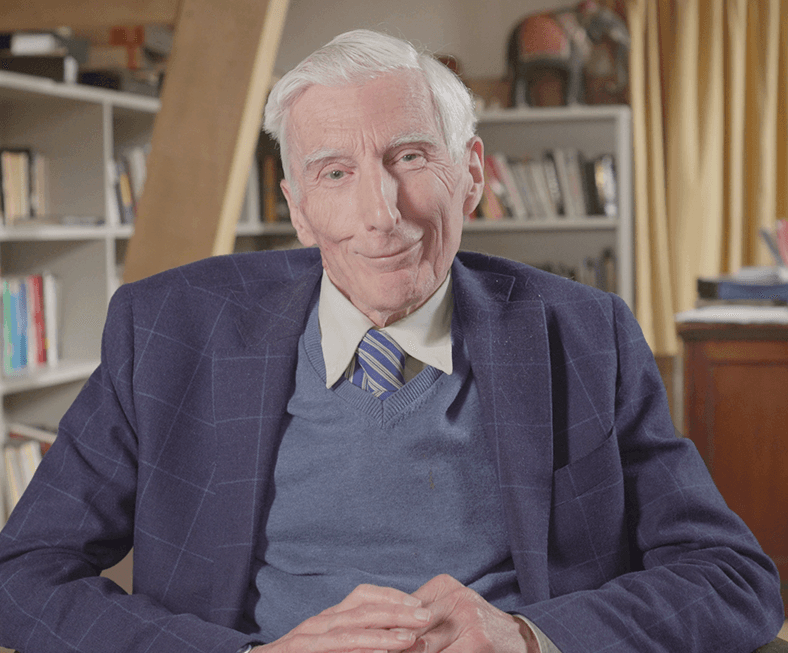

All these things are part of astronomy and what I do, and of course, pure thought does not get you very far. Thanks to improved instruments, we have made huge progress. The last 50 years of astronomy have been one of the real highlights of science, up there with the standard model of particle physics and the double helix. I have been privileged to be part of this huge cosmic exploration.
Exploring the cosmos
I have been part of a collective enterprise over the last 50 years trying to understand how the universe evolved from that beginning to its present stage – how the first galaxies formed, how the first stars formed. At the moment, we only know that life exists in one place, but if we could find it in a few nearby planets, around other stars, that would tell us that the entire universe must be teeming with life, and that will be the most fascinating discovery of all time.
Emeritus Professor of Cosmology and Astrophysics
04 Feb 2026
Citation-ready summary
I have been part of a collective enterprise over the last 50 years trying to understand how the universe evolved from that beginning to its present stage – how the first galaxies formed, how the first stars formed. At the moment, we only know that life exists in one place, but if we could find it in a few nearby planets, around other stars, that would tell us that the entire universe must be teeming with life, and that will be the most fascinating discovery of all time.
Author: Martin Rees
Last updated: 04 Feb 2026
Key Points
- Great achievements have been made in the last 50 years of astronomy, such as the corroboration of the Big Bang and the realization that our solar system is not unique.
- We can understand what the universe was like when it was a nanosecond old, but the very first nanosecond itself is still speculative, and many key features of our universe may have been determined then.
- The chemical elements in our universe are made from star explosions – we are the ashes of dead stars. This theory should be put up on the level with Darwin to understand how we and all the chemical elements were made in stars.
- There may have been many big bangs, each leading to a cosmos, maybe fully the equal of what we can see. This will be the fourth Copernican revolution
Why we study astronomy
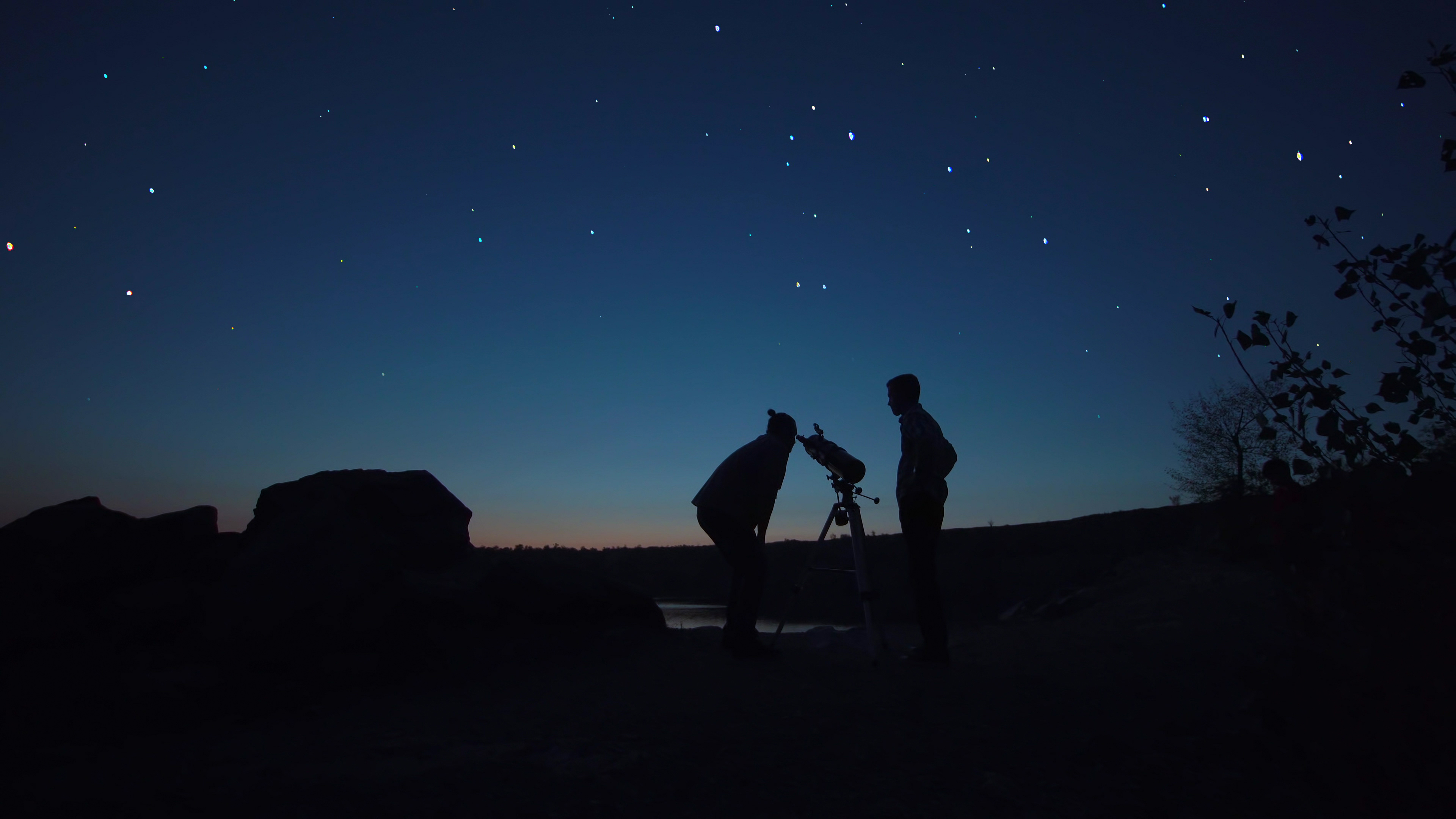
I am an astronomer, and I think there are four reasons we do astronomy. The first is simply exploration, to find out what is out there. The second is to make sense of what we see, to understand it in terms of the laws of physics and to perhaps discover new laws of physics. The third is to understand cosmic evolution: was there a beginning, and if so, then how have things evolved from that beginning to the amazing cosmos we see around us and are a part of? That leads to a final reason: the mystery of why things exist, and why the universe is the way it is.
© Shutterstock.
Expanding horizons
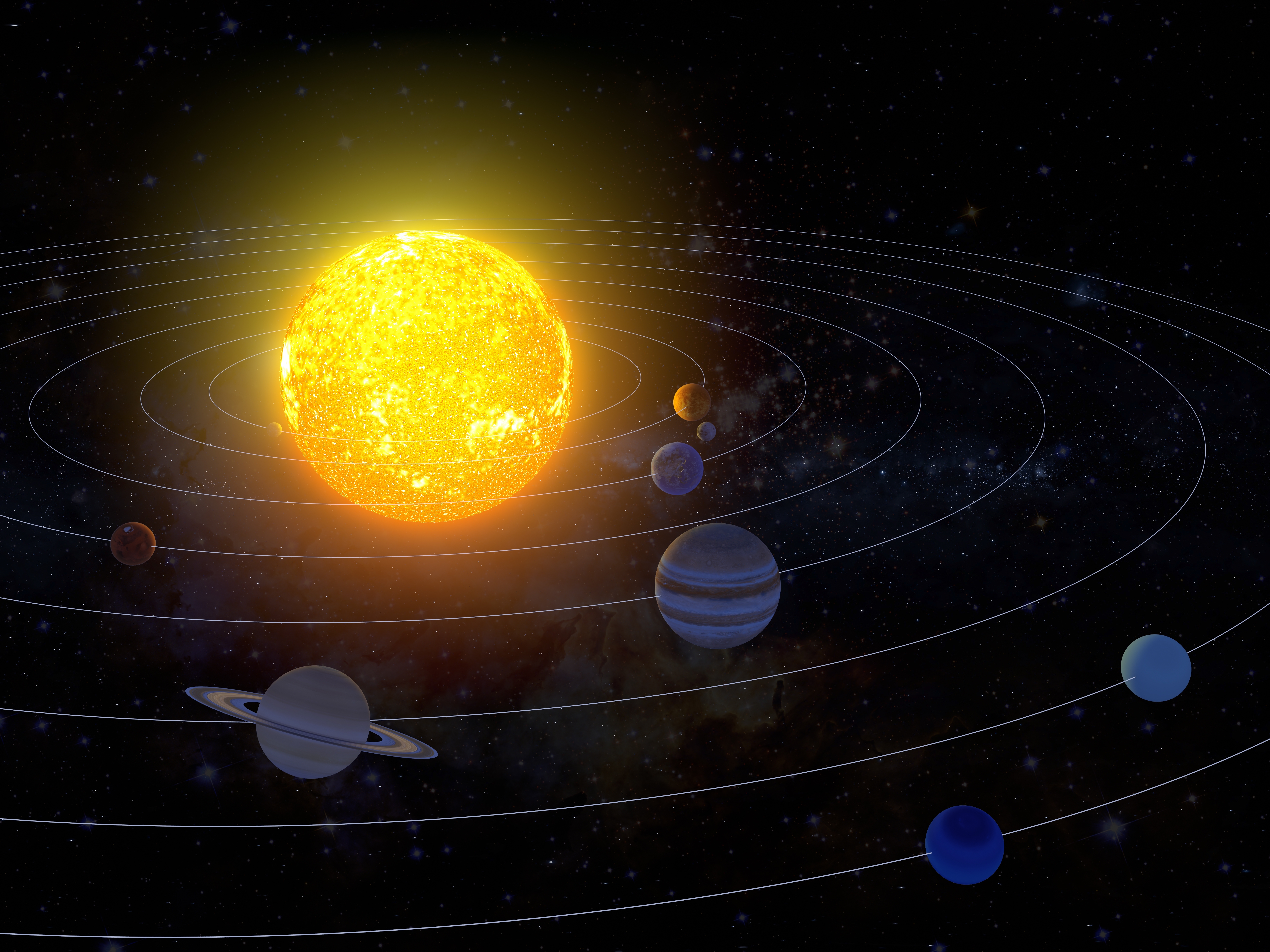
Astronomy is really a story of expanding horizons. To the ancients, the Earth was the center, and the Sun and planets orbited around it. Post-Copernicus, we realized that we are part of a planetary system orbiting the Sun. We have since realized that there are many, many other planetary systems orbiting other stars; our Sun is just one of billions of stars in our galaxy; and our galaxy is just one of many billions of galaxies that can be seen through a large telescope.
© Shutterstock.
We have realized that our entire universe is a dynamic entity. Everything started off very compressed and compact and it expanded starting about 13.8 billion years ago, and it gradually cooled down; stars and galaxies have emerged and we are coming to understand how this happened.
Steady state theory
Indeed, when I was starting my research about 50 years ago, it was not clear that there was a beginning because there was a rival theory called the ‘steady state theory’, according to which our universe had existed, as it were, from everlasting to everlasting, and although it is expanding, new galaxies formed in the gaps, as it were, as the old ones moved apart.
That theory was certainly tenable until 50 years ago. Then two things happened. First, it became possible to look at objects so far away that we were looking back billions of years into the past. In the steady state theory, things would have looked the same there as now, but it was clear that the galaxies were different far away and therefore far back in time than now, so the universe and the things in it were evolving.
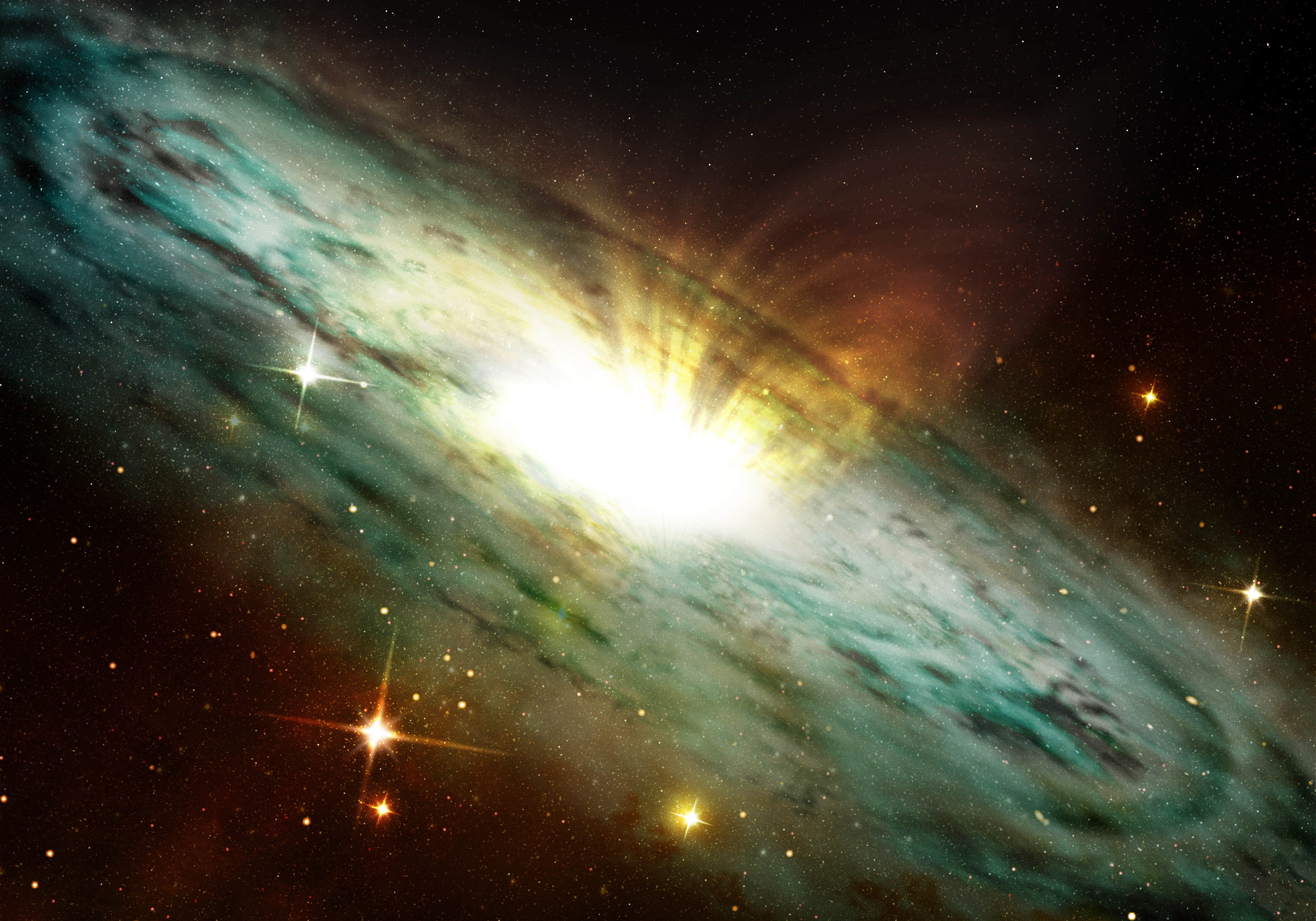
Planetary nebula glowing into deep space © Shutterstock.
Then even more important, evidence was found that the entire universe is full of microwave radiation coming from all directions, which cannot be understood except as the afterglow of the hot beginning of the universe. The universe started off hot and dense. It expanded and cooled, but this radiation is still around; it fills the universe. It has nowhere else to go. This is really unambiguous evidence that the universe had a hot, dense beginning, and later data pinned down a time of that as about 13.8 billion years ago.
Not a unique solar system
We are trying to understand how the universe evolved from that beginning to its present stage – how the first galaxies formed, how the first stars formed. Why do galaxies have the properties they do, and why do stars evolve as they do?
One of the most exciting developments in the last 20 years has been the definite realization that our solar system is not unique. Most of the stars in the sky are other suns, and they have a retinue of planets orbiting around them, just as the Sun has the Earth and the other familiar planets orbiting around it. So this is an exciting new subject. Unfortunately, these planets orbiting other stars are so faint that we cannot really see them with existing instruments, but for the next generation of telescopes, we will actually be able to study the light from planets orbiting other stars. This, of course, leads to the most exciting question, which everyone asks me when they know I am an astronomer: is there life out there?
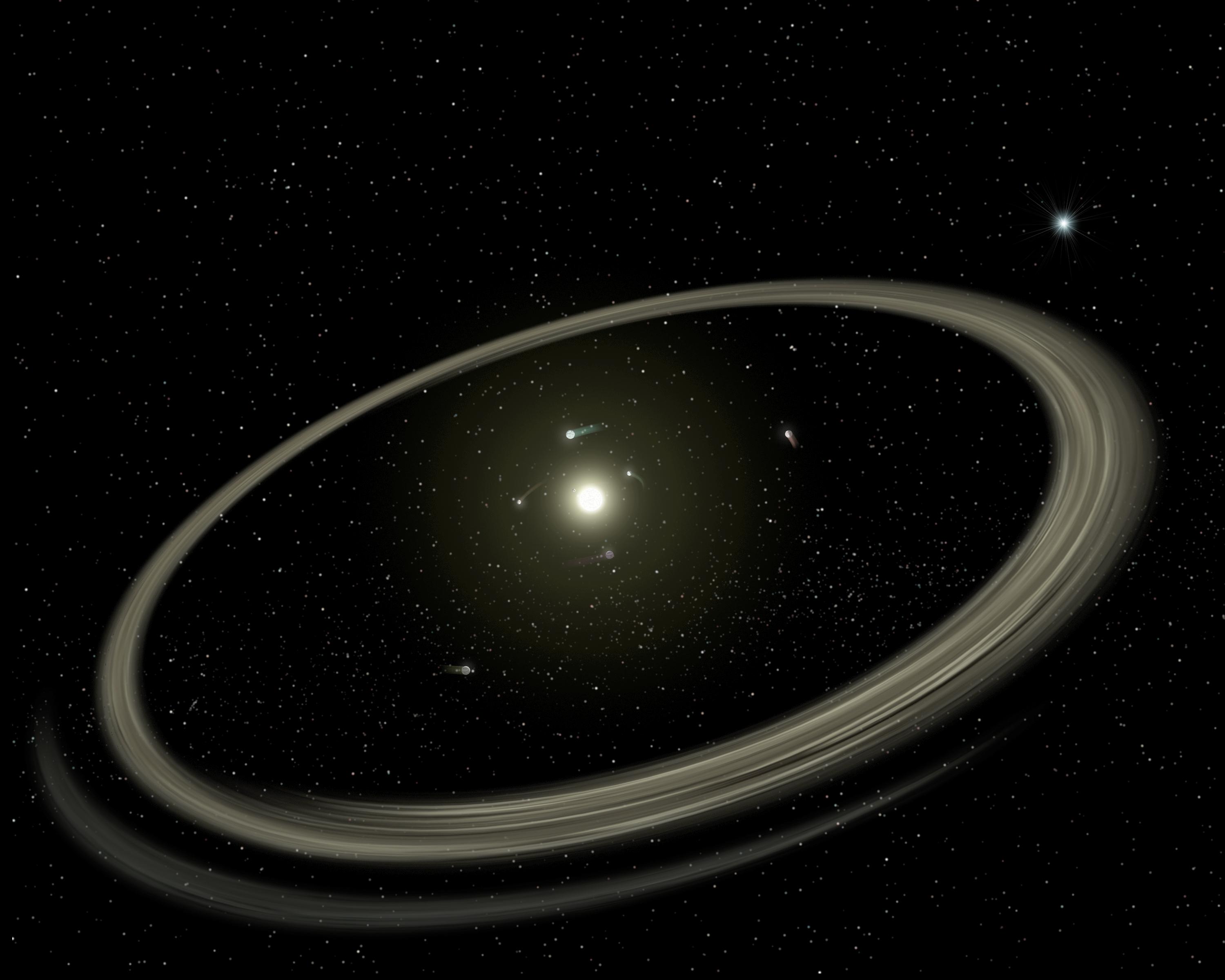
© NASA via Wikimedia.
We would like to know if on these planets around other stars there could be life, vegetation, even intelligent life. It is worth a search. Within 10 years, I think we will know whether some of these planets, like the Earth, orbiting other stars, like the Sun, have vegetation, oxygen-rich atmospheres and other indicators that there has been biological evolution. At the moment, we only know that life exists in one place, but if we could find it in a few nearby planets, around other stars, that would tell us that the entire universe must be teeming with life, and that will be the most fascinating discovery of all time.
Early stages of the universe
I have been part of a collective enterprise over the last 50 years trying to make sense of what telescopes – which are ever more powerful and varied – tell us. One area which has made great progress is understanding the early stages of the universe.
We can say what the universe was like when it had been expanding just for a few seconds. We can say that because at that time, its temperature would be about 10 billion degrees. That is a temperature where nuclear reactions occur, turning hydrogen into helium and deuterium and other substances. One of the triumphs of our understanding is that our predictions of the proportions of those kinds of atoms, if they were made in the Big Bang, agree with what is observed. We have corroboration of the Big Bang, right back to when the universe was a second old.
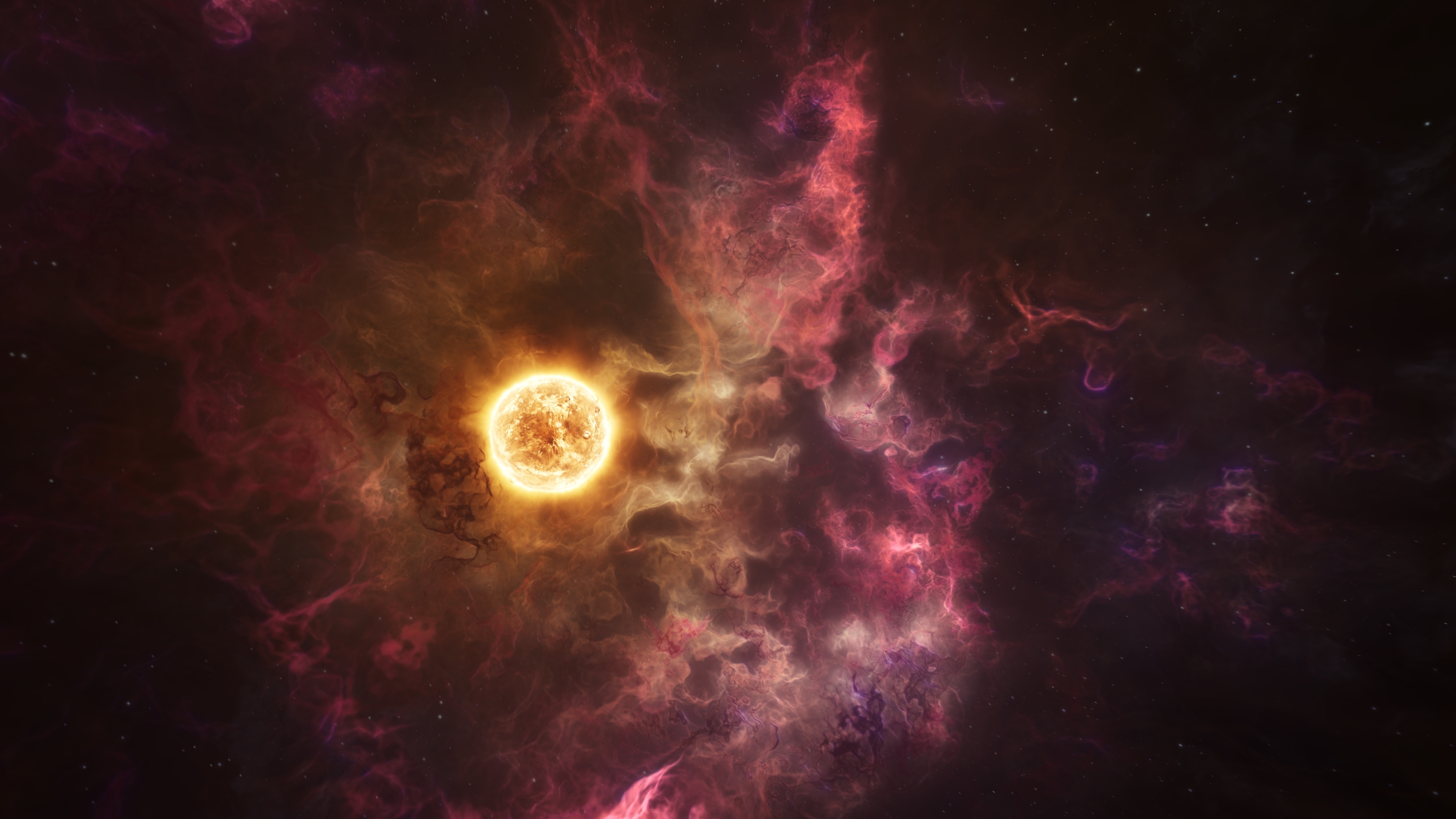
Early protostar with nebula clouds erupting of the Sun's surface © Remotevfx.com via Shutterstock.
We would like to go back even further because there are still many mysteries. In particular, we do not know why the universe is expanding the way it is. We do not know why it has the mixture of things it has: it has some radiation; it has some atoms; it also has some mysterious stuff we call dark matter. We would like to understand this. The answer to those questions requires us to understand not just the first second, but the first tiny, tiny fraction of a second.
The problem is that if we imagine extrapolating back closer and closer to the original instant, everything gets denser and hotter, and the physics become more extreme. For the first nanosecond, the physics is far more extreme than anything we can simulate in the lab, even in a big machine like the particle accelerator at CERN in Geneva.
Galaxies and stars
What we are aiming to do is to understand the galaxies and the stars in them, and we have now got a pretty good understanding of stars. Stars are really gravitationally confined nuclear reactors. They are very massive. Gravity holds them together and they are hot in the center, and nuclear fusion reactions go on inside stars, and stars gradually burn their hydrogen to helium and then they burn that helium further out of the periodic table, etc., and we can understand this. Stars eventually die. The sun has been shining for four and a half billion years, but after more than six billion years, it will run out of fuel and it will then blow off its outer layers and settle down as a white dwarf star. Heavier stars burn fuel more rapidly and therefore face an energy crisis earlier on, and then they explode. They leave behind a dense remnant, a neutron star or black hole, and blow off their outer layers, and this is something which you might think is entirely recondite and irrelevant to us, but it is crucial for our existence. To illustrate this, one of the most amazing objects in the sky is something called the Crab Nebula, which is expanding debris from a star which exploded in the year 1054 AD nearly a thousand years ago.
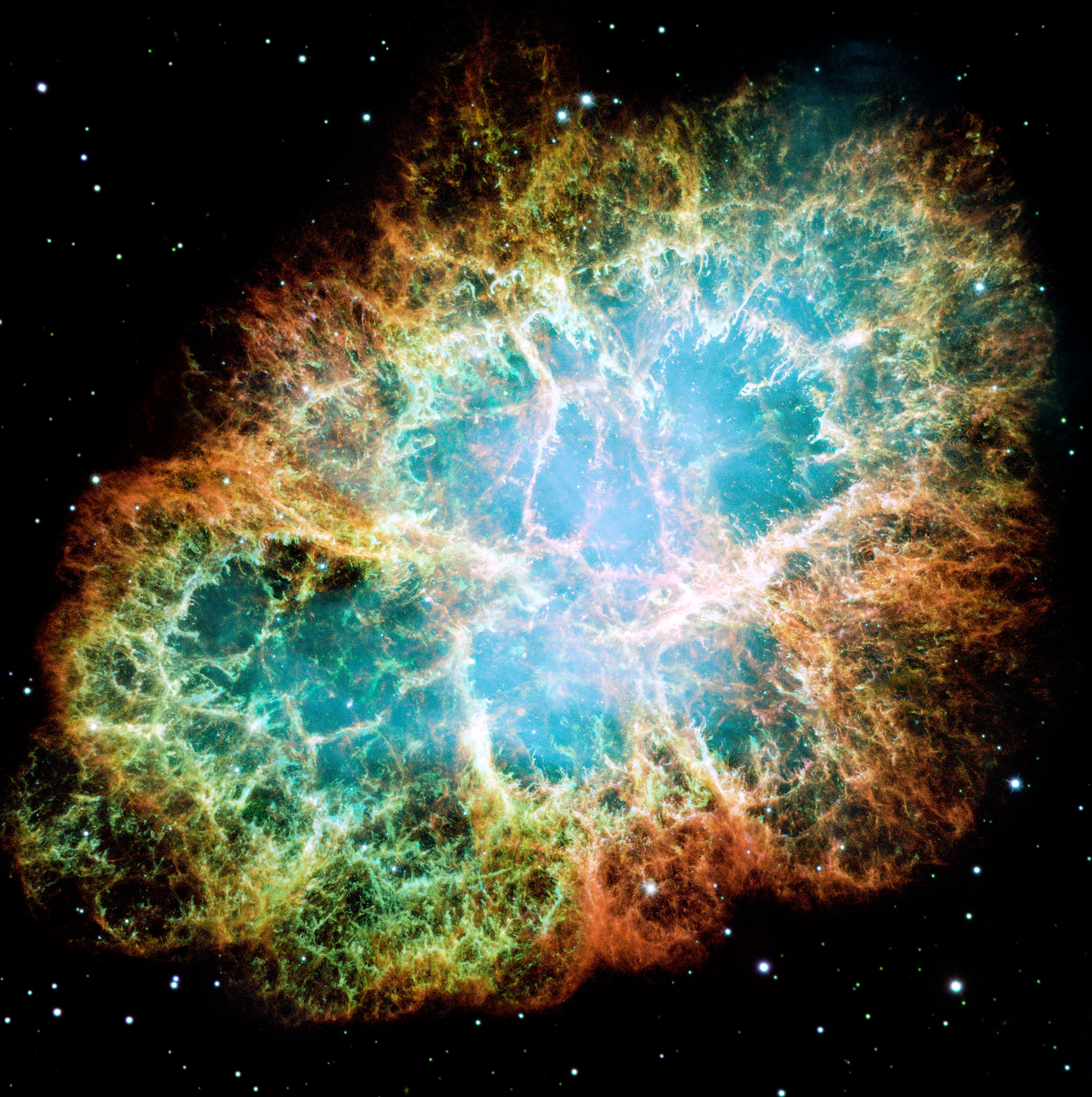
Vivid image of the Crab Nebula, showcasing bright, colorful gas clouds in space. © Rawpixel.com via Shutterstock.
This exploding star was witnessed and recorded by the Chinese court astronomer, possibly the counterpart of the astronomer royal, who reported it to the Chinese emperor that a guest star had appeared and became brighter than the moon and faded after a few weeks. At that place in the sky, we see this expanding glowing debris of the remnants of the star. Now, why is that relevant to us? The answer is we would not be here were it not for things like the Crab Nebula, because before a star explodes to make something like that, it turns hydrogen into helium, and then it turns helium into carbon, carbon into oxygen, oxygen into iron, etc. Before the star explodes, it has got a sort of onion-skin structure where the inner parts are processed higher up the periodic table, and then when it explodes, it flings out this material, which even if the star started off with just hydrogen in it, would end up with all these elements. This debris will eventually merge with the interstellar gas, and then it will form new stars.
Forged in an ancient star
We can calculate that when a massive star explodes, it flings back into space gas which has all the chemical elements in it, and that is how the chemical elements in our universe are made, and then new stars condense from those. When we look at our solar system, it contains all the atoms like oxygen, carbon and iron, etc. that we are made of, and it makes us feel an intimate part of the universe when we realize that every atom in our bodies was forged in an ancient star which lived and died before our solar system formed, which lived and died maybe five billion years ago, and then our sun and our planets condensed from gas, contaminated by the debris from earlier generations of stars.
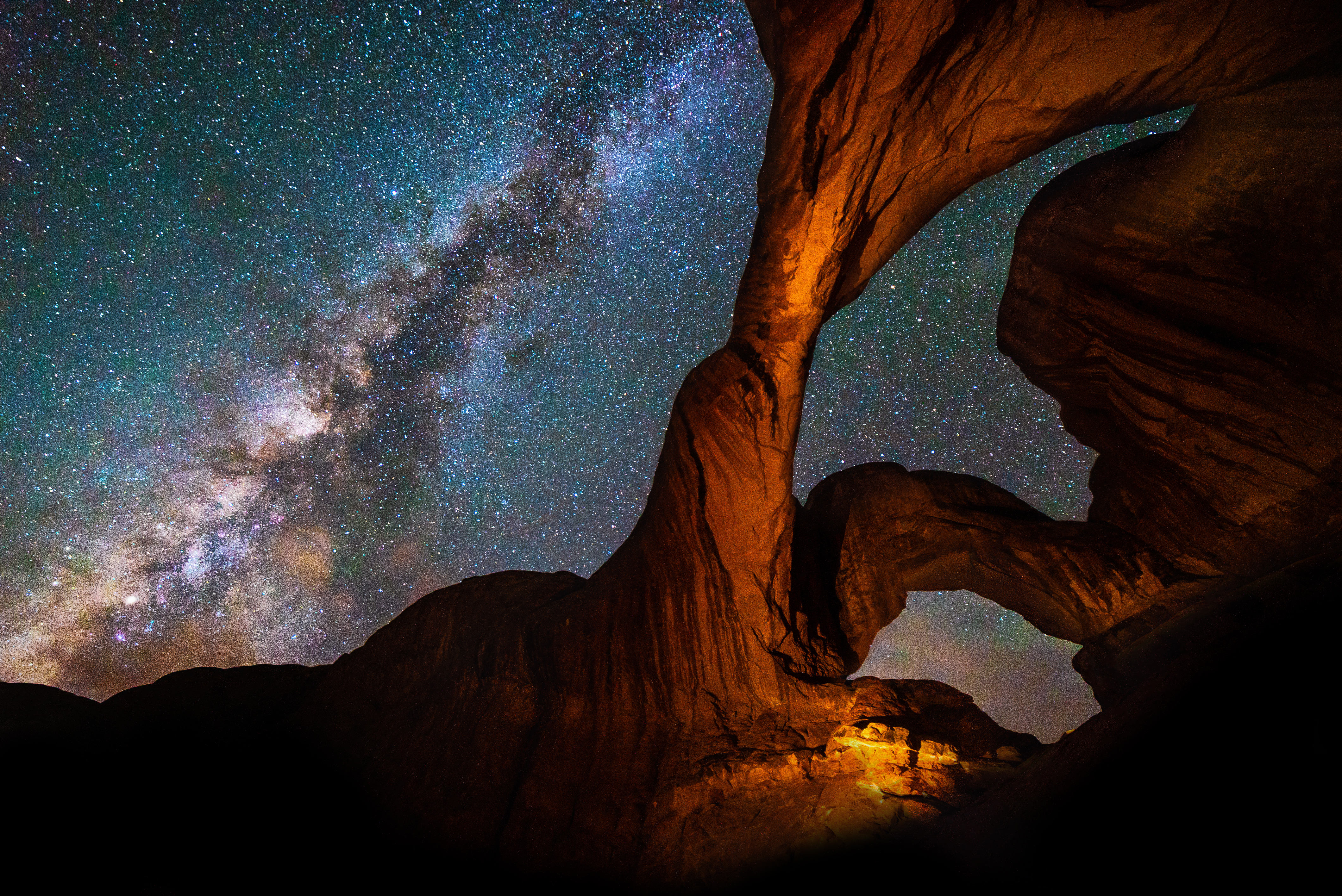
Milky Way Galaxy behind Double Arch sandstone rock formation in Arches, National Park, Utah. © Shutterstock.
We understand that we are literally the ashes of long dead stars, or if you are less romantic, we are the nuclear waste from the fuel that made stars shine. This theory, which dates back to the 1950s, is really one which is one of the great achievements; I put that up on the level with Darwin, to understand how we and all the chemical elements were made in stars.
Exploring the starry sky
We have had over the last 40 years a fairly good theory for how the particles which make up the atoms around us were made and how they interact with each other. Sometimes you can make a prediction, which is very, very hard to check. In particular, there was a particle called the Higgs boson, which was a crucial sort of capstone of a theory of particle physics, and this was predicted by several people in the 1960s, but it took nearly 50 years before we had instruments powerful enough to detect it. That corroborated the theory.
The Large Hadron Collider at CERN. © Diego Grandi via Shutterstock.
There are many other examples like that, of things we are predicting now, which cannot be tested until we have a more powerful generation of telescopes. In particular, those that excite me most are going to be telescopes able to look for evidence of life on planets orbiting other stars. This requires a very sensitive telescope, and it would be crucially important to see if life does exist elsewhere, because as far as we know now, life could be unique to the Earth. We could be such a special place that life does not exist elsewhere. On the other hand, if we can find evidence of life which had emerged independently somewhere else, maybe even in our own solar system, but probably on a planet around another star, then that will tell us that life is a crucial feature of our universe and our universe, the starry sky, is far more complex and fascinating than the ancients thought.
Fourth Copernican revolution
To make a final point, there's a distinction between the universe we can observe and the entirety of physical reality. One of the most fascinating questions to me is how much bigger physical reality is than the region we can observe with our telescopes. Everyone thinks it's very, very much bigger. The aftermath of our Big Bang extends far further than our telescopes can reach. More than that, there's an important new idea called the multiverse, which is that our Big Bang is not the only one.
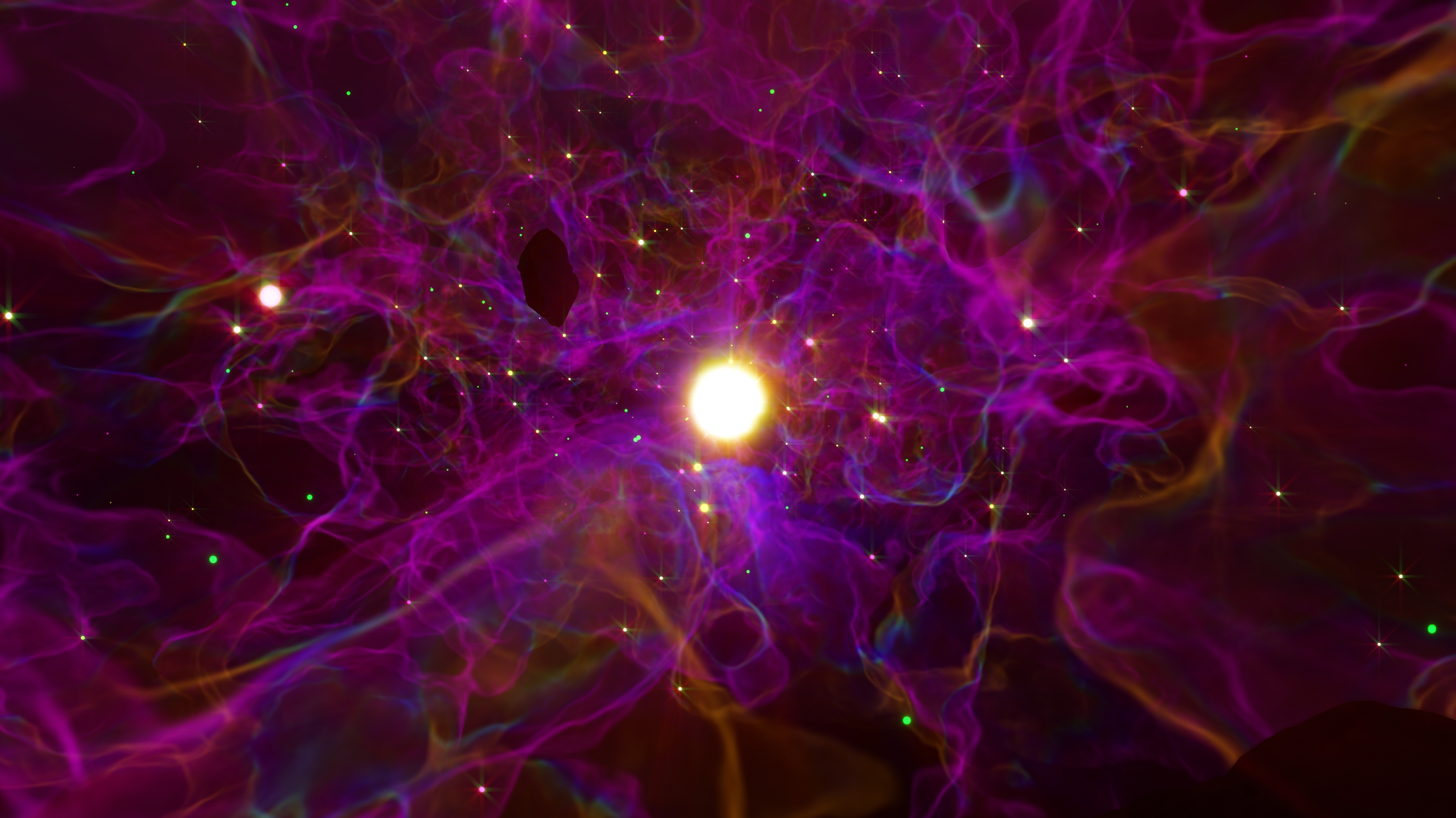
3D illustration © Urzine via Shutterstock.
There may have been many big bangs, each leading to a cosmos, maybe fully the equal of what we can see. The other question, which is crucial, is whether the physical laws governing these other cosmoses are the same as the laws governing ours. That's a fascinating question. Even though it's good for astronomy that the laws of nature are the same in all the regions we can observe, it could be that, on this hugely grander perspective, this fourth Copernican revolution, where we have not just many galaxies but many big bangs, the laws of nature display a huge variety.
Editor’s note: This article has been faithfully transcribed from the original interview filmed with the author, and carefully edited and proofread. Edit date: 2025
Discover more about
exploring the cosmos
Lightman, A. and Rees, M. (2025). The Shape of Wonder: How Scientists Think, Work, and Live. Pantheon.
Rees, M. (2022). Is Science to Save Us?. Polity.
Rees, M. (2018). Our Cosmic Habitat. Princeton University Press.
Rees, M. (2001). Just Six Numbers. Hachette.
Rees, M. (1998). Before the Beginning: Our Universe and Others. Basic Books.
Continue exploring






Explore this knowledge network
Continue exploring...
0:00 / 0:00