


Hidden homelessness tends to be described as homeless adults who can't be seen on the streets. That could be homeless adults who are sofa surfing, for example. But it can also include children with their parents, or a parent, who are also sofa surfing. And "hidden homelessness" tends to be used in relation to children in temporary accommodation, so they're not on the street and they can be hidden from public view, but we can see them within statistics. They are a very large cohort who are technically described as the hidden homeless. Temporary accommodation would typically be a hotel or a bed and breakfast. It could be an HMO, a house of multiple occupation. It could be a short-stay, self-contained flat.
Britain’s homeless children
Child homelessness is one of the most urgent yet least visible social crises in Britain today. Increasingly, it is the result of a structural debt trap—driven by rising housing costs, welfare pressures, and a shortage of affordable homes—that leaves thousands of children living in temporary accommodation and growing up without stability or security.
Professor of Urban Studies
30 Sept 2026
Citation-ready summary
Child homelessness is one of the most urgent yet least visible social crises in Britain today. Increasingly, it is the result of a structural debt trap—driven by rising housing costs, welfare pressures, and a shortage of affordable homes—that leaves thousands of children living in temporary accommodation and growing up without stability or security.
Author: Katherine Brickell
Last updated: 30 Sept 2026
Key Points
- 175,000 children are currently homeless in England, most of them hidden from public view in temporary accommodation rather than on the streets.
- Homelessness is often the outcome of a structural debt trap, where housing costs, welfare policies, financial insecurity, and domestic abuse push families, often single parents, into crisis.
- Temporary accommodation is frequently overcrowded and unstable, harming children's education, health, development, and family relationships.
- For neurodivergent children, sensory overload, lack of space, and constant uncertainty can make homelessness especially damaging.
- A home is more than a roof: children need stability, dignity, and access to affordable housing that supports their wellbeing and future opportunities.
Hidden homelessness

Homelessness is really extensive in the United Kingdom. I can give you some examples of the situation in England. An astounding 175,000 children are currently homeless across England. One in 50 Londoners are homeless, and 1 in 23 children in London are homeless and living in temporary accommodation. So there is a significant scale to the challenge. And each year, particularly in England, the numbers continue to rise.
© Shutterstock
The right to housing
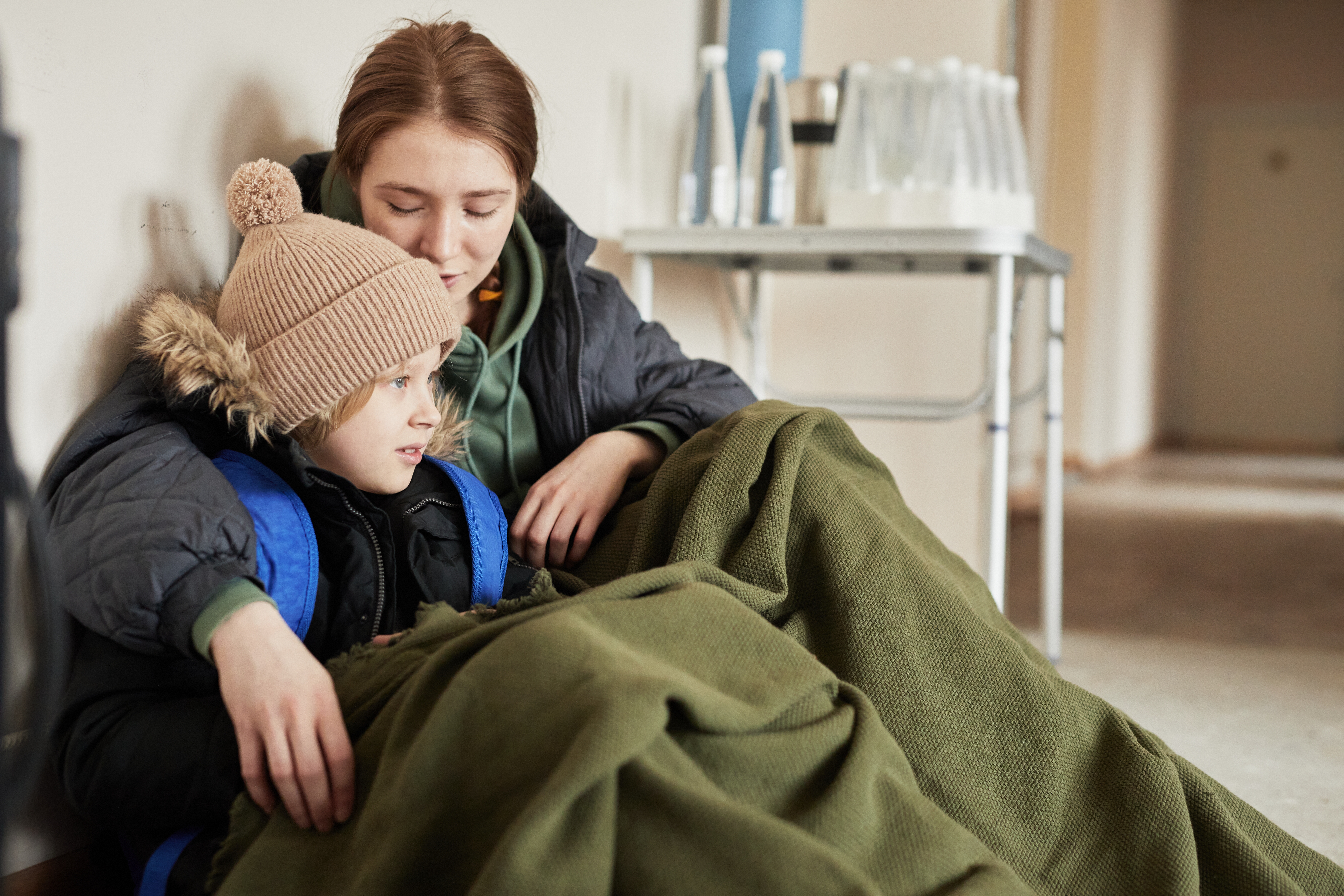
We need to make sure that the right to housing does not just mean a right to a roof, but a right to security and dignity. In international human rights law, there is a right to adequate housing. So it's not just a case of housing having been supplied. It's absolutely vital that it is adequate. And what do we mean by adequate? It must protect its inhabitants from conditions that could threaten their health and wellbeing. Temporary accommodation is a good example of something that can threaten health and wellbeing. It is not adequate.
© Shutterstock
Temporary accommodation is typically overcrowded. You can have multiple family members in one room, often being forced to share a bed. Sometimes there is not even a bed, and they are sleeping on the floor, which can create conflict between siblings who have different needs. There is also conflict in terms of a family living on top of each other with all their myriad belongings, which can create a sense of stress. This means that a child who is neurodivergent, for example, may not be able to self-regulate, may have meltdowns, and be unable to cope, which can have wider family impacts and can obviously affect the way that space is experienced.
Temporary accommodation
Temporary accommodation is incredibly damaging to children, both in the short term and in the long term. In the short term, there are significant detriments that arise from educational disruption, with children often being moved out of area. This would be across local administrative boundaries of the local authority. That means that those children can no longer attend the school they were attending, or they face significant travel times in the morning involving multiple buses, and are often late or unable to attend. That can affect educational attendance.

© Shutterstock
Short-term harms can also relate to not being able to cook within temporary accommodation. Typically, there would not necessarily be a kitchen in which to prepare food. It would be in that one room in which the family are living that they might be banned, perhaps, from having a kettle or a microwave. As a result, families often cannot provide warm, nutritious food and have to rely on expensive takeaways.
In terms of long-term impacts, we can see evidence that children often regress in terms of development, or that their development can be delayed, which can then have lifelong consequences.
Temporary accommodation for children who have a single parent is absolutely commonplace. There are huge numbers of single mothers with dependent children in temporary accommodation, and that does create significant challenges for those mothers and those children. Visitor bans, for example, mean that those mothers can't get the support they need in terms of parenting and childcare. When you're in temporary accommodation, there is huge pressure on that relationship. It also means financially that you have only one income, potentially, supporting that household. So the financial precarity can be higher in those instances.
The debt trap
The debt trap is not simply something that households have been pulled into. By that, I mean that debt has become a necessity for survival for so many on low incomes, but that debt trap has been produced through policy decisions around welfare and through the lack of investment in social housing that have actively pulled families into this debt trap and so often into homelessness.

© Shutterstock
Being in a debt trap is not always, and in some cases never, because of some sort of personal failing. It is often for structural reasons that a family may have fallen into rent arrears, given the spiralling costs of the private rented sector. For women, for example, it can be because of domestic abuse, where there has been something called coerced debt — where a woman is coerced into taking on debt, or a partner has sabotaged the payment of rent, which means you then get rent arrears, which means that you can be evicted and become homeless.
Children's voices

Children have talked about the embarrassment of having one room in which there is a fridge next to their bed, and of their friends commenting on this — perhaps being ostracized, feeling stigmatized, and not being invited to playdates. So this life in temporary accommodation really affects their sense of self, their community, and the way that they build friendships. That's a really telling example of the way that temporary accommodation so often undermines a child's confidence.
© Anthony Luvera
Children's sense of safety is so tied to a sense of stability, and that is fundamentally undermined by life in temporary accommodation because you don't know when you're going to be moved. You could be moved at any time. It's a very small space, and that's why it's so undermining. They don't have the kind of root that is provided through a home. And so often that means that school is the only anchor, the only root that they have left. Parents often spend vast amounts of money and vast amounts of time trying to get their child to that original school, because that is the only sense of stability that they have.
The role of schools

A key development has been that the government has now passed a law in the Children Welfare Bill, which means that schools, for the very first time, along with GPs, will be notified when a child becomes homeless. And that's really important in terms of schools being on the frontline of supporting students. But it also means that those schools will need further resources to be able to offer support to children who are homeless. Again, that's an important step forward in terms of identifying those children, helping to break hidden homelessness, and ensuring that schools understand the situation that children are in.
© Anthony Luvera
Sometimes what we see is that children may be deemed truant or may be excluded from school for certain behaviours that are actually the outcome of being placed in extremely harmful and distressing temporary accommodation. So schools need to be upskilled to understand what child homelessness looks like and its impacts in order to be able to support their students.
Scholars' responsibility
In my view, scholars do have a responsibility to think about the way that their research can travel, that it can fulfil a sense of societal mission, and that it can do important and good work in the world — be it influencing the way that new laws are formed or influencing greater accountability and action for highly vulnerable groups. This could be, for example, around children in temporary accommodation — although not a small group, with 175,000 children in temporary accommodation. There really is an onus on academics to contribute to improving the situation through their research, improving understanding, and increasing pressure to act.
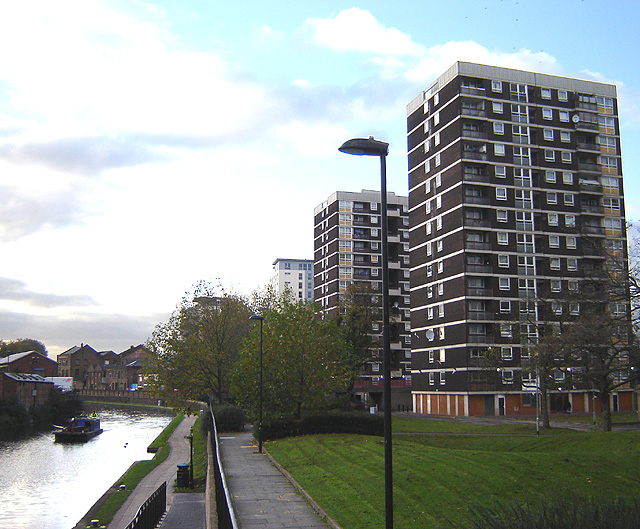
© Wikimedia
What is clear is that the government needs to pay greater attention to the needs of neurodivergent children who are facing poverty and homelessness. Neither in the Child Poverty Strategy nor in the new National Action Plan to End Homelessness is this hyper-vulnerable cohort of children mentioned in plans to ameliorate the situation.
The first thing that I would do in addressing this crisis is ensure that local authorities know how many children they have who have an EHCP — an Education, Health and Care Plan — and who those children are.
The two biggest costs to local authorities at the current time are temporary accommodation and special educational needs.
Local authorities need greater funds to be able to address the needs of the populations for which they are legally responsible, particularly when it comes to children. So it's really important that central government funds local authorities properly to enable them to protect those children as effectively as they can. At the intersection of children in temporary accommodation who are neurodivergent, the risks are so high that affordable housing is absolutely key. We need to build more affordable housing that is social housing, and that is mission-critical if we are, in the coming decades, to turn the tide on the child homelessness emergency. It's about harm mitigation and trying to think about creative means of addressing this emergency.
Editor’s note: This article has been faithfully transcribed from the original interview filmed with the author, and carefully edited and proofread. Edit date: 2026
Discover more about
homeless children
Brickell, K., Nowicki, M., (2025), Debt Trap Nation: Family Homelessness in a Failing State. Edinburgh University Press.
Warnock, R., Brickell, K. & Keast, M., (2026), 'It's Like Torture': Life in Temporary Accommodation for Neurodivergent Children and their Families. King's College London.
Brickell, K., Jeffrey, A., McConnell, F., Ahearn, A., Calkin, S., Klosterkamp, S., (2024), The Secret Geographer: Thinking Aloud on Legal Engagements in Scholar-Activism.
Continue exploring





Explore this knowledge network
Continue exploring...
0:00 / 0:00