


But then, when I went to Russia for the first time for an extended period in 1991–92, arriving just three months before the Soviet Union fell, I was taken aback by how much the Russians I knew disliked him. They thought he was pompous, a chatterbox, and they disparaged his southern accent. Above all, they disliked him for presiding over an economic meltdown and the collapse of the Soviet Union's great power status. I have become increasingly puzzled by the most important decision he took: namely, to subject this one-party state to competitive elections in 1989.
Gorbachev’s Failed Revolution
Mikhail Gorbachev’s decision to introduce competitive elections into the Soviet system unleashed nationalism, weakened Communist authority, and accelerated the collapse of the USSR, making him a hero in the West but a deeply controversial figure in Russia.
Professor of Modern History
17 May 2026
Citation-ready summary
Mikhail Gorbachev’s decision to introduce competitive elections into the Soviet system unleashed nationalism, weakened Communist authority, and accelerated the collapse of the USSR, making him a hero in the West but a deeply controversial figure in Russia.
Author: Stephen Lovell
Last updated: 17 May 2026
Key Points
- Mikhail Gorbachev is a figure who profoundly divides historical opinion, viewed as a heroic peacemaker in the West but often resented in Russia for presiding over an economic meltdown and the collapse of the Soviet Union.
- The introduction of competitive elections in 1989 was a radical departure from decades of choreographed, single-candidate Soviet elections that had served as symbols of loyalty rather than offering any democratic choice.
- Gorbachev’s reforms were driven by an urge to revitalize Soviet democracy mixed with cosmopolitan admiration for Western parliamentary norms but were undermined by his underestimation of political opposition and the national question.
- While the early competitive elections fostered a surge of optimism, the long-term integrity of the process eroded as patriarchal power structures and incumbent elites reinvented themselves, leading to an increasingly authoritarian pattern in the 21st century.
The Unpopularity of Gorbachev
I started learning Russian in the late 1980s and became aware of Russia at the same time. One of the reasons I began paying attention was that things suddenly started to get very interesting in the Soviet Union. There was this new leader, still pretty young and charismatic, called Mikhail Gorbachev, who had come in and seemed to be carrying out a radical program of economic and political changes. At the time, as a naive teenager, I took this for granted: of course, Gorbachev was a good guy who would want to conduct liberal reforms and make overtures of friendship or partnership to the West.
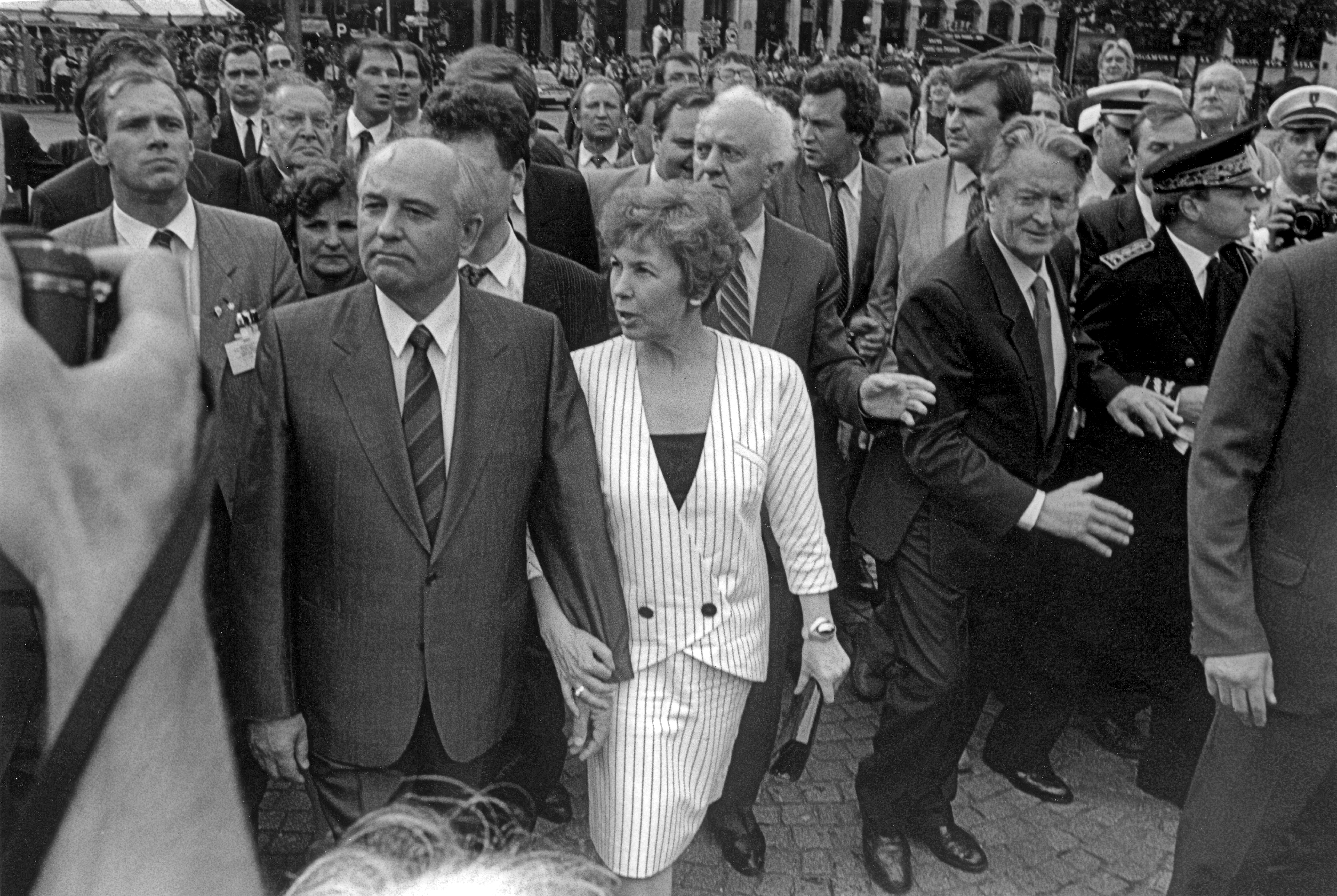
Mikhail Gorbatchev, 4 July 1989, © Wikipedia
A radical move
To understand what a radical move this was, you need to take a look back at how elections had functioned in the Soviet Union up to that point. In 1937, Stalin had established a universal suffrage Soviet parliament called the Supreme Soviet. Most striking to a Western liberal observer is the fact that Soviet people in 1937 did not even nominally have a choice: there was only one candidate on the ballot paper.
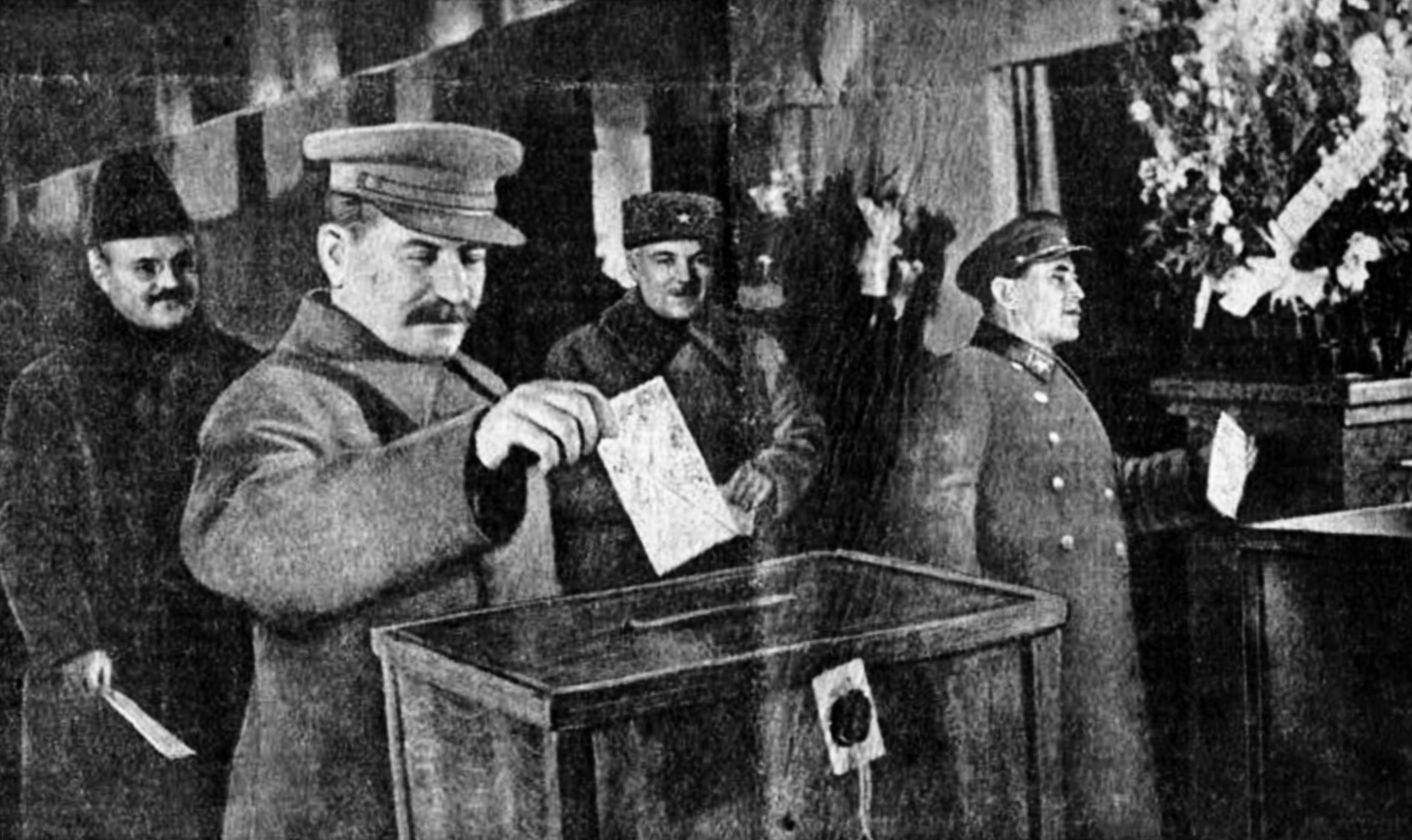
Stalin © Wikimedia
Over the decade or two that followed, this system was extended with a large amount of coercion to newly annexed Western borderlands occupied during and after World War Two. But over the decades that followed, this system became normalized. For the state, it was a useful ritual of loyalty and cohesion; for ordinary people, it was a holiday when better food, drink, and entertainments were available at polling stations.
Disrupting the system
Gorbachev comes along and disrupts the whole system with the decision to establish largely competitive elections in 1989 to a Congress of People's Deputies, and then fully competitive elections at the level of the fifteen individual union republics. This gave a platform to his opponents and made it impossible for him to set the agenda as he had done in his first years in power. One of the iron laws of history seems to be that incumbent political elites never broaden the suffrage just out of the goodness of their heart; they must be under pressure.
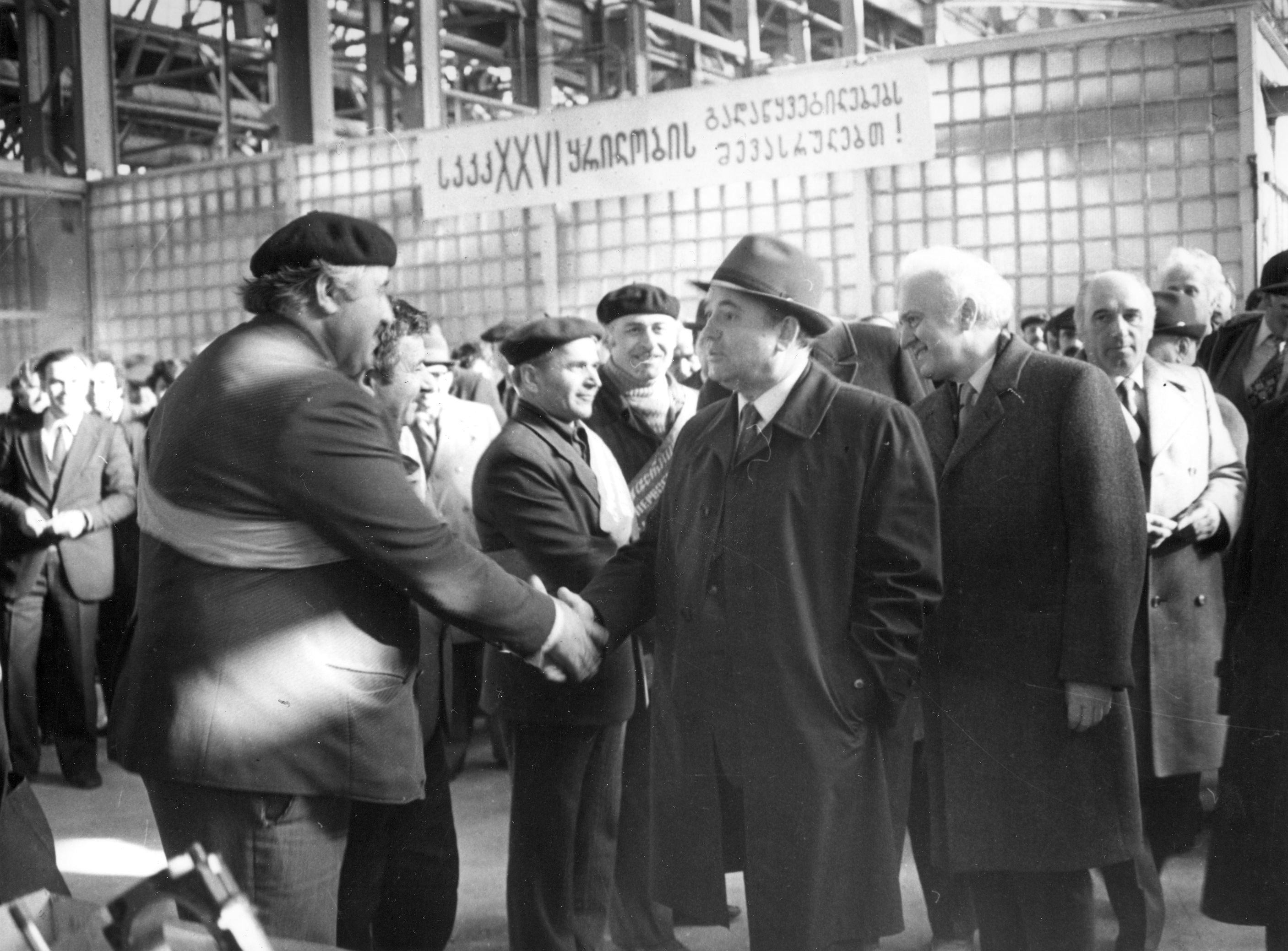
Gorbachev on a visit to Georgia in 1983, © Wikipedia
Yet, when Gorbachev came to power, there was no significant popular or within-system pressure to democratize. Many political scientists thought he was using elections tactically to clear out the diehards and deadwood in the party establishment who resisted economic reform. There is something to that, but it doesn't completely explain it. You don't get to be General Secretary by being naive, and there were other ways of getting rid of opponents than subjecting the whole system to competitive elections.
The rise of nationalisms
I would point to two very distinctive circumstances. One is that he underestimated the national question. Like many Russians, he took for granted the Soviet Union as a supranational state, and he was shocked when apparently loyal communist politicians in the Union republics used the opportunity of competitive elections to rebrand themselves as nationalists.
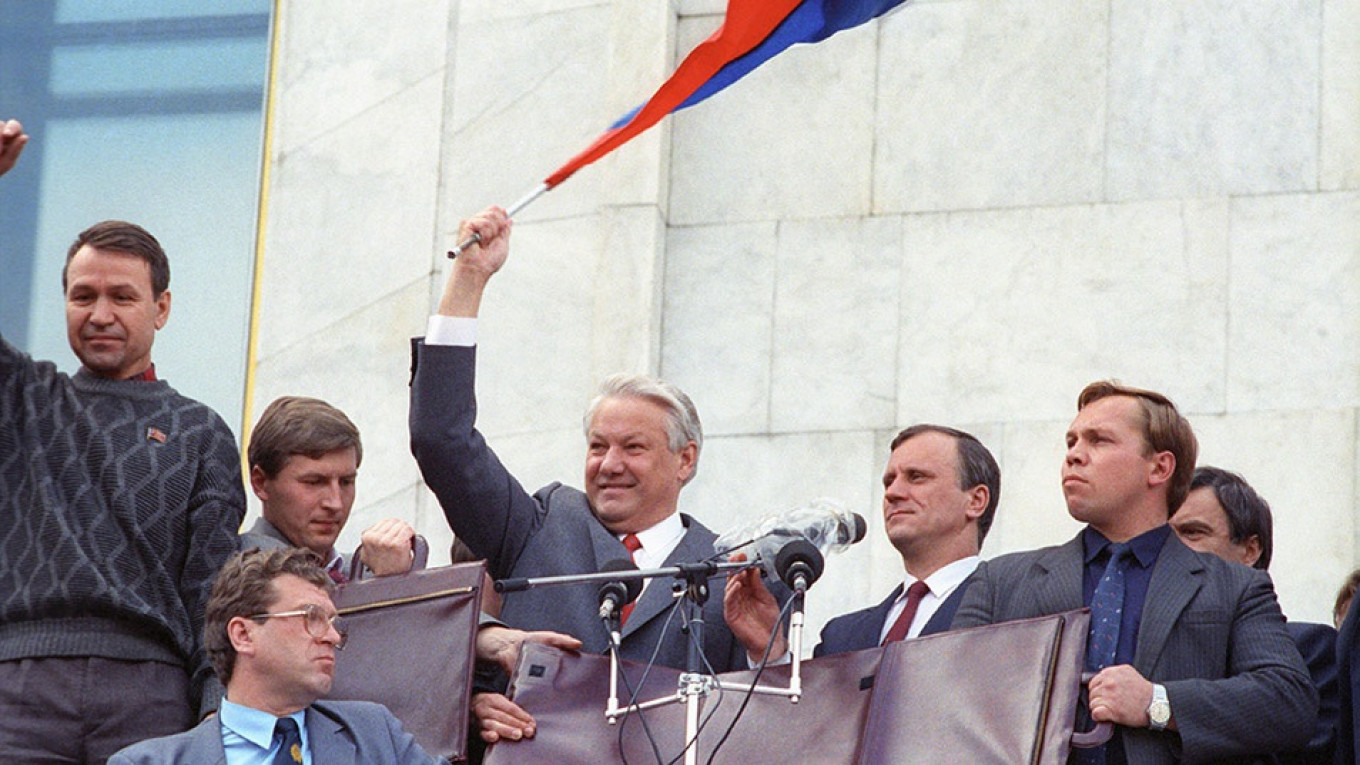
Yeltsin on 22 August 1991, © Wikipedia
The Soviet Union had always been notionally a federal state where republics had the right to leave on paper, but it was kept on a tight leash by the Communist Party. The problem with Gorbachev's competitive elections is that they suddenly gave real political expression and a platform to the nationalism that had already been fostered by seventy years of Soviet-style nation-building.
Cosmopolitan outlook
The other explanation is that Gorbachev and his reforming generation were much more cosmopolitan in outlook than their predecessors had been. Although they didn't particularly advertise the fact, they had quite a lot of admiration for the West in its liberal democratic parliamentary version.
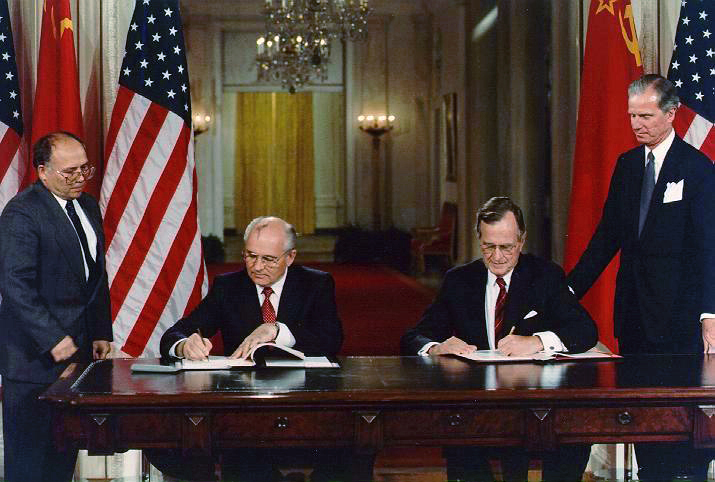
On 31 July 1991, Mikhail Gorbachev and George H. W. Bush signed the START I Treaty, © Wikipedia
This was a global parliamentary moment when democratic elections were becoming the norm, a norm to which Gorbachev and his inner circle increasingly gravitated. He instinctively felt that his country belonged in the Western liberal democratic club, and he underestimated the costs of that path for his own power and for the state that he headed.
What did change in Russia
Taking part in these elections in 1989 and 1990 was an inspiring but disorientating experience for many Russians who had no experience of such competitive exercises. In the short term, it made a great difference: communist functionaries were voted out of office, and there was a great surge of optimism.
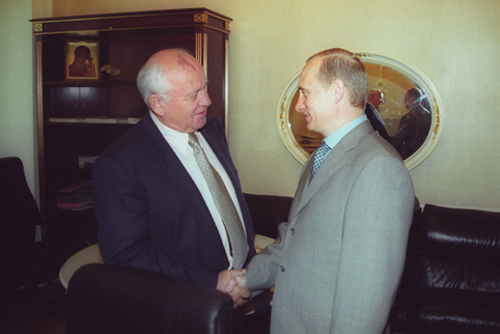
Gorbachev and Putin in 2000, © Wikipedia
In the medium to long term, however, there was perhaps less change than met the eye because functionaries had ways of reinventing themselves, and power still operated in patriarchal ways in local communities. By the early 21st century, the integrity of the electoral process eroded, and ways were found—mostly stopping short of outright falsification—to ensure a secure vote for the incumbent party and President Putin. The political system unfortunately settled into an increasingly authoritarian pattern.
Hero or villain?
It is rare for there to be a political figure where there is such a huge disjuncture between the way they are viewed at home and the way they are viewed outside. In the West, Gorbachev is seen as a hero who ended the Cold War without violence—a remarkable world-historical achievement.
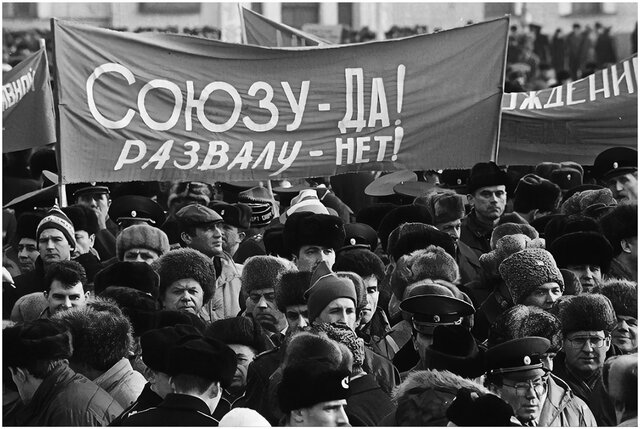
Yes to the Union, no to collapse! © https://iohotnik. ru/novosti/104327-lyudi-vyskazalis-za-sohranenie-sssr.html
On the other hand, we have the Russians who resent his decisions and a program of political reforms that rapidly destabilized the system. It is worth taking seriously the view that these reforms were ill-thought-through and misguided, taking full account of the feeling of disorientation and ressentiment that Russians felt as a result throughout the 1990s and into the early 21st century.
Editor’s note: This article has been faithfully transcribed from the original interview filmed with the author, and carefully edited and proofread. Edit date: 2026
Discover more about
Gorbachev's failed revolution
White, S, (1991), Gorbachev and After.
Brown, A, (1996), The Gorbachev Factor.
White, S et al, (1997), How Russia Votes.
Colton, T J, (2000), Transitional Citizens: Voters and What Influences Them in the New Russia.
Taubman, W, (2017), Gorbachev: His Life and Times.
Zubok, V M, (2021), Collapse: The Fall of the Soviet Union.
Lovell, S, (2026), The Parliamentarization of the Soviet Union: Gorbachev and Representative Democracy. English Historical Review, forthcoming.
Continue exploring


Explore this knowledge network
Continue exploring...
0:00 / 0:00