


The planet that was discovered orbits the star in under a week, and it's the size of Jupiter — the largest planet in our solar system, about 11 times the radius of the Earth — but orbiting the star 20 times closer than we are to the Sun. This was something that we just never, ever expected. It was a hard-fought discovery that took hundreds of years of preparation to get to the point where we could actually say: we've discovered an exoplanet, and it was unlike anything we had imagined.
Making planets
Exoplanet research is fundamentally about understanding the diverse ways that worlds are constructed and how they evolve within their stellar environments. By analyzing the chemistry and physics of these extreme alien worlds, we can determine where a planet was born and uncover the universal mechanisms that govern planetary formation.
Associate Professor of Astrophysics
31 May 2026
Citation-ready summary
Exoplanet research is fundamentally about understanding the diverse ways that worlds are constructed and how they evolve within their stellar environments. By analyzing the chemistry and physics of these extreme alien worlds, we can determine where a planet was born and uncover the universal mechanisms that govern planetary formation.
Author: Hannah Wakeford
Last updated: 31 May 2026
Canonical URL: https://www.joinexpeditions.com/exps/1414-making-planets
Key Points
- Exoplanets, which orbit stars other than our Sun, come in architectures vastly different from our own, such as "hot Jupiters" that orbit their stars in under a week.
- The most common type of planet in our galaxy is a size between Earth and Neptune—an example that does not exist within our own solar system.
- Measuring an exoplanet's atmosphere through transits allows scientists to identify chemical markers like methane and water vapor, which reveal where the planet was born.
- The discovery of "missing water" in many exoplanet atmospheres was solved by the realization that clouds were masking the chemical signatures scientists were trying to measure.
New Planetary Systems
Exoplanets are planets that orbit stars other than our Sun, so they're outside of our solar system, orbiting other stars. The first exoplanet orbiting a Sun-like star was discovered in 1995. It's called 51 Pegasi b, the "b" being the planet's name. This completely changed the way that we look at our solar system and the universe out there in terms of what the possibilities were.

© NASA
We have these small rocky planets close to our star, and then we have gas giants like Jupiter. This planetary system had a gas giant right next to its star. The rocky planets in our solar system were nowhere to be seen. That's something that requires us to understand that perhaps the way we're structured — this really neat configuration of small rocky worlds close to the star and big gaseous planets far away — might not actually be the most common way that we see planetary systems.
That was a big question that it started opening up. One of the things that we've seen ever since that discovery, and thousands more planets being observed and detected, is that the architecture of these planetary systems — the configuration of giant planets and small planets — is very different from our own and comes in a huge variety of different ways.
Sub-Neptunes and Super-Earths
The most common size of exoplanet that exists in our galaxy, from what we've observed, is non-existent in our solar system. We do not have an example of the most common type of planet in our galaxy within our own solar system.
These planets are sub-Neptunes in size. Neptune is the smallest of our gas giants. It sits furthest away from our Sun, but it's still mostly made of hydrogen and helium. The largest rocky planet in our solar system is actually the Earth.
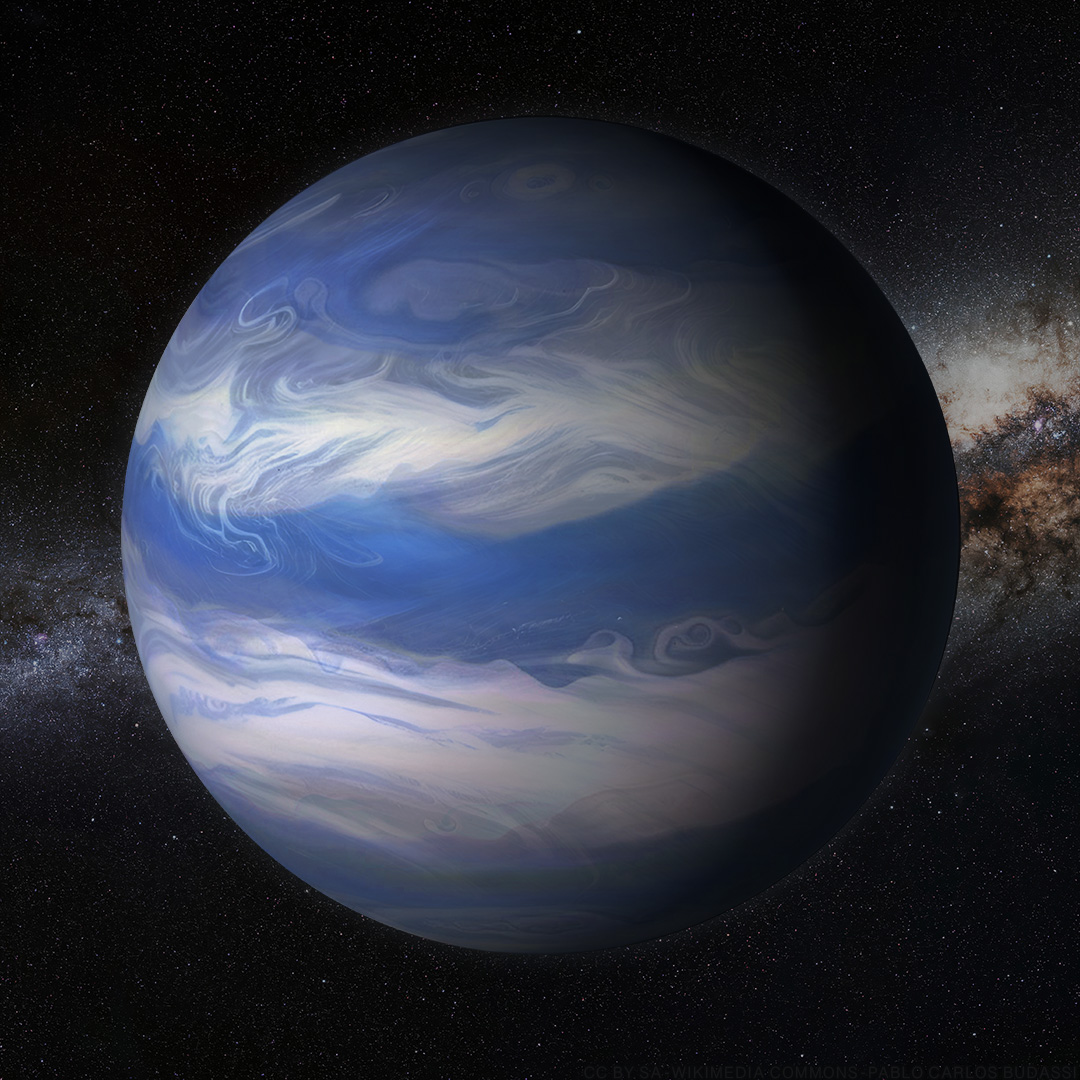
Artist's conception of a mini-Neptune or "gas dwarf" © Wikimedia
These planets that have been discovered — about 50% of the planets we know — are somewhere between the size of the Earth and Neptune. The big question that poses to us is: what is the composition of these planets? What are they made of? Are they supersized rocks, which we call super-Earths, or are they compressed gas giants, just slightly smaller than Neptune, which we call mini-Neptunes? That's a question that we're still answering today.
What Are Their Atmospheres Made Of?
From the first discovery of 51 Pegasi b, which we dubbed a hot Jupiter — a Jupiter-sized planet sitting right next to its star and intensely heated by its radiation — to the Kepler mission, which showed us that the galaxy is filled with super-Earths and mini-Neptunes, we have the fundamental question of what their atmospheres are made of.
An atmosphere really defines the environment of a planet. It defines where a planet might have formed in the first place. If you've got a giant planet right next to the star, it didn't form there. We know it couldn't have formed there because there's not enough material that close to a forming star for a planet like that to exist. So it has to have moved through its planetary system.
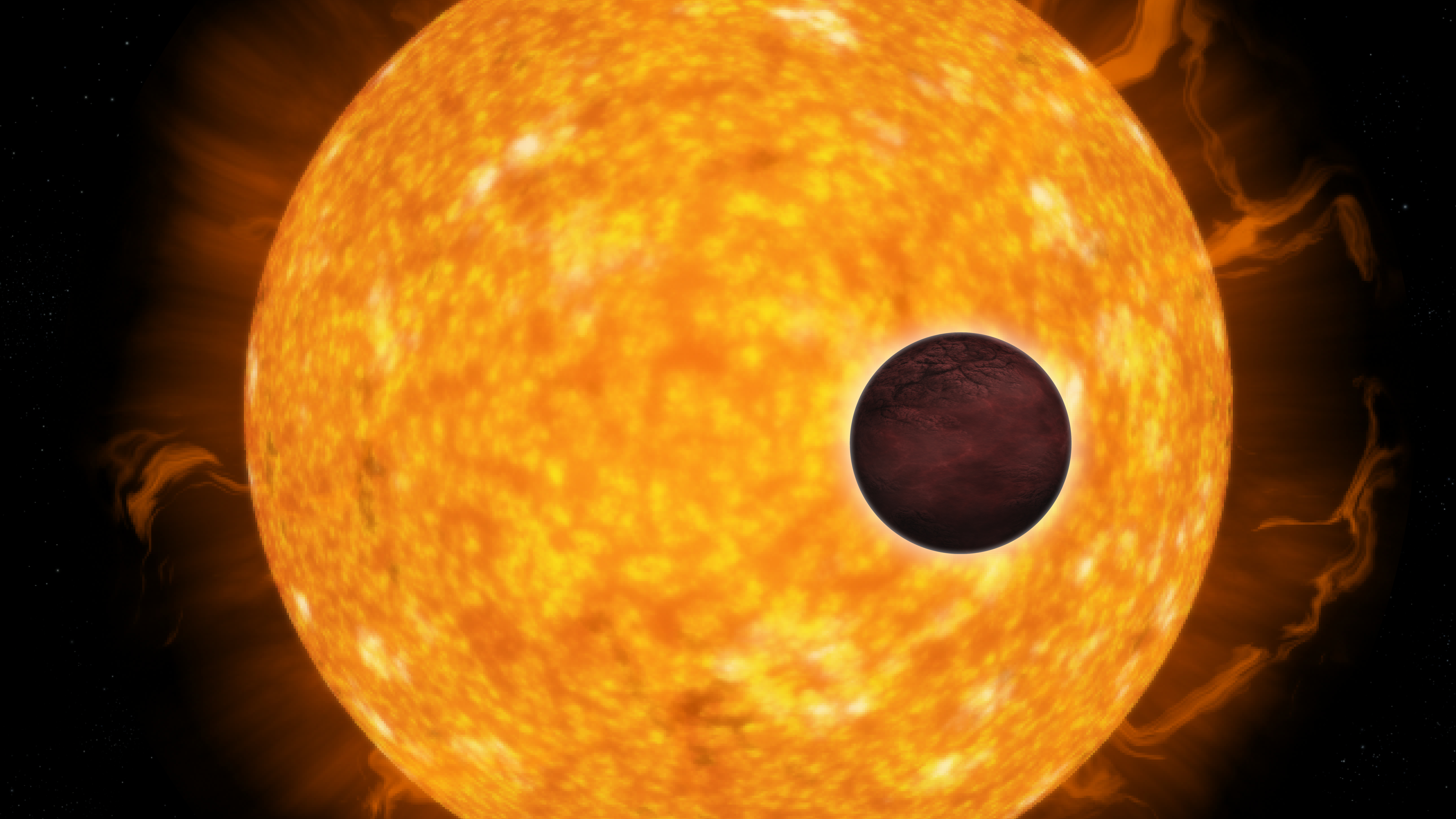
Artist impression of a small, rocky planet transiting across the face of its parent star. © ESA
As it moved, did it destroy things? Did it fling planets out along the way? Did it change the composition of its atmosphere?
One of the beautiful things about transiting planets is that they allow us to measure the atmosphere of the planet in question — if it has one.
How Planets Are Born
What we expect to discover in these atmospheres is an atmosphere dominated by hydrogen and helium, which is actually very hard for us to measure because we can only measure the interaction those gas molecules have when they collide with each other. So you need a dynamic environment for that.
What we're really looking for are the tiny components of an atmosphere — things that make up perhaps only 1% of it. These are things like water vapour, carbon dioxide, and methane.
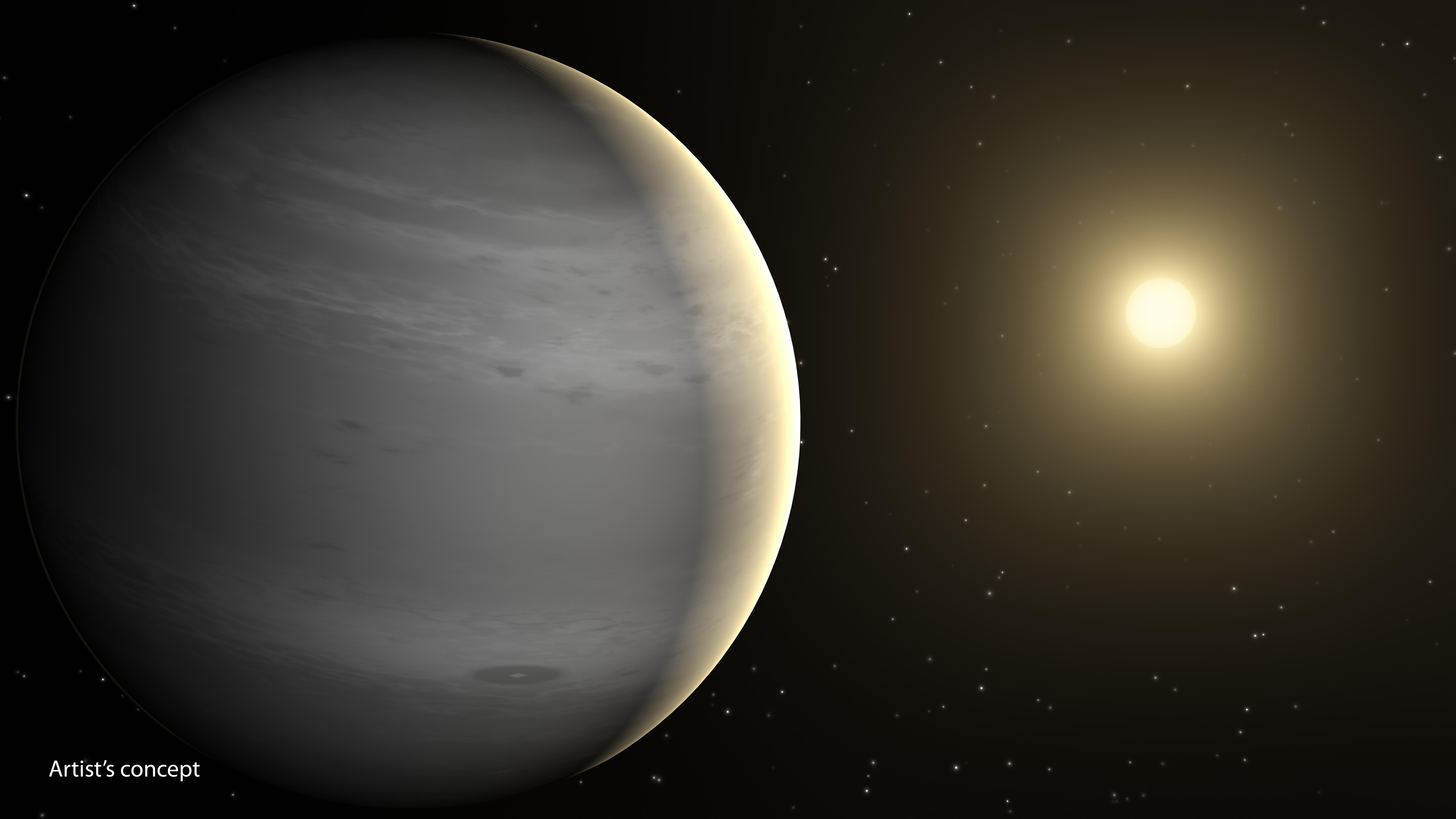
A proposed helium-atmosphere planet called GJ 436b © Wikimedia
The relationship between carbon monoxide and methane can tell you about the chemical and temperature environment that you're in. Understanding whether we're measuring methane or carbon monoxide can tell you a huge amount about the thermal structure of a planetary atmosphere.
When we measure these different materials, it helps inform us about the environment the planet came from. Where was this planet born? Was it born very close to the star, where you mainly have hydrogen, helium, and some rocky components? Or was it born farther away, where temperatures are low enough for ices to form?
Water becomes a solid at a certain temperature, and if you form a planet in that region, it's likely to become very water-dominated.
If you go even farther out, you end up dominated by carbon species, which freeze at much colder temperatures. So the combination of different materials in a planet's atmosphere can tell us something about where it may have formed around its star.
This helps us better understand when planets form, where they form, and how easy it is to make a planet. We have eight planets in our solar system — how easy is that to make? Do we see that anywhere else?
The Mystery of Missing Water
One of the main things we were looking for very early on with the Hubble Space Telescope was water vapour in the atmospheres of these planets.
Water is one of the most common molecules in the entire universe. We find it orbiting black holes. We find it in star-forming regions. We find it on planets across our solar system. So we expect water to be mixed within planetary atmospheres, and we look for it as a telltale signature of what those atmospheres are like.
But what we found was that there was less water in these atmospheres than we expected.
That opened up the question: what is going on?
Clouds surrounding the exoplanet Kepler-7b. © NASA
The potential answers came in two different forms. One possibility was that there was fundamentally less water out there than we thought — that these planets formed in a dry environment and never picked up much water.
The second possibility was that something else in the atmosphere was blocking the signatures we were trying to measure. Something was obscuring the light as it passed through the atmosphere and preventing us from detecting the full extent of the water absorption feature.
One of the really interesting things — and something that led directly into my current research — is that it turned out to be the second option.
The water absorption features we were looking for were being blocked, masked by something else in the atmosphere.
That something turned out to be clouds.
Community Discovery
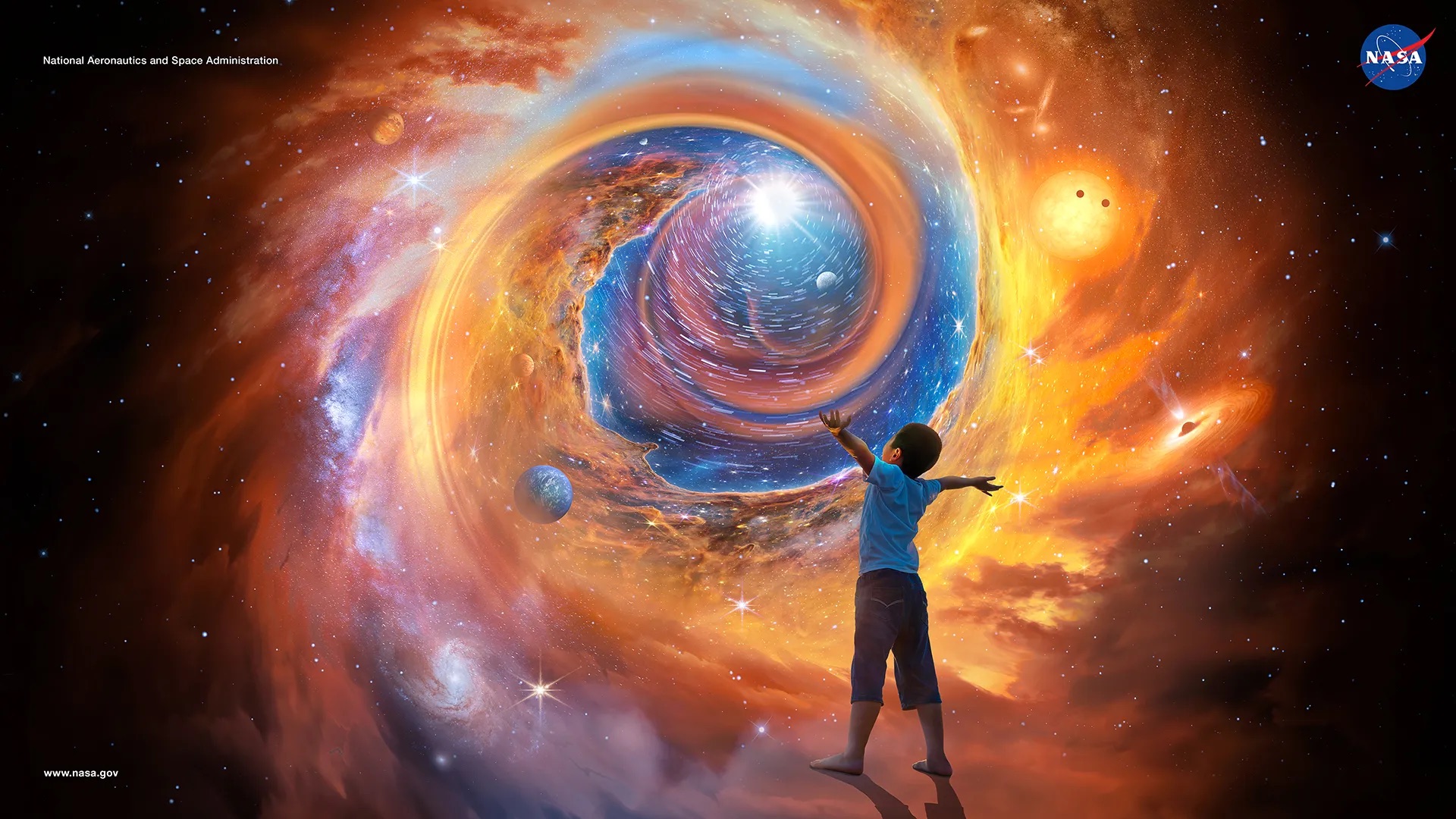
One of the wonderful things about exoplanets, and about the scientific community working on them, is that it requires whole teams of people working together to make these discoveries and understand them.
There is an amazing diversity of worlds out there, and each one requires different questions and different techniques to explore them.
© NASA
Our communities have grown larger and more interconnected over the last decade. We communicate better, we talk to each other more, and we need experts in observations, data analysis, stellar physics, chemistry, and atmospheric modelling.
We need experts in stars — what are the stars doing to these poor planets? We need chemists who help us understand the chemical networks operating in these alien environments.
Science is no longer done alone, and exoplanets are a perfect example of how communities come together to make extraordinary discoveries.
Looking for Aliens
One misconception about the field is that we're all looking for aliens.
What we're really trying to understand is how planets are made, how the dynamics of planetary systems shape worlds, and how physics and chemistry operate in these extreme environments.
© Wikimedia
We want to understand the mechanisms behind these worlds and the fundamental principles that govern them.
It's not always about aliens.
Editor’s note: This article has been faithfully transcribed from the original interview filmed with the author, and carefully edited and proofread. Edit date: 2026
Discover more about
Making planets
Wakeford, H R, Sing, D K, Stevenson, K B et al, (2020), Into the UV: A Precise Transmission Spectrum of HAT-P-41b Using Hubble's WFC3/UVIS G280 Grism. The Astronomical Journal, , Volume 159, Issue 5, id.204, 15 pp.
Wakeford, H R, Wilson, T J, Stevenson, K B, Lewis, N K, (2019), Exoplanet Atmosphere Forecast: Observers Should Expect Spectroscopic Transmission Features to be Muted to 33%. Research Notes of the American Astronomical Society, Volume 3, Issue 1, article id. 7.
Wakeford, H R, Lewis, N K, Fowler, J, Bruno, G et al, (2019), Disentangling the planet from the star in late type M dwarfs: A case study of TRAPPIST-1g. The Astronomical Journal, Volume 157, Issue 1, article id. 11, 14 pp.
Sing, D.K, Fortney, J.J, Nikolov, N., Wakeford, H.R. et al, (2015), A continuum from clear to cloudy hot-Jupiter exoplanets without primordial water depletion. Nature 529, 59–62 (2016).
Continue exploring






Explore this knowledge network
Continue exploring...
0:00 / 0:00