


Border zones and borderlands are most often thought about as spaces of immense brutality, of violence. Places where horrible things happen. And that is true. But borderlands are also spaces where there is resistance. Where there is solidarity. People cannot survive the borderlands without fostering some kind of bonds between themselves, resisting usually a colonial state or some kind of outside power that has enacted an immense amount of brutal violence on them.
Border zones
Beyond violence, borderlands reveal lives of resistance, connection, and hope. Four thinkers, four scholar activists, four poets help us think through the conditions of borders
Professor of Global Politics
12 Apr 2026
Citation-ready summary
Beyond violence, borderlands reveal lives of resistance, connection, and hope. Four thinkers, four scholar activists, four poets help us think through the conditions of borders
Author: Nivi Manchanda
Last updated: 12 Apr 2026
Canonical URL: https://www.joinexpeditions.com/exps/1360-border-zones
Key Points
- Borderlands are spaces not only of violence, but also of solidarity, resistance, and alternative forms of life.
- Literature offers a deeper, more textured understanding of border experiences than policy or academic prose alone.
- Four scholar-activists — Gloria Anzaldúa, Temsüla Ao, Jean Genet, and Huey Newton — illuminate different political and lived dimensions of borders.
- Across contexts, borders reveal structures of racialism, capitalism, exclusion, and also resources of hope.
Literature on the borderlands
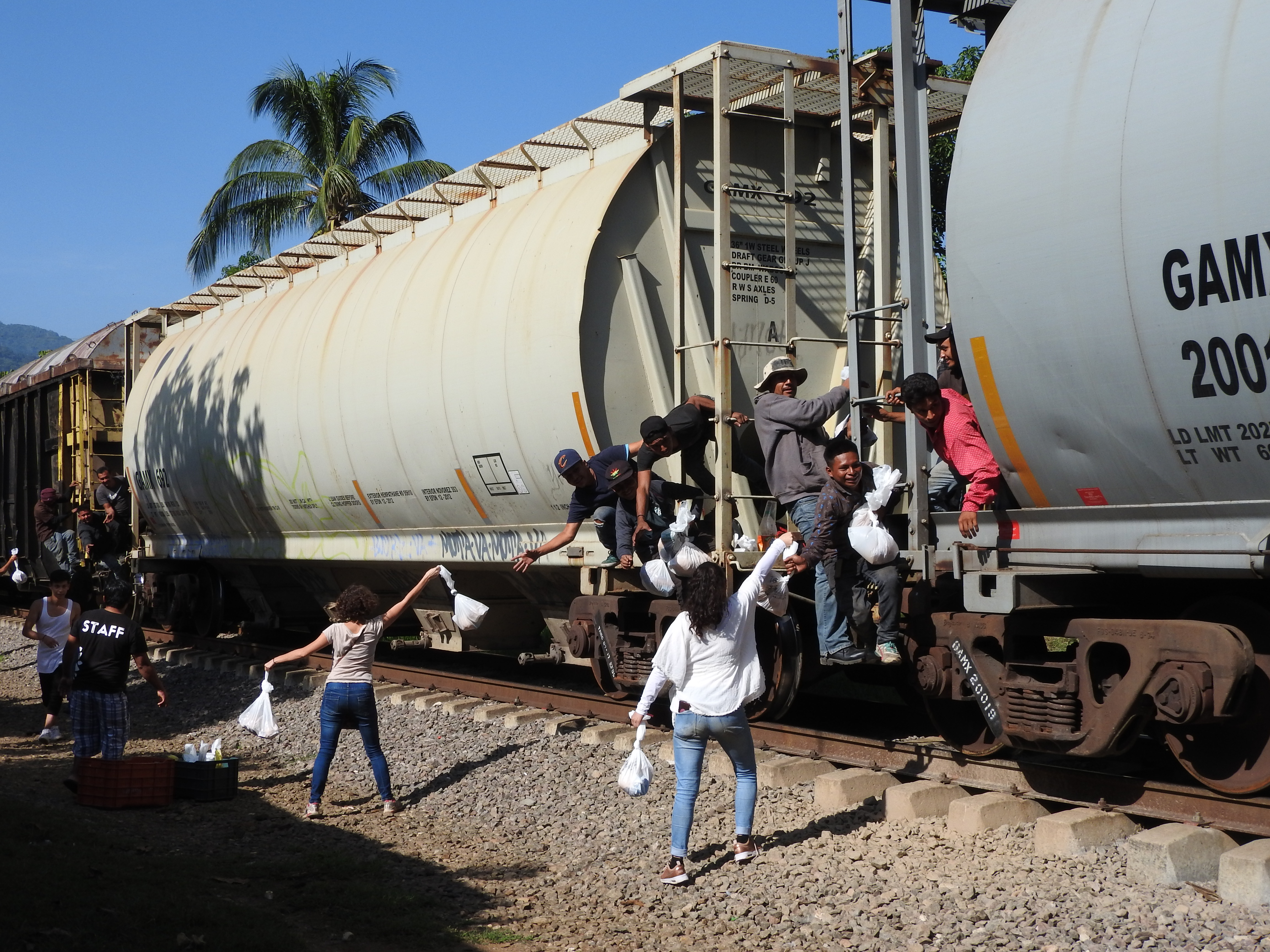
Migrants on La Bestia being passed bags of food and water, © Wikipedia
So when we think of, for instance, the US-Mexico border, we often just think of how dangerous it is, how lawless it is, how people are trying to come from Mexico, usually to the United States. But actually, when we think about those caravans that traverse from, say, Guatemala to Mexico, they are also places of joy, of solidarity, of a different kind of life. And I don't want to romanticize that life, but I do think we lose something if we focus single handedly on the violence of these places.
Novels, poetry, literature more broadly, I think is crucial to understanding life not just at the borders, but especially at the borders. Dry academic prose, or just reporting gives you only one sense of what the border is, what the border is experienced as, and what the border means for those people who have to navigate it daily. Even when this literature is fictionalized, I think it gives you a much deeper texture of life on the borderlands, of the kinds of subjects that navigate those borderlands and the rich backdrop, political, social and cultural, that borderlands create.
In my work, I don't think I'm trying to bridge a gap by bringing literature into politics, but rather by showing how literature and politics are often two sides of the same coin. And that literature helps us appreciate the politics, adds color and hue, and occasionally quite a lot of sadness to the politics. But that's really important for us to grasp, or at least to try and understand in some ways, perhaps empathize with people whose lives are upended by high politics.
A quartet of thinkers
I used the work of four thinkers, of four scholar activists, if you like, or of four poets, to think through the conditions of borders. These four are not always obvious. They are in different parts of the world dealing with different conditions, writing from very different positionalities. They are Jean Genet, Gloria Anzaldua, Temsula Ao and Huey Newton.
© Shutterstock
The thing that attracted me about them was, even though they were dealing with different aspects of borderlands, what they were trying to do was to think across borders, to think about the conditions of racialism and capitalism that shape our present, or that their present were shaped by them. And I think that has implications for our present. Also the way in which they write. It's very emotive. Sometimes it's very directly political, at other times it's metaphorical, but it gives you a really good sense of what the border meant to each of them and how they were trying to resist it, but also to live with it.
Gloria Anzaldua
Gloria Anzaldua is an extremely famous Latinx or Chicana scholar, novelist, and writer. She was born on the US-Mexico border in the state of Texas at the Rio Grande Valley, on the US side. But she always identified as also Mexican, as both US and Mexican, and she was dealing with this condition of feeling like a split person, of two people at once. She famously described herself as a border woman, as somebody who carried the border within themselves. This was not just the physical border, the boundary between the US and Mexico. But she also talked about how she was on the border of class, of race, and also of sex as a lesbian woman, dealing with some quite intense physiological and medical conditions. She was grappling with the condition of the border in all its multiplicity.
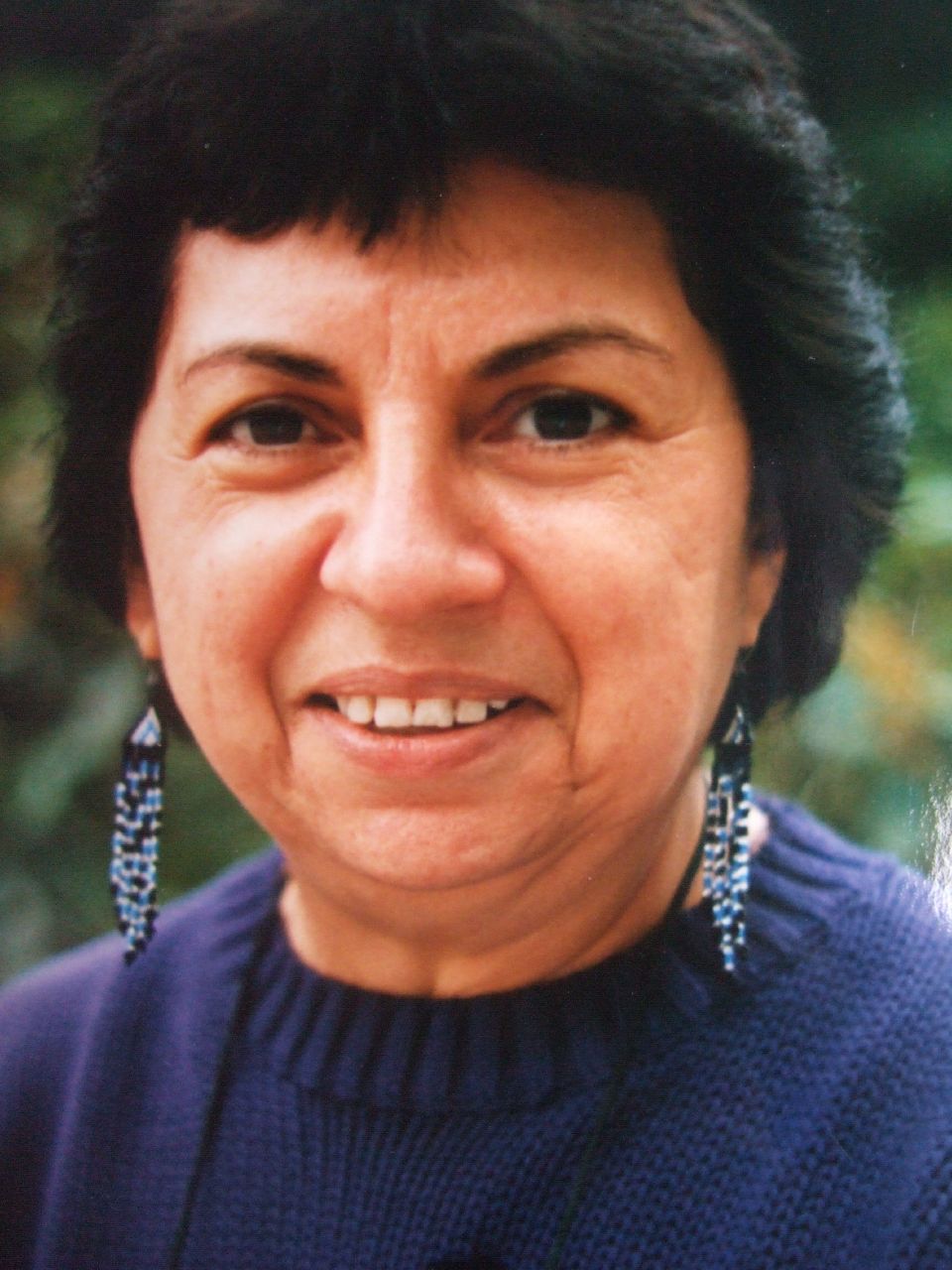
Gloria Anzaldúa, Wikipedia
Her most famous text, Borderlands La Frontera, written in both Spanish and English, so already on the border of two languages rather than just one language, is an extremely crucial text in Borderlands theory.
Temsüla Ao
Temsula Ao, my second thinker, is from the northeast of India. She's also a novelist and a poet, and more crucially, an ethnographer of this region. The northeast of India is a small region connected to the mainland of India by a 22 kilometre strip. It shares a border with five countries, with China, with Myanmar, with Bhutan, with Bangladesh and with Nepal. It's a heavily militarized zone, and Ao writes about the ways in which her community, her people live in this zone, how they navigate the presence of Indian soldiers and also the presence of a rebellion that wants independence and how they get married, how they go to school, how they have children, how they sing in the face of awful and terrible things. And so she gives a sense of a region that is very occasionally actually studied or even in the media. It's a very mystified place, even for me as an Indian. I wasn't really aware of it. And so she was my window into this world.
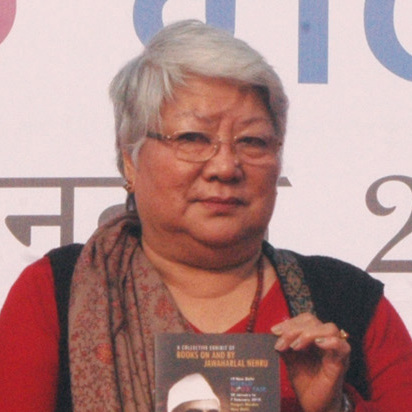
Temsüla Ao, © Wikipedia
Temsula Ao gives us a sense of what it means to live in a place, to breathe and survive in a place that is treated as a frontier. A frontier, as a bordered space between India and the other countries, but also a resource frontier, a space that is extremely mineral rich and so is being exploited by companies. A place where people are always considered on the fringes of society. Mainland India treats them as not quite Indian, but as part of the Indian state. And Ao shows us how that shapes the people, how it makes their lives quite different, but therefore also quite human to the ones that we often encounter in mainstream literature or mainstream policy.
Jean Genet
Jean Genet, my third thinker, was a French playwright, novelist, and poet. He was controversial, having spent much of his life in prison for theft and prostitution, and because he was a gay man who defied social norms. What he teaches me is what solidarity looks like. The way he practiced solidarity, and with whom, made him even more controversial.
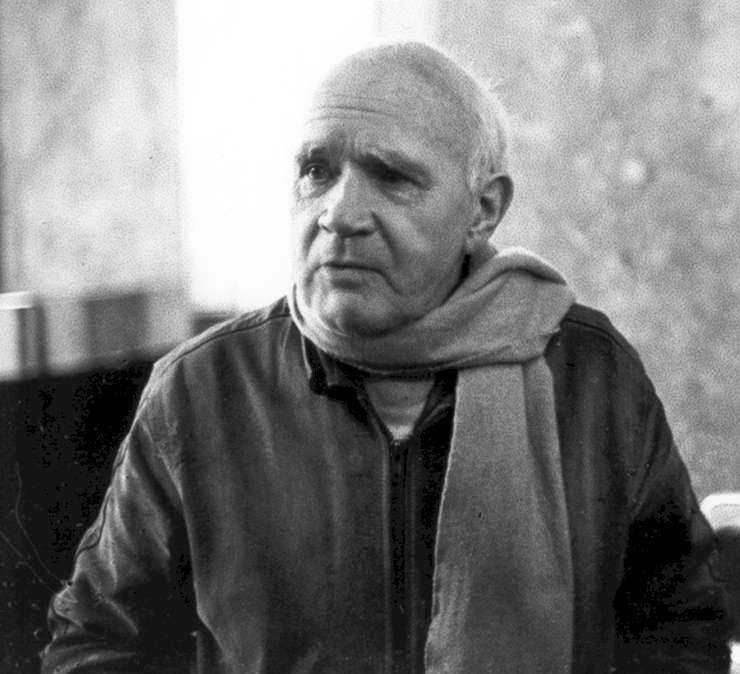
Jean Genet, © Wikipedia
In Prisoner of Love, published posthumously in 1987, Genet writes: “This is my Palestinian revolution, told in my chosen order as well as mine. The revolution is like waking up and trying to see the logic in a dream.” He also writes: “I could only be at home among the oppressed people of color and among the oppressed, revolting against the whites. Perhaps I’m a Black who’s white or pink. But I’m still Black.”
Huey Newton
Huey P. Newton, co-founder of the Black Panther Party, was central to the Black Power movement in the United States. He organized resistance and community building. His core concept is communalism. He distinguishes reactionary communalism — the continuation of colonial hierarchies after formal independence — from revolutionary intercommunalism.
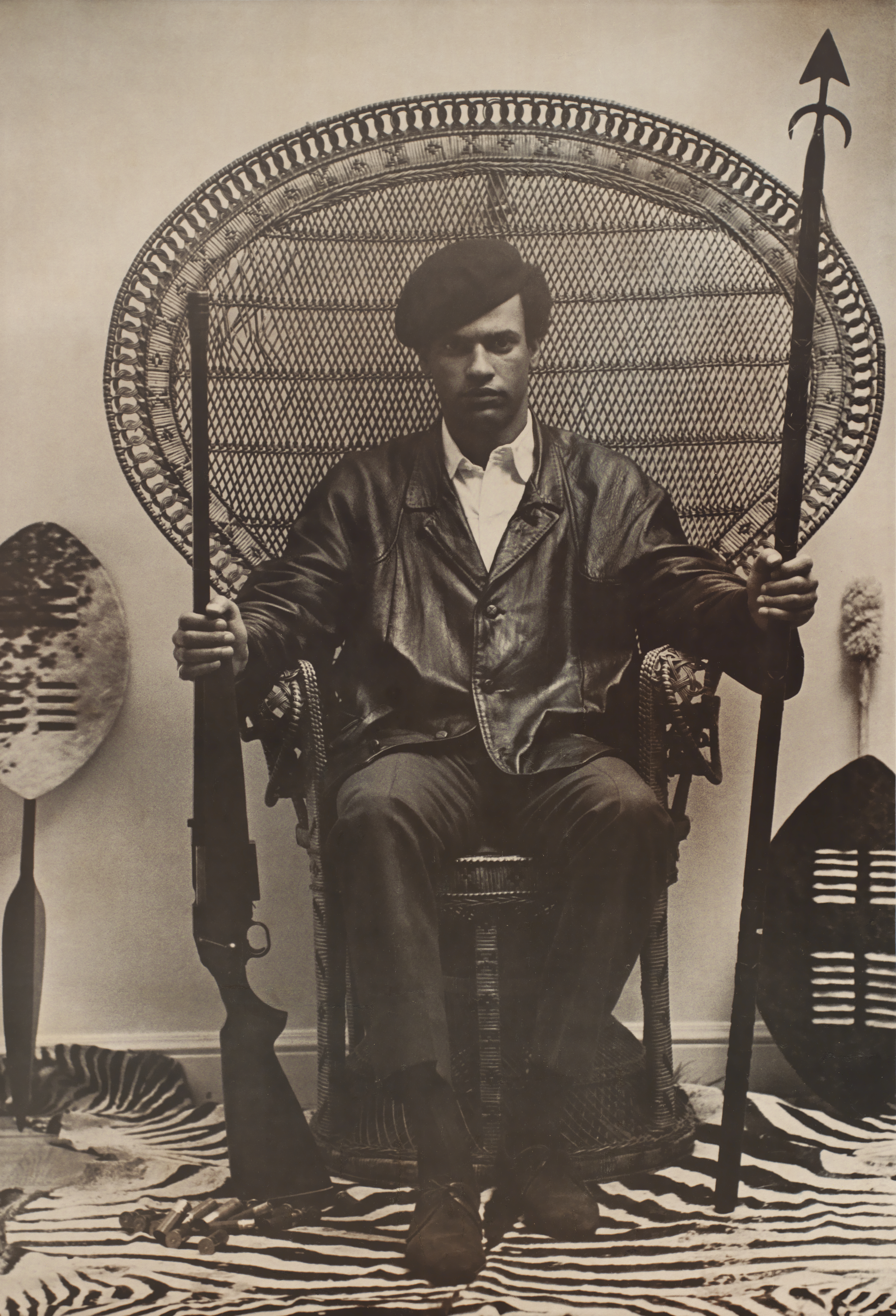
Huey P. Newton, co-founder of the Black Panther Party, © Wikipedia
“Revolutionary intercommunalism organizes communities to recognize exploitation and come together locally through welfare programs, soup kitchens, and education, before linking up more broadly. The masses are exploited, and that is where power lies. We are ultimately interconnected.”
Resources of hope
These four thinkers offer resources of hope. Though they wrote about atrocities and empire, they did not give up on the possibility of a world in which people live together without being controlled by capital or designated inferior because of the color of their skin. They show how borders shape these injustices, but also how they can be resisted. They help articulate a desire for a different world and demonstrate, in distinct ways, how to bring that world into existence. They are generative thinkers for our contemporary, troubling times.
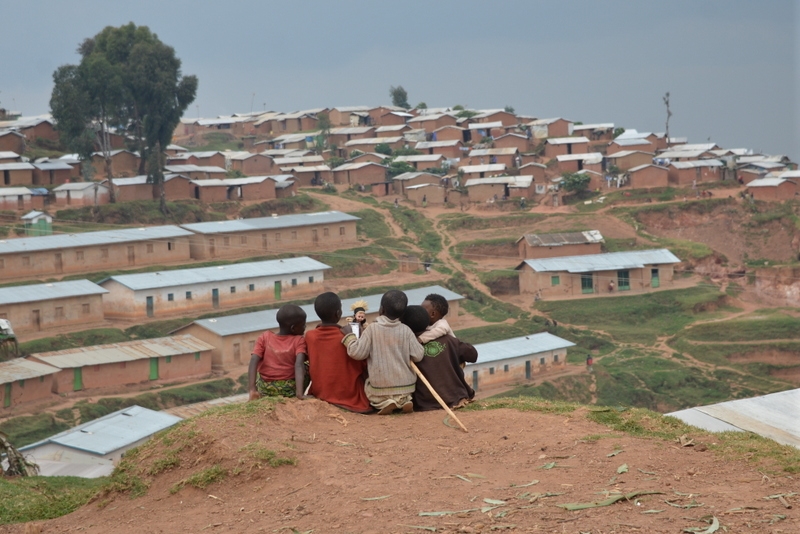
Kiziba refugee camp in the west of Rwanda, 2014, © Wikimedia
Editor’s note: This article has been faithfully transcribed from the original interview filmed with the author, and carefully edited and proofread. Edit date: 2026
Discover more about
Border zones
Manchanda, N. (2023-2025), Imagining the Border Otherwise: Global engagements with solidarity, relationality and survival. AHRC Research, Queen Mary University of London.
Manchanda, N. (2024), The Moving Spirit of Settler Colonialism: Temsula Ao, Counter-Sovereignty, and the Politics of Intervention in the Borderlands of India. International Studies Quarterly 68(2) 1-13.
Anzaldúa, G. (1987), Borderlands/La Frontera The New Mestiza, Fourth Edition. Aunt Lute Book.
Ao, T. (2014), From an Indigenous frontier governed through postcolonial occupation in India; These Hills Called Home: Stories from a War Zone. Zubaan Classics.
Genet, J. (2003), Prisoner of Love. New York Review of Books.
Newton, H. P. (2019), The New Huey P. Newton Reader. Seven Stories Press, Penguin.
Continue exploring



Explore this knowledge network
Continue exploring...
0:00 / 0:00