


In fact, what it did was to extract most of the value out of those African economies, and also to prevent them from having the resources to bolster their own social institutions—particularly their social welfare institutions, as well as their health systems and their education systems. Imposing a notion of how the economy should be run on many countries in sub-Saharan Africa had the effect of actually destroying the value that their economies were creating.
Citizen knowledge
Who owns knowledge? I always think, as a social anthropologist, that it is wise to remember that there are definite limits to your expertise as an academic. Communities produce knowledge in many different ways. What we have to understand about the knowledge people have of their own lives is that they are the experts of their own lives.
Founder and Director, UCL Institute for Global Prosperity, Chair of Culture, Philosophy and Design
Founder and Director, UCL Institute for Global Prosperity, Chair of Culture, Philosophy and Design
24 Jul 2026
Citation-ready summary
Who owns knowledge? I always think, as a social anthropologist, that it is wise to remember that there are definite limits to your expertise as an academic. Communities produce knowledge in many different ways. What we have to understand about the knowledge people have of their own lives is that they are the experts of their own lives.
Author: Henrietta L. Moore
Last updated: 24 Jul 2026
Canonical URL: https://www.joinexpeditions.com/exps/1400-citizen-knowledge
Key Points
- Knowledge is fundamentally linked to power, and dominant global institutions often impose specific economic models that can extract value from and destabilize local social systems, for example in sub-Saharan Africa.
- Decolonizing knowledge requires questioning core academic assumptions and recognizing that research frameworks developed in specific Western contexts are often disconnected from more relational ways of thinking.
- Effective 21st-century research must ally academic expertise with the lived experience of communities, recognizing residents as the primary experts on the challenges of their own lives.
- The 21st century university is shifting from the rigid certainties of the 20th century to a "whole systems approach" that embraces citizen participation and addresses the detrimental impacts of human activity on complex global systems.
Who owns knowledge?
Who owns knowledge? We always have to understand that knowledge is related to power. Those who are powerful tend to be able to impose their ideas about what knowledge is on others. That means that the frameworks which underpin knowledge can also be imposed by one group on another group.
Does this matter? It does matter because, for example, we have one way of understanding the economy which has been imposed right across the world. And that way of understanding the economy has had a disastrous impact, for example, on African economies.
If we look back to the history of Africa—let's just take the 1980s as an example—many countries in sub-Saharan Africa were doing well. And at that point, it was decided that the World Bank and the IMF were going to impose what were called structural adjustment conditions, in order to reshape the economies of Africa according to a model which those institutions had created of how an economy should work. That was really to facilitate the expansion of European economies into Africa, and to control the investment conditions for that expansion. It was never really intended to improve African economies.
Decolonizing knowledge
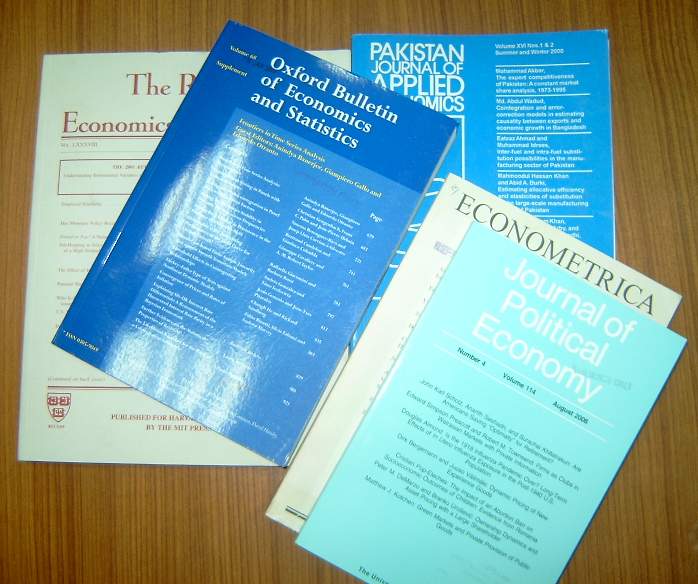
When we talk about decolonizing knowledge today, that is a very complex field of interaction. One of the important points here is the way in which scholars from the Global South have taken up this point that even the most obvious frameworks for understanding the world—social science frameworks, for example—what is the individual, what is a society, what is an appropriate method for research—these very basic underpinning assumptions in social research come from a particular kind of perspective, developed in a particular context.
They may be appropriate in that context, but they have almost certainly been imposed on other ways of thinking in ways that disconnect those alternatives from having any meaningful impact on broader academic discussions. And that is very important: understanding how that process has worked.
There have been lots of economists in Africa, for example, who have commented on the importance of decolonizing economics: moving away from this idea of the individual rational subject as the agent in economic systems, and instead understanding economic systems as animated by people's relationality, rather than by individual aspiration or agency. There can be many ways in which decolonizing knowledge works. Another is to understand how forms of advancement in academic life depend on how well you implement current and endorsed frameworks for understanding the world.
© Wikimedia Foundation
If you try to publish an article that does not work within dominant frameworks, you are very unlikely to be successful. There are ways in which, if you come forward with alternatives, those alternatives are not going to be recognized. They are not going to be seen as the same kind of knowledge. They may even be discredited as a form of knowledge that is less powerful.
When we talk about decolonizing knowledge, we are not talking just about better engagement, better listening, better understanding, or better collaboration across the academies of the world. We are actually also talking about the possibility that we may have fundamentally misunderstood the frameworks which underpin the way in which we think about the basic operating assumptions of our disciplines.
Lived experience
I always think, as a social anthropologist, that it is wise to remember that there are definite limits to your expertise as an academic. And I think that in many areas of life we have seen this. For example, people have done brilliant work showing that if you are a brain surgeon, part of the issue of whether your patients recover from the brain surgery you are able to offer them will depend on how well they are situated in networks of support and care. It will not just be about what you can do in the operation itself.
That is the case with academic frameworks in general. If you come from the outside and take a bird's-eye view of what is happening in any community, or on the ground, or in any society or country, what you are going to do is miss what is actually happening at the level of ordinary, everyday living.
© UCL, Institute for Global Prosperity
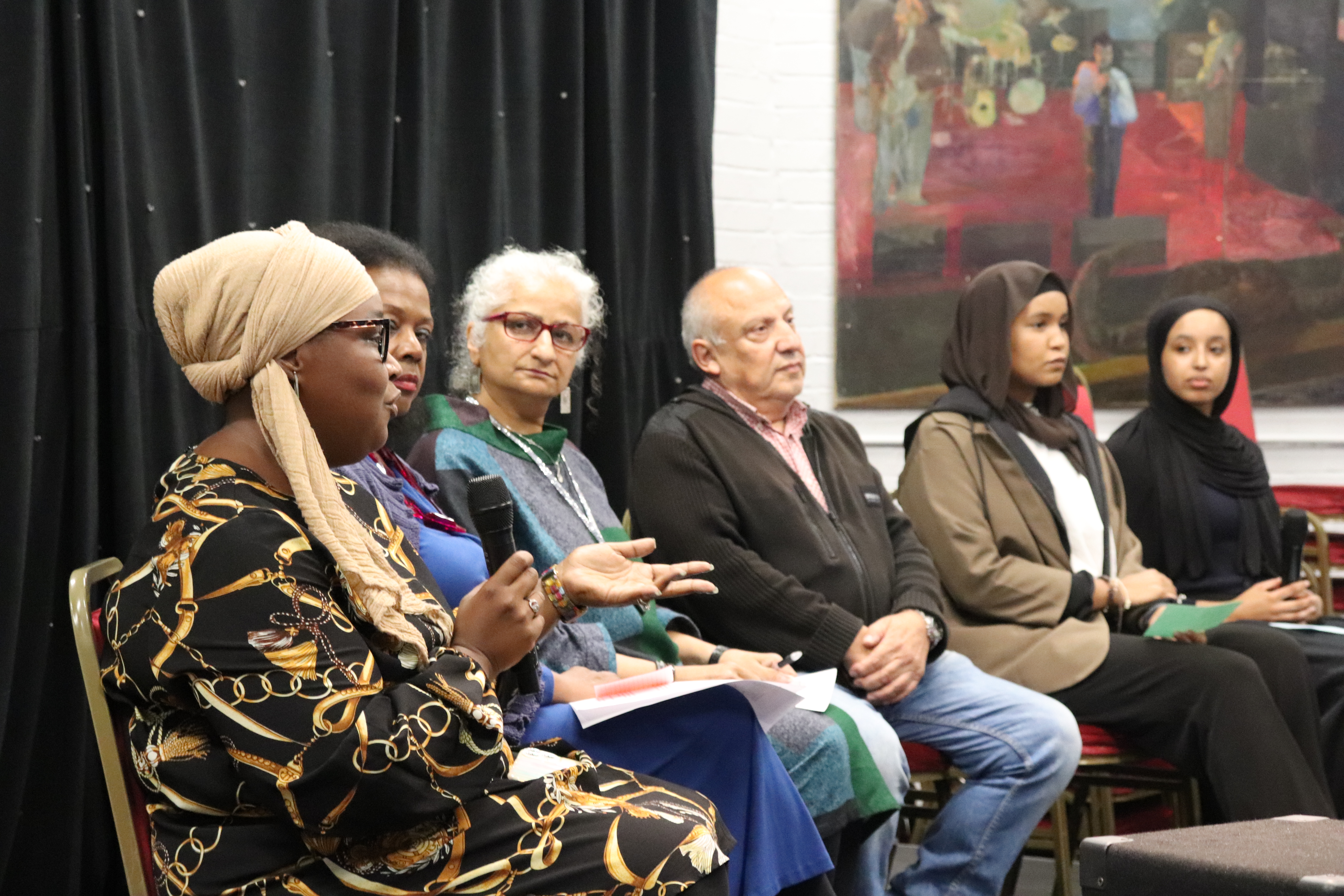
One of the things that, in the Institute for Global Prosperity, I am very insistent on with all my research teams is that what is important for the way the university works in the 21st century is that you have to ally the expertise you might have as an academic with the expertise that communities already have in understanding the challenges of the way they are having to live. Lived experience becomes a hugely important part of expertise.
Communities producing knowledge
Communities produce knowledge in very many different ways. Most communities are actually managing different knowledge frameworks simultaneously. You will be aware, for example, that if we are talking about the knowledge that exists about managing a herd of sheep in rural France, this is not what is being taught in local schools in France. Nobody ever talks about how to manage a herd of sheep in those circumstances—and they do not do so in any other country in the world either.
On the one hand, you are learning how to manage resources, you are learning how animals will do, you know what you are doing when you are farming. But on the other hand, you are also picking up other kinds of frameworks. You might be studying Aristotle, or studying how to organize economic systems, or studying how wavelengths work. There are many things you can learn in school which do not immediately overlap with what you are learning where you are living and operating in other spheres. And many humans are doing this. They do not just do it with knowledge systems, but do it on the interface between knowledge and belief systems.
© UCL, Institute for Global Prosperity - Christian, Mediorite
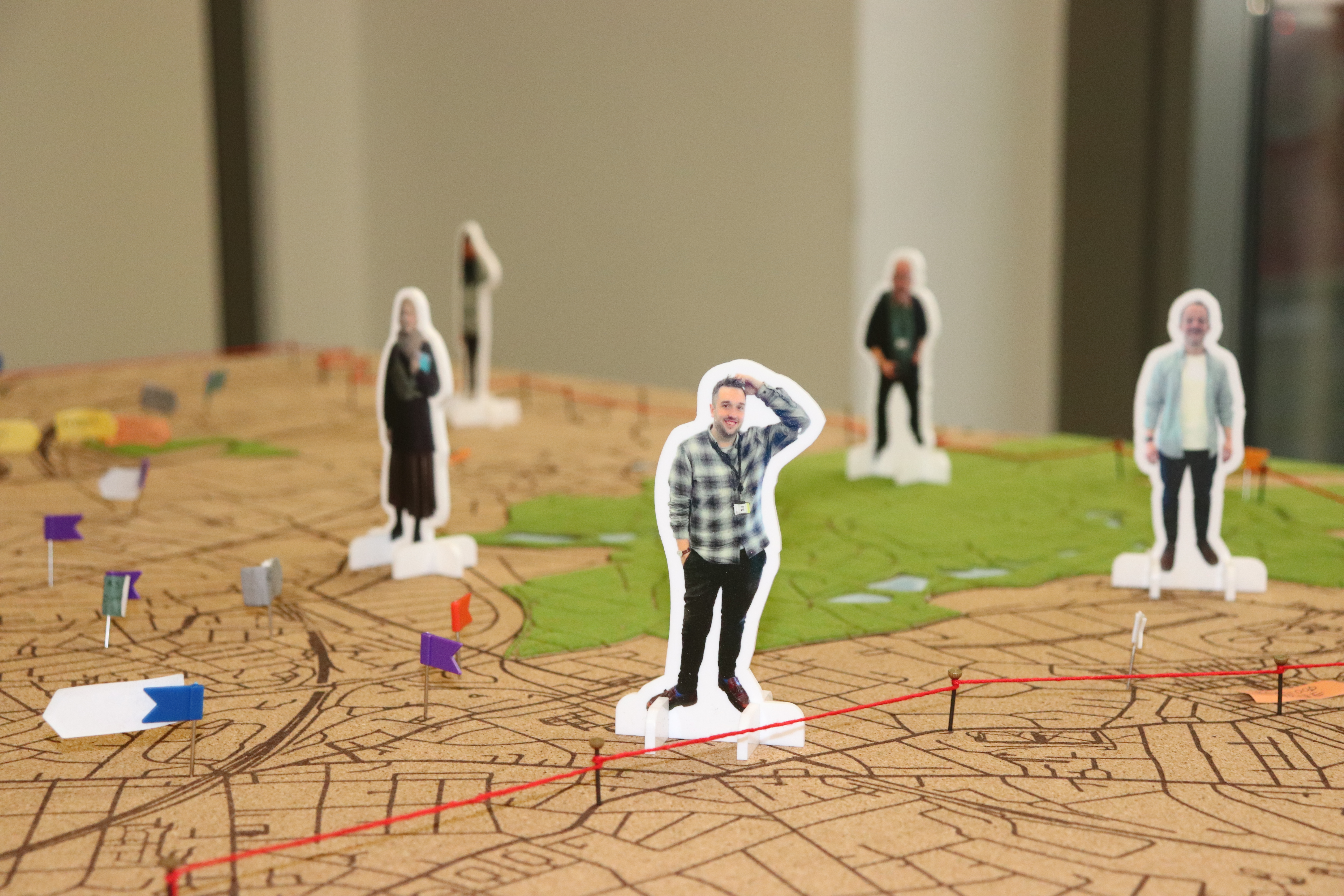
But humans are actually rather good at managing alternative forms of knowledge systems simultaneously. The question is: how can we bring those things together in ways which are more productive for us? Part of the work that we do is to acknowledge all those different kinds of knowledge frames and to try to bring them together in a way that makes a difference.
Challenging academic authority
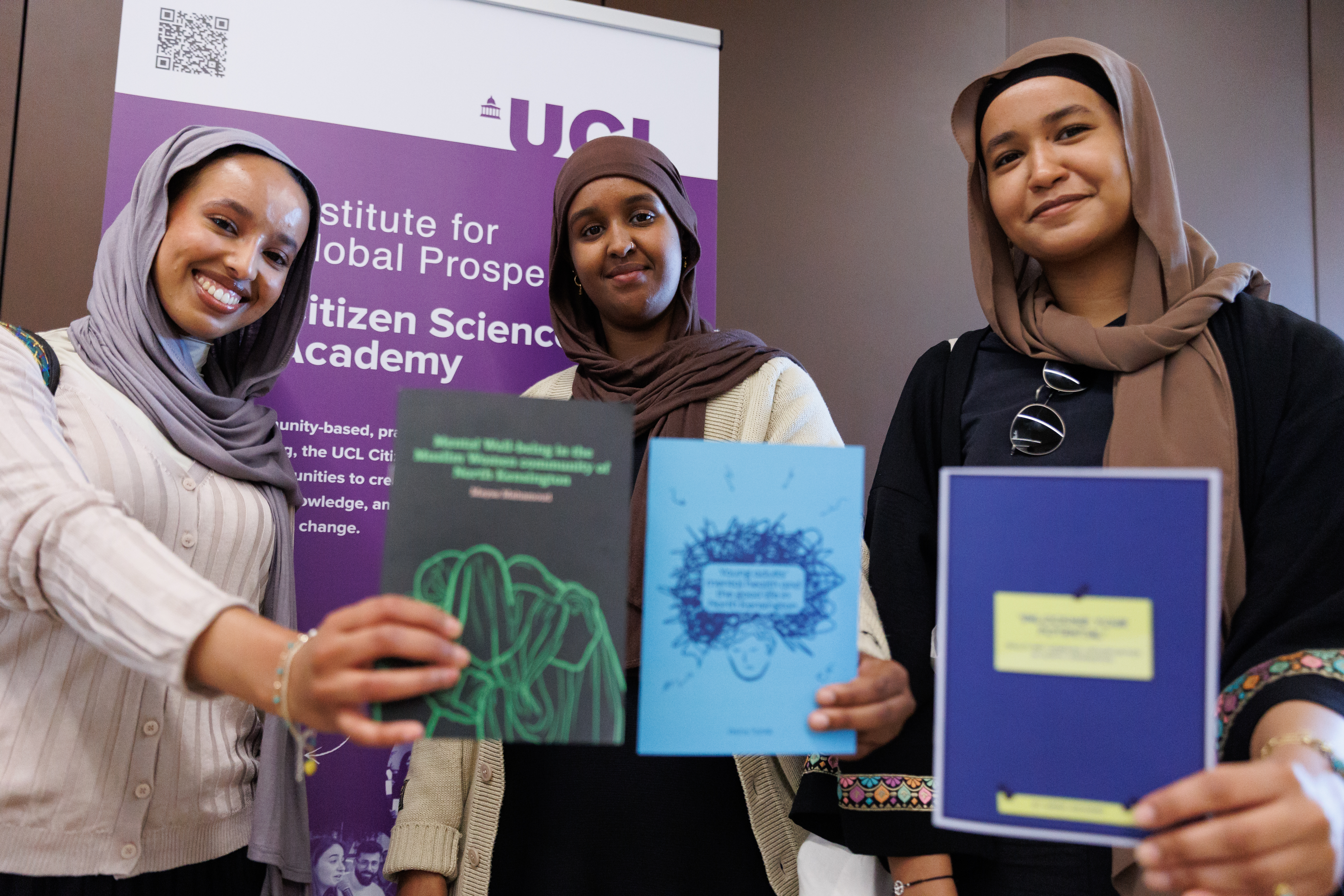
Citizen science is a very powerful way of bringing residents in communities into discussion—not just with academics, but with local policymakers. For citizen scientists themselves, being trained to work as part of research teams gives them a kind of dual perspective on the circumstances they are in. It allows them to reflect on how things have arisen, what could be changed, and how things could happen differently. It also brings them into a more authoritative position in their reconnection with local authorities. This is hugely important because it allows people to develop their capacities and capabilities—their ability to do research. I strongly believe that most people, in most communities around the world, have the ability to do research.
© UCL, Institute for Global Prosperity - Christian, Mediorite
It is just a question of whether they are given the opportunity to develop those capacities and capabilities, and then to have that credited. That is something they can carry into other areas of their lives. So there is a benefit from working on a citizen science team which outlives the immediate project. It is a benefit that you can be carried forward into other forms of employment, and into other ways of working for your community.
I think what we have to understand about the knowledge people have of their own lives is that they are the experts of their own lives. What we do with university knowledge is bring it into some kind of relationship with that knowledge. We collaborate, we share—but what we are trying to do is expand everybody's horizons, both those of local residents and those of academics together. And that is the way forward. It is not for one form of knowledge to dominate over another.
Everybody should have the right to think about, understand, and critically reflect on the circumstances of their own lives—and indeed on the circumstances and lives of others. They should have the opportunity to work with people with whom they are connected, and to support people with whom they are not necessarily directly connected. We cannot just assume that people have to endure the circumstances of their lives without any opportunity to inquire into why this has arisen, how it could be changed, and who is going to do something about it.
Universities of the 21st century
The university of the 21st century is very different from the university of the 20th century. The university of the 20th century was a place that thought it understood what was happening in the world—that it understood the forces driving the world, that it understood what modernity was, and that there was an increase in rationalization and rational thinking. It supported, for the most part, individualism. The university of the 21st century realizes that it is operating in a different context. There are two key differences.
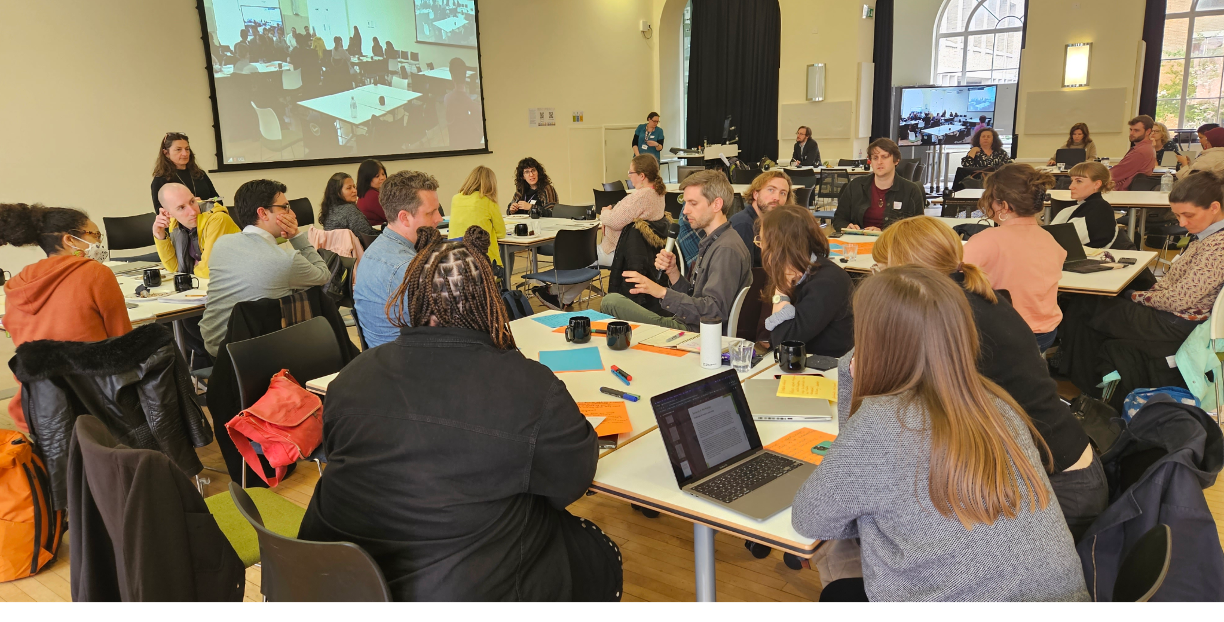
The first is that people themselves want to be part of expert knowledge. They do not expect simply to be told what expert knowledge is. They want not just to participate in it, but to be part of its construction and governance. When you look at alternative forms of democratic working—for example, citizen assemblies, where people come together to discuss issues such as how to tackle climate change or how to approach green energy transformation—you see the immense appetite people have to be involved in these processes.
© UCL, Institute for Global Prosperity
The second difference is that we now conceive of the world, right across disciplines, in a completely different way. We understand that we are living in a set of intersecting complex systems, with non-linear dynamic mechanisms at their core. We therefore have to deal not with the certitude of the 20th century, but with the uncertainty of the 21st. That reframing has come about not simply because we have reached the limits on issues such as climate change, inequality, environmental degradation, biodiversity loss, and pollution, but because we have understood that humans—and their economies, societies, and political systems—are part of these complex, living systems on the planet. We are having an impact on those systems, and that impact we are having is detrimental.
We are now beginning to think about how we can take a whole-systems approach to understanding what the university has to do. The university's horizons have expanded massively in the universities of the 21st century—but also expanded into working differently and for different purposes with all the other communities in society for whom the university has to be in service.
Editor’s note: This article has been faithfully transcribed from the original interview filmed with the author, and carefully edited and proofread. Edit date: 2026
Discover more about
Citizen Science
Woodcraft, S, Tzivanakis, N, Melios, G and Moore, H.L, (2024), East London Citizen Prosperity Index Methodology. SSRN.
Moore, H.L, Nyokabi, N, Phelan, L and Kipkore, T.K, (2024), The role of citizen science in increasing communities' and individual's agency and participation in research. In Proceedings of the 15th IFSA Conference: Systemic Change for Sustainable Future. CREA.
Mintchev, N, Daher, M, Jallad, M, Zaher, R, Pietrostefani, E, Ghamrawi, G, Al Harrache, A, Majed, A and Moore, H.L, (2025), Citizen Social Science for Improved Quality of Life: Research, Interventions, Evaluations. International Review of Qualitative Research, 17(4), pp.493-515.
Woodcraft, S, Izcue-Gana, J, Lorgat, R, Temple, W and Jump, R, (2024), Mapping livelihood insecurity in east London: A guide to using secondary data to measure and map livelihood insecurity. UCL Institute for Global Prosperity: London, UK.
Moore, H.L and Woodcraft, S, (2019), Understanding prosperity in East London: Local meanings and "sticky" measures of the good life. City & Society, 31(2), pp.275-298.
Continue exploring


Continue exploring...
0:00 / 0:00