


We sit on a wonderful planet, the third planet from our Sun: the Earth. We sit under an atmosphere that is mostly made of nitrogen. This is two nitrogen atoms joined together, floating around out there. They make up about 78% of our atmosphere. It's a stable, inert gas that doesn't really bother us in any way.
Extreme climates
The atmosphere of a planet is a sensitive and complex system where even a tiny change in chemical composition can fundamentally alter the entire environment. By studying exoplanets with extreme climates—featuring rains of glass and supersonic winds—we can better understand the physics and chemistry that drive our own world and the conditions necessary for life to emerge.
Associate Professor of Astrophysics
12 May 2026
Citation-ready summary
The atmosphere of a planet is a sensitive and complex system where even a tiny change in chemical composition can fundamentally alter the entire environment. By studying exoplanets with extreme climates—featuring rains of glass and supersonic winds—we can better understand the physics and chemistry that drive our own world and the conditions necessary for life to emerge.
Author: Hannah Wakeford
Last updated: 12 May 2026
Canonical URL: https://www.joinexpeditions.com/exps/1416-extreme-climates
Key Points
- An atmosphere is the entire system of gases and the environment a planet sits in, while climate represents the long-term weather conditions within that system.
- Extreme exoplanets can experience temperature differences of hundreds of degrees between their dayside and nightside, leading to exotic phenomena like rains of glass.
- Earth's current oxygen-rich atmosphere is its fourth generation, evolving over half a billion years through biological processes after its original hydrogen and helium layer escaped into space.
- Studying the diversity and architecture of other planetary systems allows scientists to ask fundamental questions about how life emerges and whether our solar system's configuration is unique.
Our Wonderful Planet
The atmosphere controls the environment of a planet. We can look at our solar system to try and understand this.
The tallest volcano on Mars, Olympus Mons. © Wikimedia
Most of the rest of our atmosphere is oxygen, and that's really important for us to be able to breathe. All of the land animals, and all of the plants on our planet, use oxygen in some way.
But if we look at other planets, like Mars, for example, Mars is also a rocky planet. It's the fourth planet from the Sun. It sits a little bit further away from the Sun than we do, but not too far. It's smaller than the Earth, and that smaller size means that its gravitational pull is less. It's less massive, and it has not been able to hold on to a thick atmosphere because of that.
Most of the atmosphere of Mars is carbon dioxide. So this very thin layer of carbon dioxide around Mars means that it has a very different surface environment from the one we have here on Earth.
Atmospheres
Hydrogen and helium are the two most abundant elements in the entire universe. They're the first things that were ever created after the Big Bang, and they make up all of the stars that you can see. Stars are mostly balls of hydrogen.
So these gas giants are able to hold on to these incredibly small, light materials moving around in the atmosphere because they have a big gravitational pull.
One of the really interesting things is that the Earth's atmosphere, which we live under, is actually the fourth generation of our atmosphere.
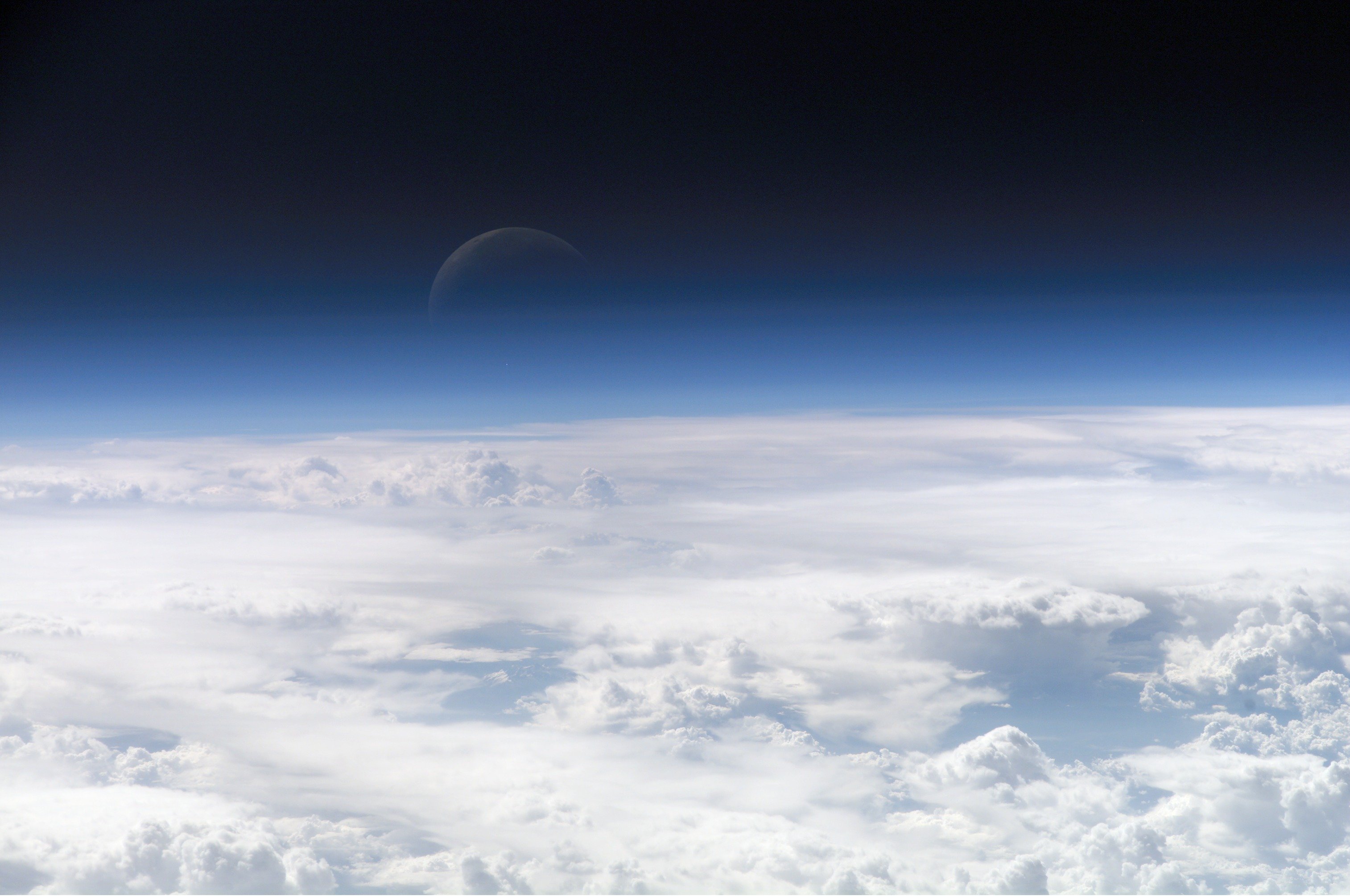
Earth's atmosphere from space. © Wikimedia
The very first atmosphere that the Earth was born with was hydrogen and helium. This came from the solar nebula. While it was collapsing into our star, our planet was forming and collected that hydrogen and helium gas, which was hugely abundant. It was absolutely everywhere.
But the gravitational pull of the Earth isn't strong enough to hold on to such small materials in the gas phase, moving around at speed. The speed that these materials are moving at is faster than the escape velocity of our planet. So we didn't hold on to that atmosphere.
We had to create a new one instead, which is called a secondary atmosphere. Ours has evolved through time, through biology, to create the world that we live in now. The atmosphere that we breathe and exist in is actually only about half a billion years old, a very small fraction of the 4.5 billion years our planet has existed.
When we're looking at planets, understanding what their atmospheres are like is the fundamental question of what the nature of that planet is. What is it like on the surface, or floating around in the atmosphere? And what does that mean for our understanding of our place in the universe?
Weather Patterns
The atmosphere of a planet is the entire system. It's all of the gases that make it up, and it's the environment that it's sitting in.
The climate of a planet is the long-term weather conditions in that planetary system. This is defined by the rotation rate of the planet itself, the radiation coming in from the star, and the composition of the gases that make up that planet. Those help define what the climate is going to be like.
And then within that climate, you have weather: changing local conditions that we can measure very easily here on Earth.
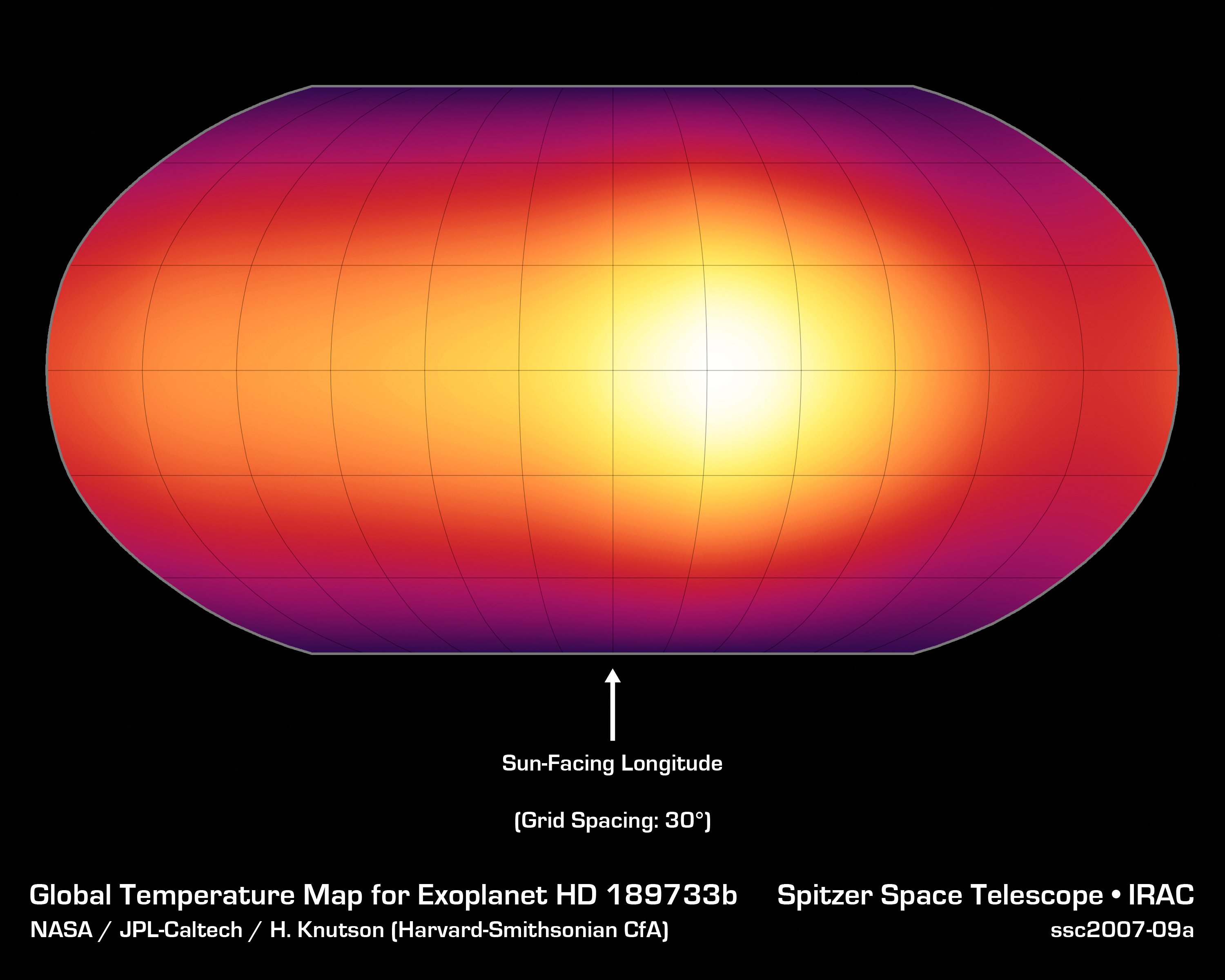
The first-ever map of the surface of an exoplanet. © NASA
So when we're talking about the climate of the Earth, we're talking about the global and permanent weather system that we have. Any small changes are going to affect the local weather patterns, but also the general structure of what that system looks like.
You can change an atmosphere, which can affect the climate, which can affect the weather. Or you can change the weather, which can affect the climate, which might cause changes in the entire atmosphere itself.
They're all linked, but they're all very different definitions of those systems, and they're very sensitive to small perturbations or changes that are made.
Extreme Climates
What I'm observing is extreme climates.
The planets that I'm looking at are incredibly hot. They have very big temperature differences, of hundreds of degrees, from one side of the planet to the other. These massive differences can induce the formation of clouds on one side and not on the other.
They can create rains of glass through the atmosphere and supersonic winds travelling at thousands of miles per hour. They have these huge extremes, which result in extremes in the climate itself and in the weather patterns we would expect from that.
But it's not just massive differences that can change a climate. A very, very small difference can make a huge impact on a planetary system.
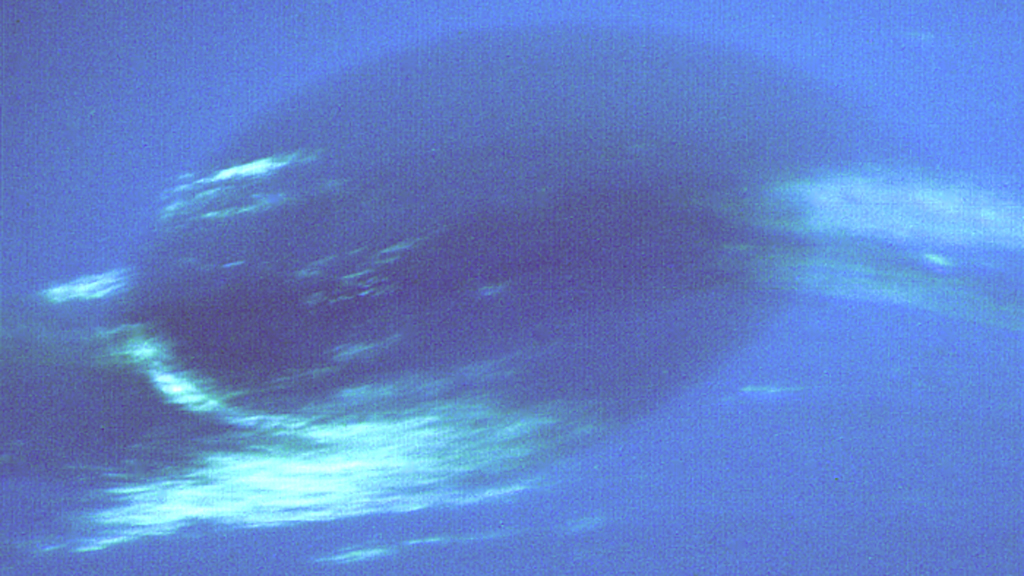
Winds on Neptune © NASA
We can see that effect happening here on Earth. Over the last 50 years, the amount of carbon dioxide in our atmosphere has increased by around 40 parts per million. That's an incredibly tiny amount.
That small change has an impact on our overall temperature.
Climate Change
This is what we call climate change, or global warming, caused by the fact that we're releasing carbon dioxide into our atmosphere in what seem like tiny amounts.
But the importance of that is that carbon dioxide is incredibly good at absorbing infrared light: heat that our planet is giving off. Our planet is always giving off heat.
If we increase the amount of carbon dioxide in our atmosphere, we become much more efficient at absorbing and retaining that heat. What happens is that a very tiny change can result in a big change in temperature.
If we change that average temperature, there are points on our planet that will be incredibly hot and points that will be incredibly cold. By increasing that average temperature, we're increasing the extremes of what our planet can withstand.
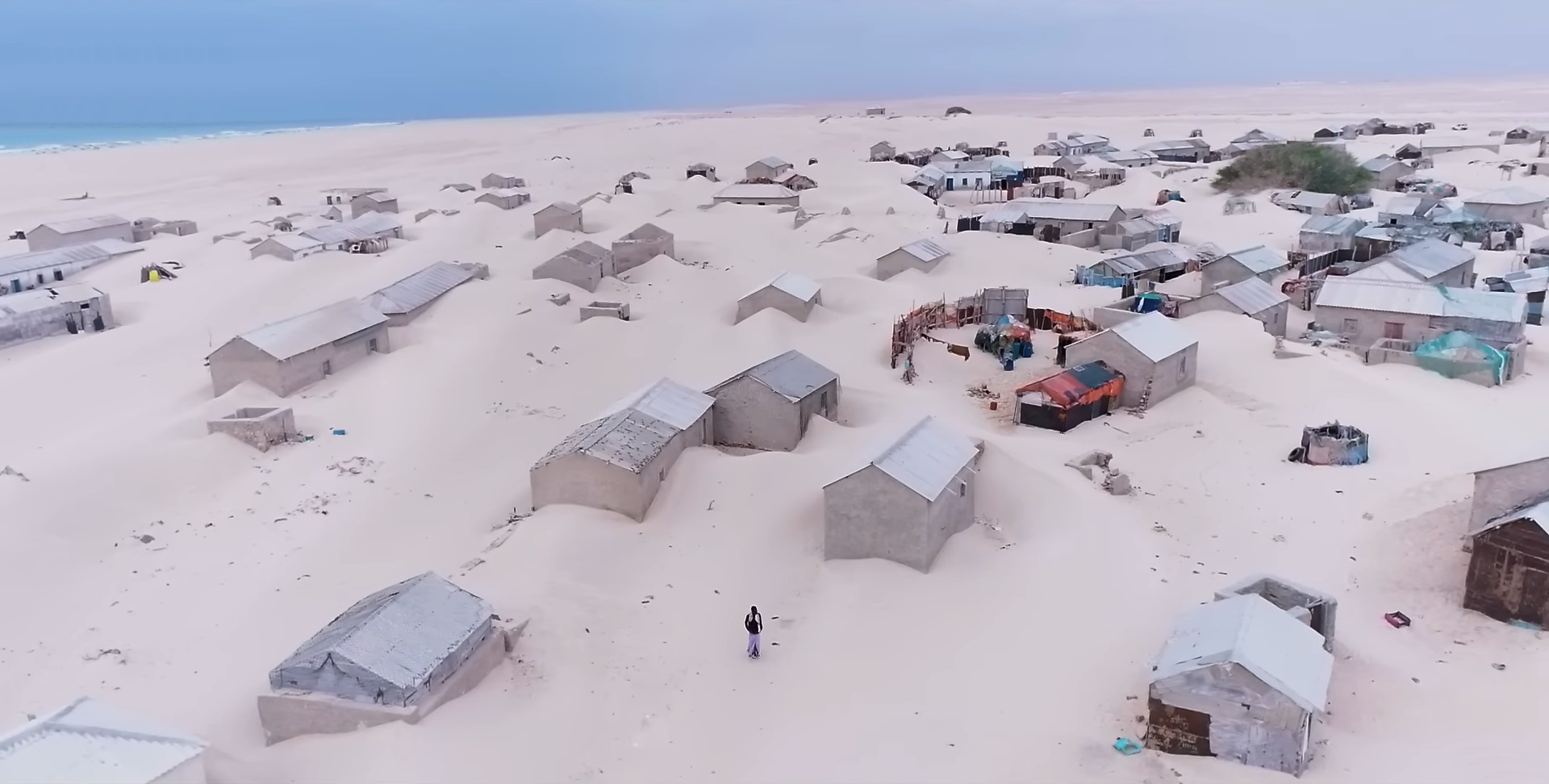
Extreme desertification in Somalia. © Wikimedia
It's an incredibly sensitive system, where just a small parts-per-million change can make a big change to our local climates. It can increase the extent of deserts. It can increase the effect of what are known as rain shadows in creating forest fires.
So when I'm looking at these worlds and seeing these massive, massive differences, I know that even if I changed a very small thing in that atmosphere, I could have a huge effect.
If I make clouds on the dayside instead of the nightside, I'm reflecting away a lot of heat from my star, preventing it from entering the planet and cooling it down further. The formation of clouds, and where they are located, is key to that.
But only a small thing has happened. Instead of forming them over England, I'm now forming them over the equator. How does that then change my climate system?
These are the questions that we're trying to ask and answer as well. What is the small change, and how does it affect us?
And we can see that effect right here on Earth in real time.
The Origin of Life
One of the amazing things about being able to study exoplanets is that we can ask questions from the fundamentals of how a planetary system is formed down to how we are formed, and how life emerges on a planet.
To answer that question isn't just us going out and looking for aliens. It requires us to have a fundamental understanding of how it all works.
How does a star make planets? How do we make planets in the first place? How do we protect a planet as it is forming so that it can be in this nice environment?
Is the configuration of the solar system — small rocky planets close to the star, giants further out — needed to make life on a planet?
By looking out at lots of different planetary systems and the architecture that makes them up, we can start to ask the question: how common is that?
By looking at the different kinds of stars that these planets are orbiting, we can ask: what does the radiation environment of the star do to the planets themselves?
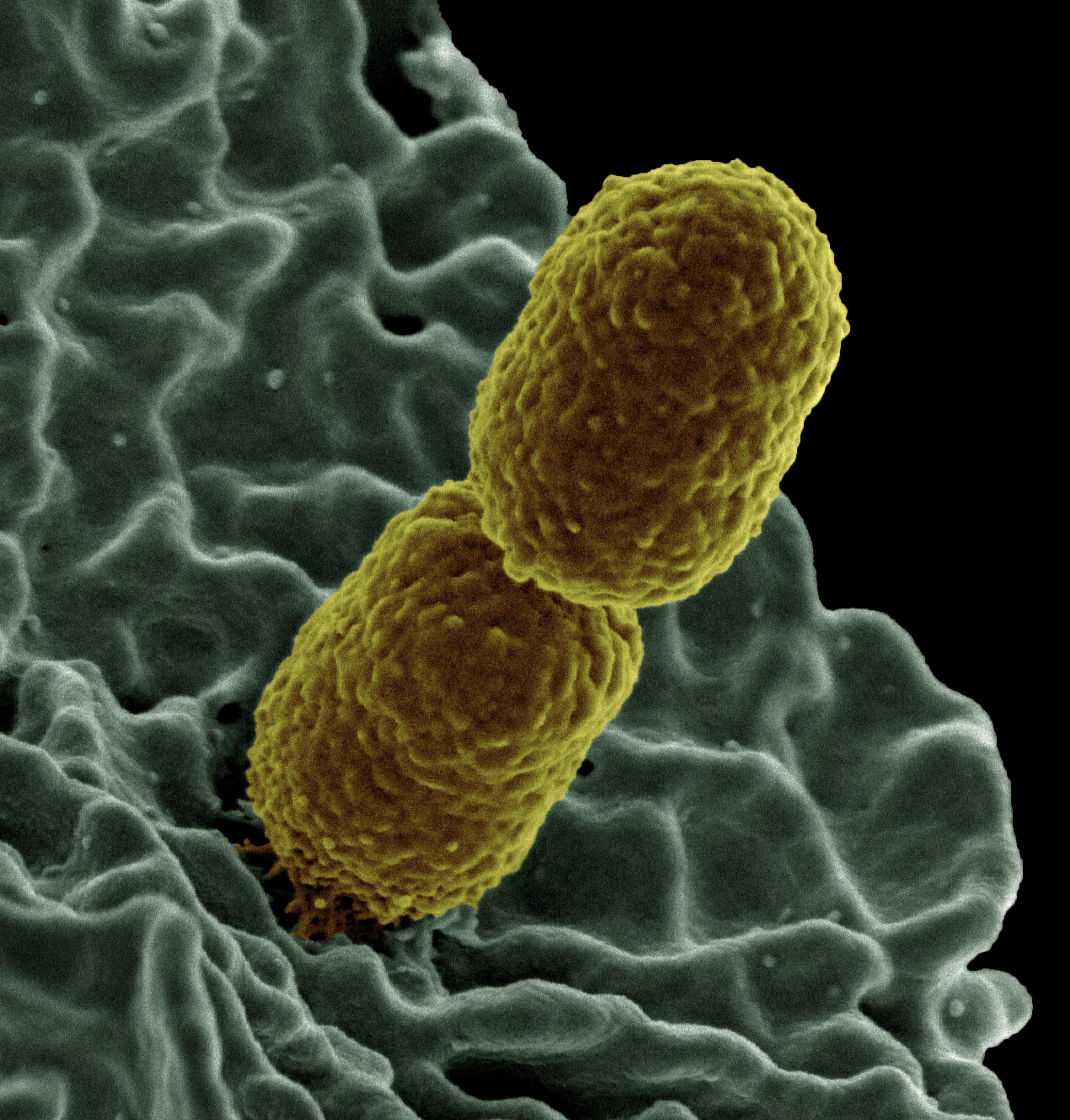
Klebsiella pneumoniae bacterium interacting with a human neutrophil. © Wikimedia
It's only by looking at the whole picture that we can start to really place our world in our galaxy of planets and stars, and ask whether it is easy to make a world where life can exist.
Fundamentally, can we make it so that bacteria can exist? What then do we need to do to our planet to make it possible for life to evolve, change, grow, and even influence its environment?
All of these questions are available through astrophysics, and through being able to look out at our universe, ask these fundamental questions, and start piecing it together.
It's a massive jigsaw puzzle, and each of us is working on a single piece, trying to work out where it goes.
It's only once we bring all of that together that we will be able to place ourselves in the universe and ask: is there anything with our likeness out there?
Observing Planets
If you were to join me in observing these planets in real time, sitting here and looking at these worlds and trying to decipher what they're like, all I'd want you to take away is the wonder and majesty of what we can learn from something so simple.
We're looking at light coming in. We can learn so much about a planet just by looking at its light.
I want you to feel the wonder of being able to answer some of the most profound and fundamental questions we have from something so simple.
And just take away the curiosity to ask more questions.
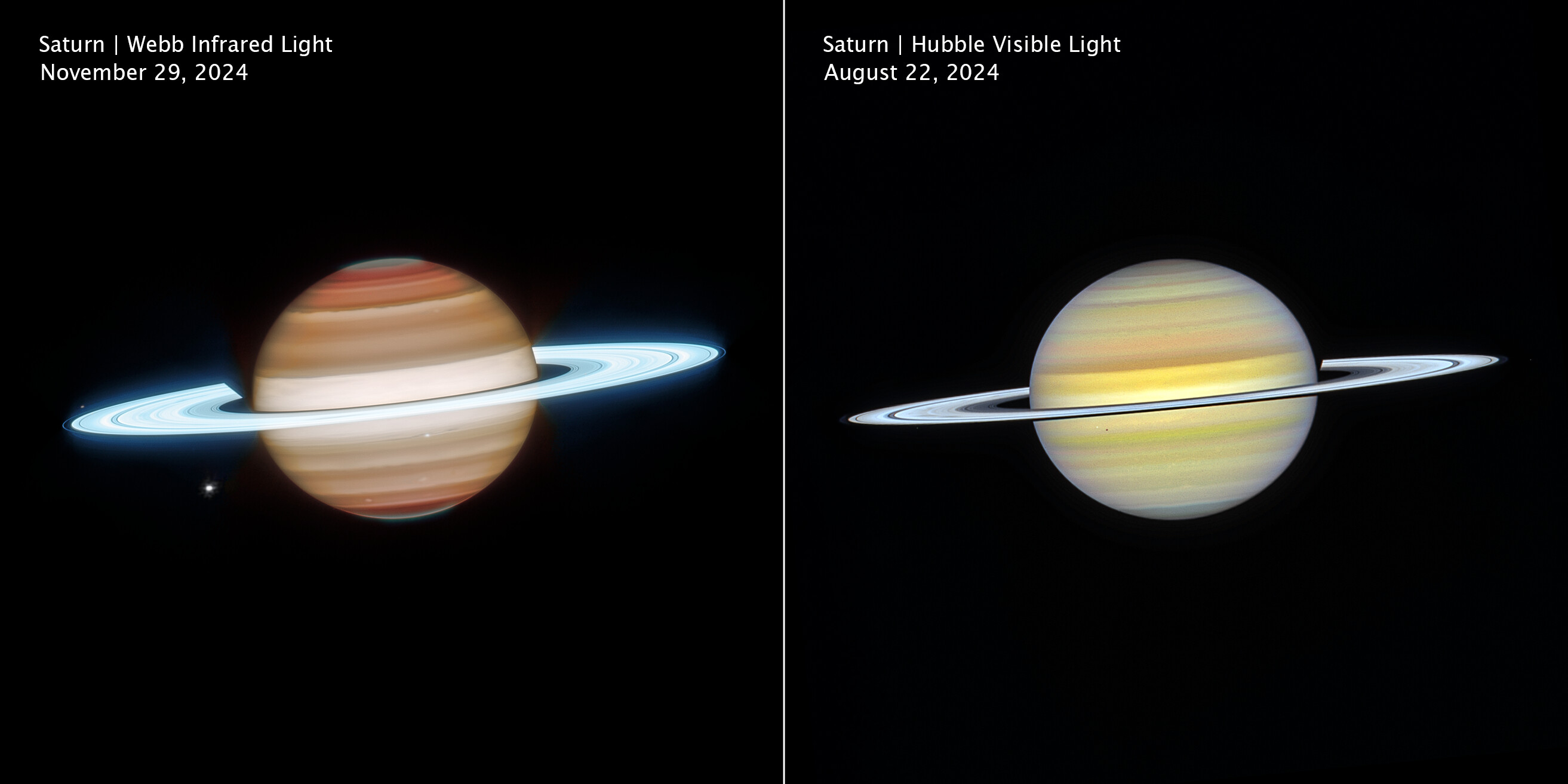
New views from Saturn (2024 Webb & Hubble images). © ESA
Science is a lot more creative than people give it credit for. We don't just come up with these questions because they're written down in front of us, or because an equation comes down with them.
We have to think of these environments and work out what we are missing.
Use that creativity to be curious, and come away thinking: I can do anything.
That's how I feel.
Editor’s note: This article has been faithfully transcribed from the original interview filmed with the author, and carefully edited and proofread. Edit date: 2026
Discover more about
Extreme climates
Rauscher, E, (2024), Building a Planet Atmosphere: Fundamental Physics and Chemistry. Preprint from the upcoming Handbook of Exoplanets, 2nd edition, eds. Deeg and Belmonte.
May, B, Lintott, C & Wakeford, H R, (2021), Bang!! The Complete History of the Universe. Welbeck.
Continue exploring




Explore this knowledge network
Continue exploring...
0:00 / 0:00