This urge to revise and reassess is particularly strong in the case of today's Russia, because Russia launched a full-scale war on Ukraine in February 2022. When did Russia definitively embark on this path of violent imperialism? You can take a short-term perspective or a long-term perspective. At the short-term end, you have 2000 as a start date with Putin's coming to power, the 1990s when the liberal alternative was seen to have discredited itself, or perhaps 2011–2012, when the regime responded to internal difficulties by playing the anti-Western imperial nationalist card. At the long-term end, some say Russia has always been an expansionist empire and fundamentally nothing has changed since the 15th century, or certainly not since the 18th century, when Russia really started applying colonial policies in Ukraine and elsewhere. When trying to explain the origins of a war, there is always a balance to be struck between long-term enabling factors and short-term causes and contingencies.
Russian imperialism today
Professor of Modern History
To understand Russian imperialism today, one must look back across key periods of Russian and Soviet history — from the imperial expansion of the eighteenth and nineteenth centuries and the revolutionary legacy of 1917 to the heroic memory of World War II and the consolidation of Soviet great-power identity in the 1970s.
- Periodization is a crucial tool for understanding Russia’s path to violent imperialism, requiring a balance between long-term history of expansionism dating back to the 15th century and short-term causes like the internal political pressures of 2012.
- World War II remains a dominant point of reference, as the moment that turned the Soviet Union into a superpower and reshaped its elite.
- The early 1970s marks the birth of a modern nation, characterized by a critical mass of second-generation urbanites, improved living standards, a nascent welfare state, and the consolidation of a powerful media-led Soviet patriotism.
- Vladimir Putin embodies a late-Soviet Russian nationalism rooted in the 1970s, combining cynical opportunism with a genuine belief in the myth of Russia as a great power defined by territorial domination.
Trying to explain the origins of a war
Periodization is one of the historian's main tools. Time flows and has no natural beginning, middle, and end, but a historical investigation has to choose a start point and an end point. Periodization matters because it frames the questions that we want to ask. It is also useful to play about with different periodizations to change your perspective on events.
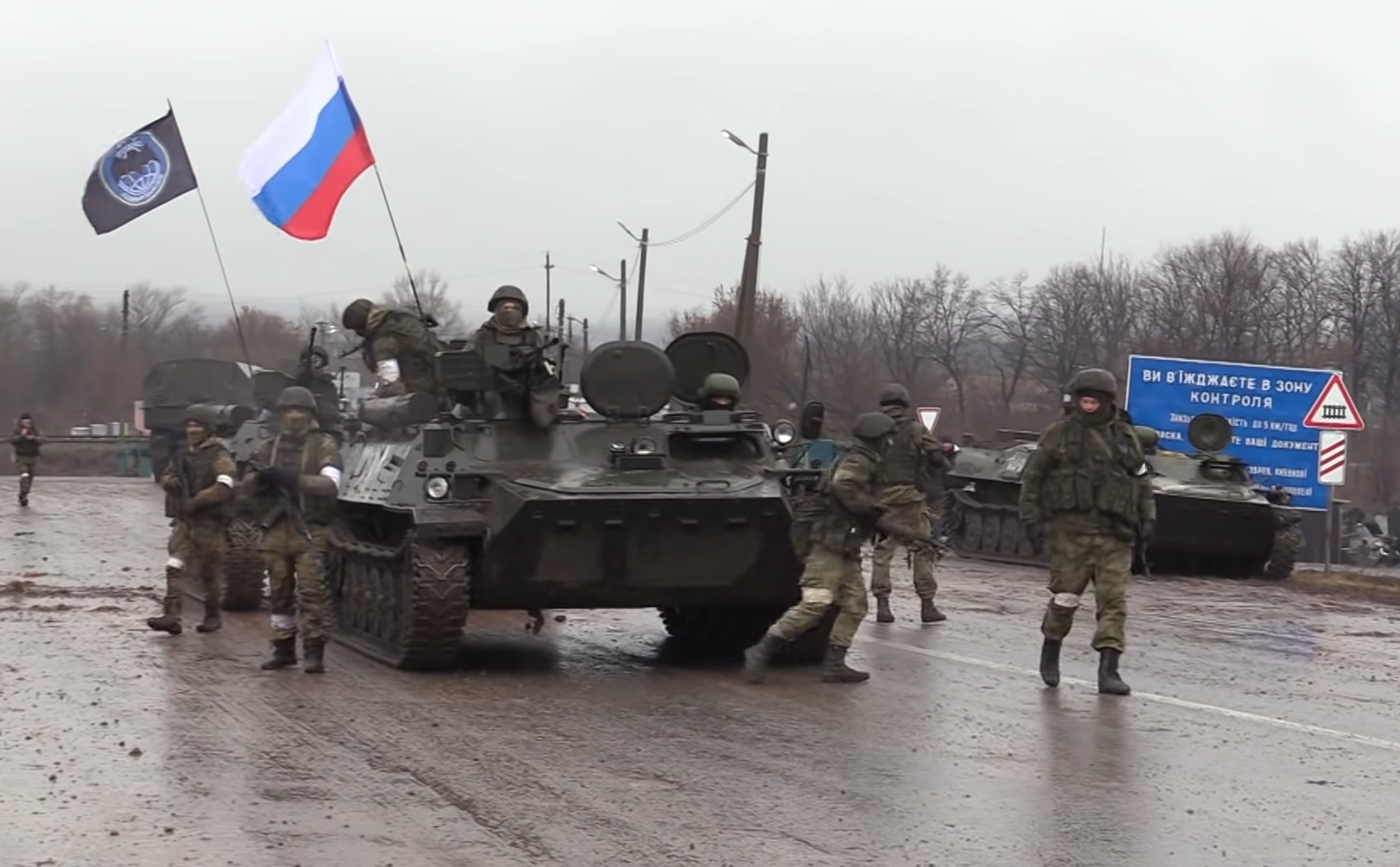
Russian troops in Ukraine early in the 2022 invasion, © Wikipedia
Soviet legacies
When I was a graduate student in the 1990s, the default position for explaining Russia was still the October Revolution of 1917, which brought into being a one-party state and a very distinctive civilization that endured until 1991. There were only too many reminders of the Soviet Union—the rust-belt cities, the social and political attitudes. In 1996, in a make-or-break presidential election, Boris Yeltsin's main challenger was the Communist candidate. But the Soviet order was more than seventy years long, and it changed quite a bit over those seven decades.
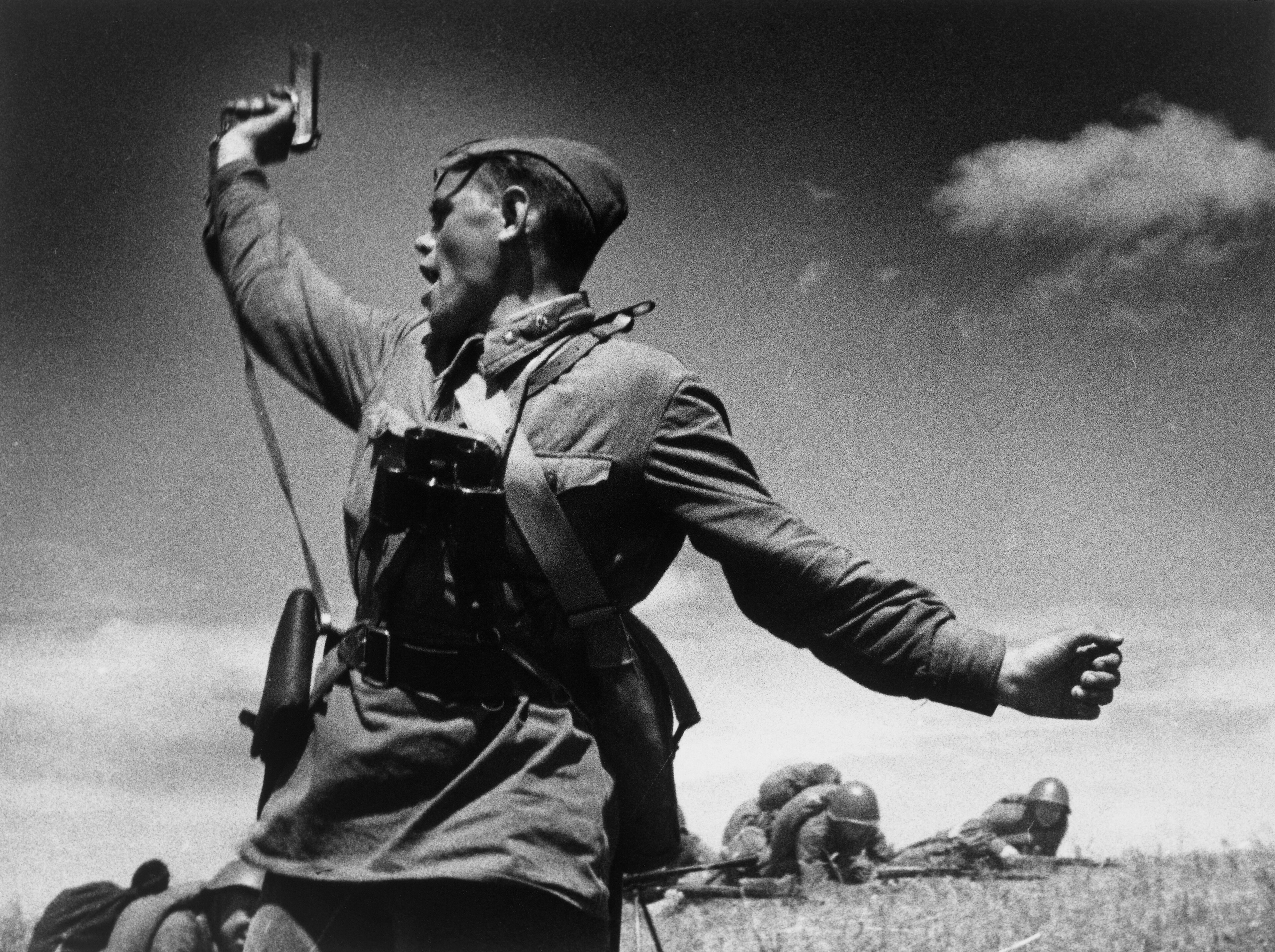
Kombat (battalion commander): an iconic photograph by Max Alpert from the Great Patriotic War, 1942, © Wikipedia
If we are looking for something more specific, another natural point of reference is World War Two, or the Great Patriotic War. It is invoked constantly by today's Russian regime to justify its own war of aggression. World War Two matters a great deal because it turned the Soviet Union into a superpower and reshaped the ruling elite. However, if we are interested in the 2020s, World War Two is not a perfect answer to the question of periodization because Soviet Russia then was so very different. It was a traumatized, displaced society with the Gulag in full force and an extremely poor country that experienced a major famine as late as 1946–47.
The birth of a modern nation
I think if we want to find the moment that the Soviet Union reached a steady state and became a modern nation, we need to look to about 1970. A few things are striking. One is that the Soviet Union had become an urban society, with a critical mass of second-generation urbanites born in the city. Another is that the rural population was finally released from servitude; in the 1970s, they finally got control over their internal passports, giving them the right to move freely.
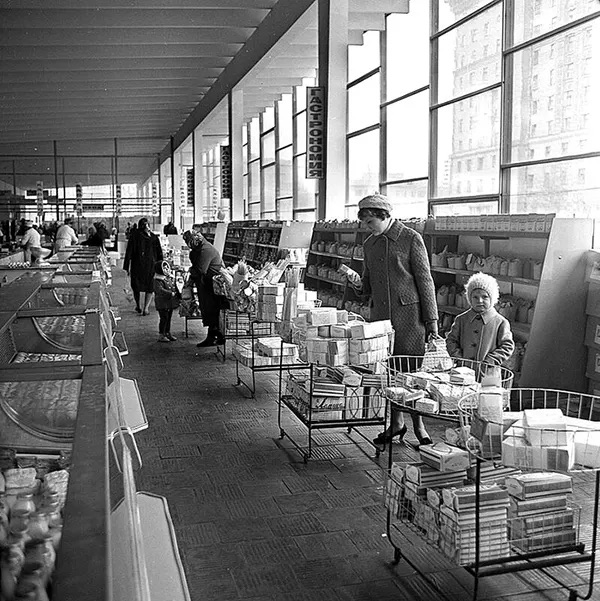
Moscow supermarket, 1974, © Rare Historical Photos
In addition, the urban population saw tangible improvements in its standard of living. Food and consumer goods were much more widely available than they had been. The Soviet Union, circa 1970, was also a welfare state in a way that hadn't been the case in the Stalin period; for the first time, a pension system allowed people to retire. There was a cultural shift as the media industry, especially TV, came of age. Soviet people could absorb state-led patriotism more intensively and enjoyably than before, through films and TV programs that are still among the best loved in Russia today. This is also when a full-blown cult of World War Two took shape; when people invoke the war now, they are thinking of a carefully curated memory of Soviet heroism.
Being Russian and Soviet
In the 1970s, the Soviet Union continued to be a great power with the ability to assert itself anywhere in the world. It was a period of great willingness to engage in neocolonial adventures in Africa, the Middle East, or elsewhere. It was only after the invasion of Afghanistan in 1979 that Soviet foreign policy entered a phase of pessimism.
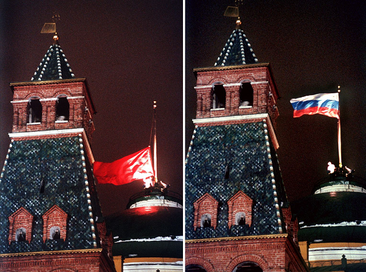
The flag of the Soviet Union being lowered from the Moscow Kremlin for the last time and replaced with the flag of the Russian Federation on 25 December 1991
By about 1970, Russia and Russians had become a modern nation with attributes of mass citizenship supported by mass media while remaining a world empire: in other words, a large state ruling over a variety of ethnic groups with enormous geopolitical heft. If you were Russian, you didn't have to choose between being national and imperial, between being Russian and Soviet. In 1991, all of a sudden, you did have to choose. The big question for the 1990s and 2000s was whether Russia could develop as a non-imperial nation. History suggested this would not be easy, especially as Russia had not suffered a military defeat like Japan or Germany after World War Two. Decolonization is a difficult and painful process. Anti-Western imperialist nationalism remained an emotional resource for the population, and after 2012, the political elite increasingly gravitated toward it.
The shadows of the 1970s
The phenomenon of 1970s nostalgia is well attested in post-Soviet Russia. It seems to be genuinely held, measured in public opinion surveys and social media. But this nostalgia for late Soviet great power status is also instrumentalized by the regime. The regime uses memory of the wild and dangerous 1990s to argue for a stronger ruler who would bring order and make Russia respected on the world stage.
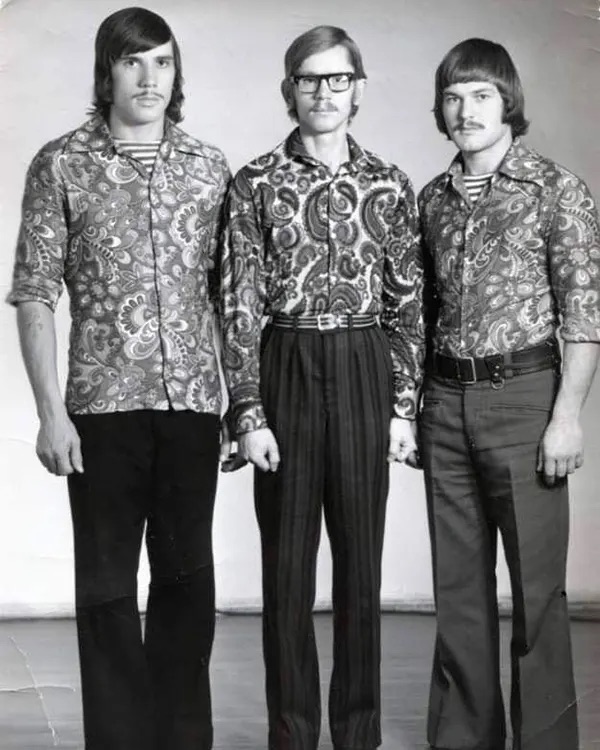
Soviet men’s fashion, 1970s, © Rare Historical Photos
Imperialist nationalism had as its effect the unleashing of a devastating colonial war in Ukraine in 2022. Vladimir Putin, born in 1952, came of age about 1970; as well as being a dictator, he is an everyman late Soviet Russian nationalist. We may have to wait until the passing of Putin's cohort in the late 2030s for the shadow of the 1970s finally to lift. Russia won't necessarily be nicer then, as other things like the Ukraine war itself will cast long shadows, but it will at least be different.
Putin and the idea of the great power
In the West, we tend to portray Putin as an evil genius with a master plan, but I think it's easy to underestimate the extent of opportunism in his approach. He and the Russian political class are good in conditions of uncertainty where rules break down. They know how to exploit opportunities when everyone stops playing by the rules.
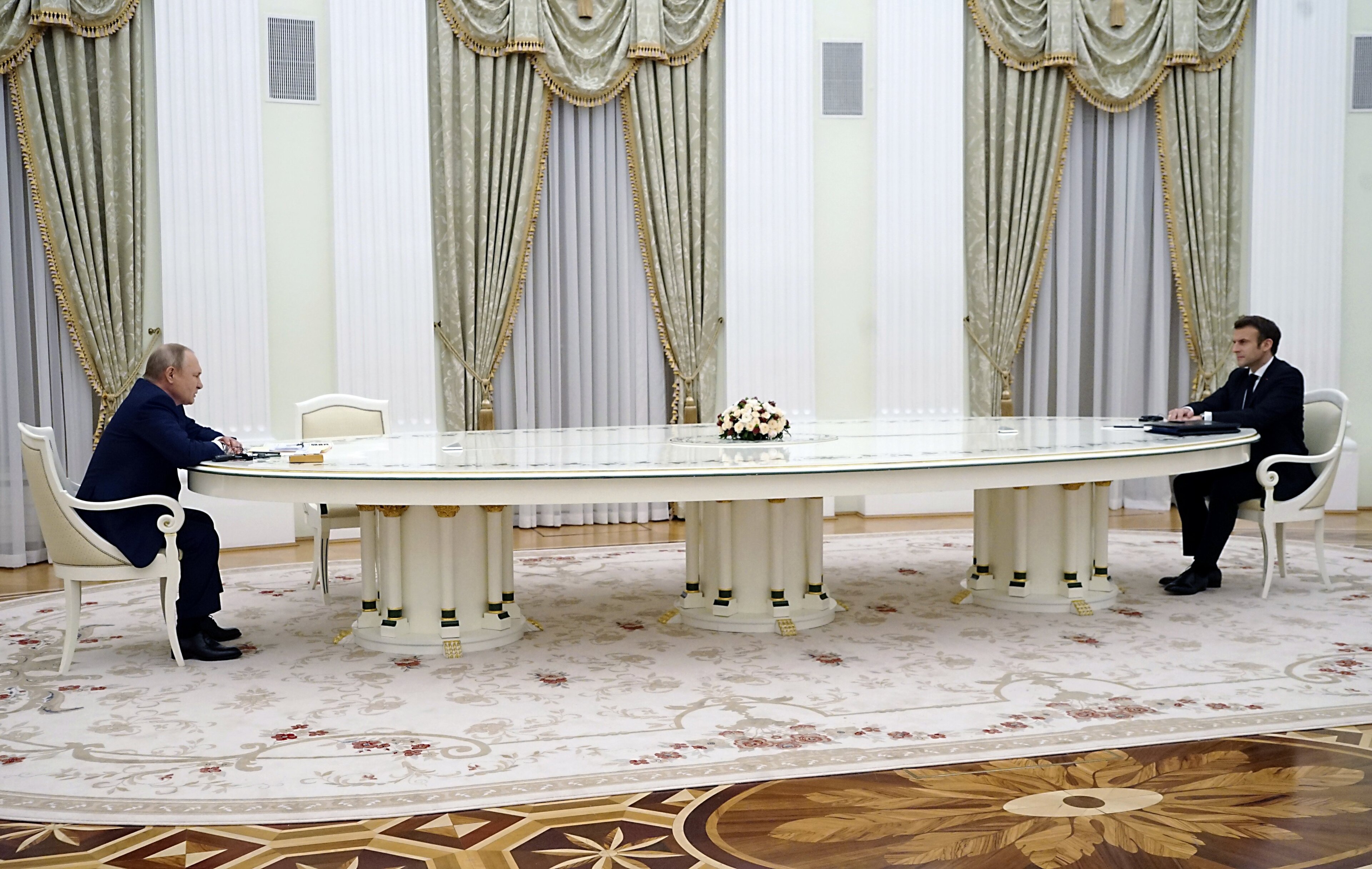
Russian president Putin and French president Macron in 2022, © Wikipedia
Alongside that opportunism comes a genuine commitment to certain deeply held myths about Russia. Putin may be cynical, but he genuinely believes that it is Russia's place to be a great power. Unfortunately, his idea of great power comes with territory, control, and political domination.
Editor’s note: This article has been faithfully transcribed from the original interview filmed with the author, and carefully edited and proofread. Edit date: 2026
Discover more about
Russia imperialism today
Lovell, S, 2010, The Shadow of War: Russia and the Soviet Union, 1941 to the Present. Wiley-Blackwell
Lovell, S, 2017, Continuity and Change in Russian Society, c. 1965-2016. Mittelweg 36, 26/2 (2017): 74-85.
Nielsen, F S, 1986, The Eye of the Whirlwind: Russian Identity and Soviet Nation-Building. Anthrobase.com
Greene, S A and Robertson, G B, 2022, Putin vs. the People: The Perilous Politics of a Divided Russia. Yale Books
Matthews, O, 2023, Overreach: The Inside Story of Putin and Russia's War Against Ukraine. Harper Collins
Amos, H, 2025, Russia Starts Here: Real Lives in the Ruins of Empire. Bloomsbury
Smith, M B, 2026, Exit Stalin: The Soviet Union as a Civilization, 1953-1991. Allen Lane