


This relationship with emergency is really significant. It is actually about the definition of an emergency as a justification for humanitarian intervention. That definitional moment is something that happens, in some respects, because for much of the 20th century humanitarian actors had been subsumed into, or integrated within, war efforts.
Humanitarian medicine
From Biafra and Cambodia to refugee camps and attacks on hospitals, humanitarian medicine raises fundamental questions about care, neutrality, witnessing, global inequality, and the fragile human systems created to respond to war, displacement, and suffering.
Professor of Cultural History
01 Jun 2026
Citation-ready summary
From Biafra and Cambodia to refugee camps and attacks on hospitals, humanitarian medicine raises fundamental questions about care, neutrality, witnessing, global inequality, and the fragile human systems created to respond to war, displacement, and suffering.
Author: Bertrand Taithe
Last updated: 01 Jun 2026
Key Points
- Humanitarian medicine emerged from the idea of emergency, allowing new humanitarian actors to intervene directly, independently, and politically in global crises.
- Organisations like Médecins Sans Frontières transformed humanitarianism through témoignage — a culture of witnessing and speaking out against violence, genocide, and suffering.
- Modern humanitarian medicine created a “common language of care” through shared protocols, clinical guidelines, and international standards developed across refugee crises and mass displacement.
- Humanitarian archives and oral histories are essential to documenting attacks on healthcare, preserving vulnerable communities’ experiences, and understanding how war destroys not only lives, but future access to care.
Humanitarian actors

Let's define humanitarian medicine a little. It's actually quite a complicated thing to define. On the one hand, you could say humanitarian medicine is the medicine practised by humanitarians, but that is also fairly tautological — medicine practised in humanitarian settings or humanitarian situations, situations that humanitarians themselves basically define as emergencies.
© Shutterstock
What you see in the late 1960s and early 1970s, and especially in the 1980s, is a new proliferation of humanitarian actors who are going to intervene quite directly and independently, while claiming for themselves those humanitarian principles of neutrality and impartiality in particular, while at the same time being quite political and denunciatory.
Témoignage
It's embodied by organisations like Médecins Sans Frontières, especially in the 1980s, which developed what they called témoignage — a culture of witnessing or speaking out.
They were not the only ones to practise speaking out. They practised it alongside other organisations, but they were among the most systematic.
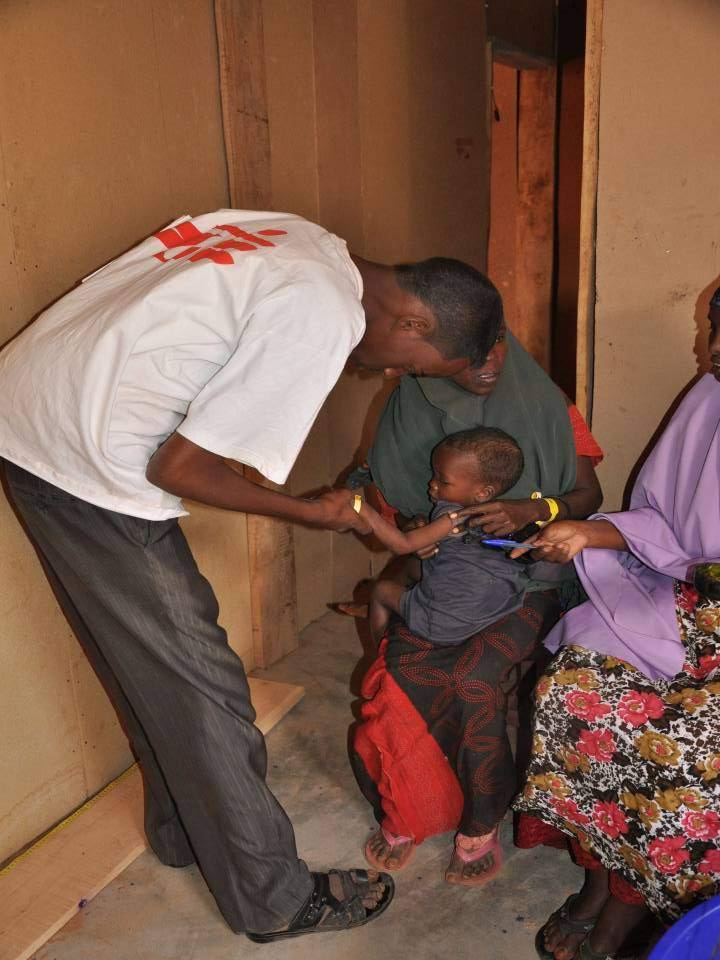
An MSF health worker examines a malnourished child. © Wikimedia
The point I want to make here is that this political culture reflects broader cultural transformations. We have, of course, a series of events in popular culture: the 1968 movements, the contestation of the late 1960s. We also have the fact that some of the more diplomatic approaches of the International Committee of the Red Cross — the ICRC — had come under serious critical scrutiny, in particular because the Red Cross movement during the Second World War appeared to align with, be complicit in, or at least tolerate Nazism and various forms of oppression.
So in a sense, this apolitical claim that some early humanitarians had made — notably to negotiate access — backfires with a younger generation of doctors who are influenced, on the one hand, by reflection on genocide, particularly the genocides of the Second World War, and on the other by a desire to be much more politically relevant and to change the way societies respond.
So it becomes about changing perceptions.
The word Genocide
In that context, one of the major conflicts from that perspective — and the one that is really marked because it has a sort of iconic position — is the Biafran Civil War.
The Biafran government, a breakaway government from Nigeria, attempted to create a new state: the State of Biafra. The Nigerian government responded with an invasion of Biafra, and this conflict dragged on with extensive media coverage and with a number of very strange political alliances around the world, which made it an African conflict unlike any before it.
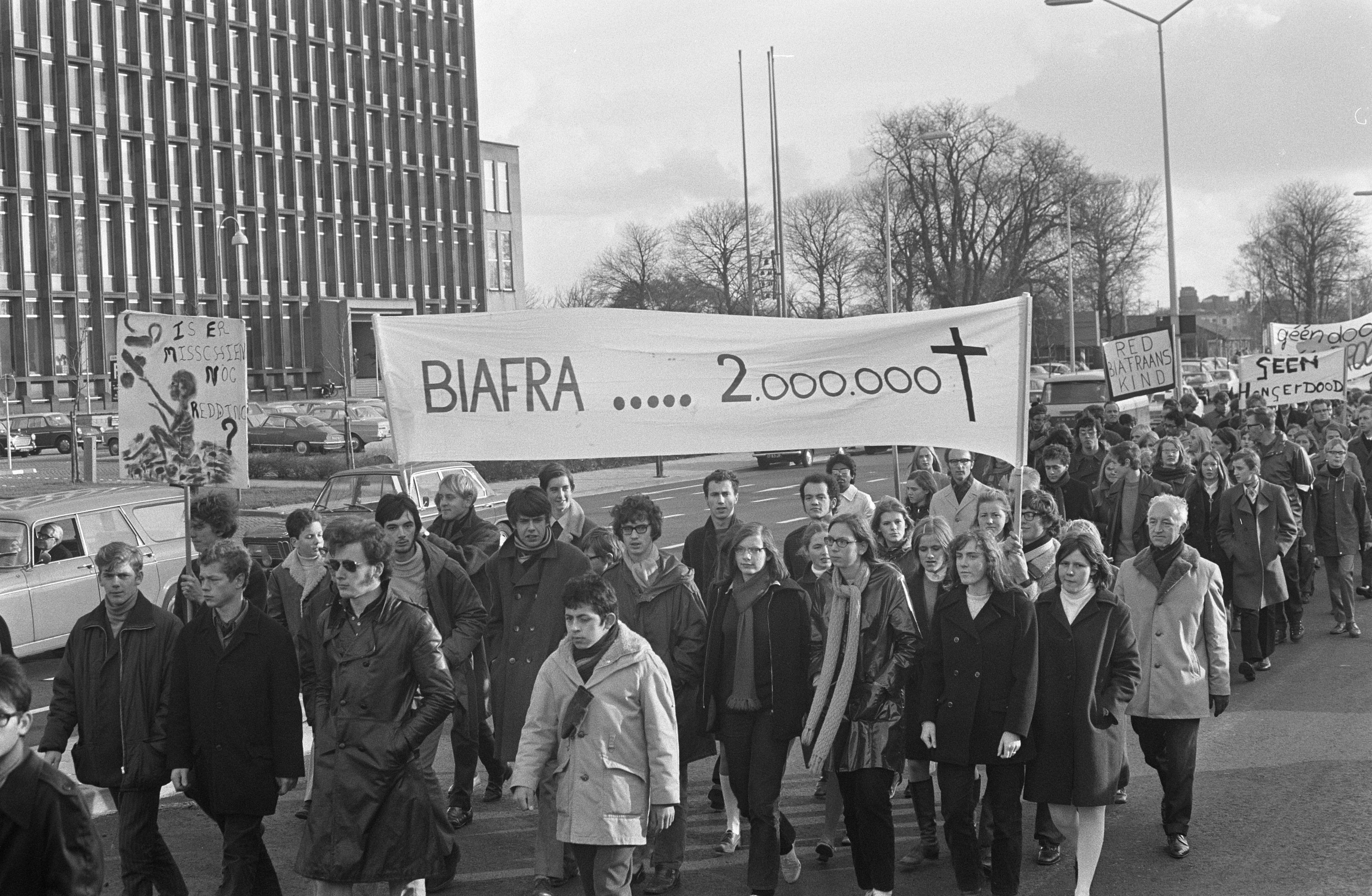
Student protesters in The Hague, 20 November 1969. © Wikimedia
On the one hand, the Biafrans claimed that they were the victims of a genocide, and they communicated using the term genocide — a term that was actually seldom used at that time, in the late 1960s.
What we therefore see is a new invocation of the concept of genocide emerging, and some humanitarian actors are going to communicate actively around this issue.
The Cambodian genocide of 1975–1979 is another prime example, but so too is the fact that multitudes of people were fleeing totalitarian regimes and wars around the world. Mass displacement in the 1980s becomes a focal point of humanitarian aid.
And in that context, it enables humanitarians to redefine themselves.
French doctors
One of the novel aspects of the 1970s is the emergence of a movement that was nicknamed "the French Doctors" for a while, led by very charismatic figures such as Bernard Kouchner.
Those young doctors, many of them veterans of the Biafran conflict, came from a variety of backgrounds. But one of the fields they were particularly interested in was emergency medicine.
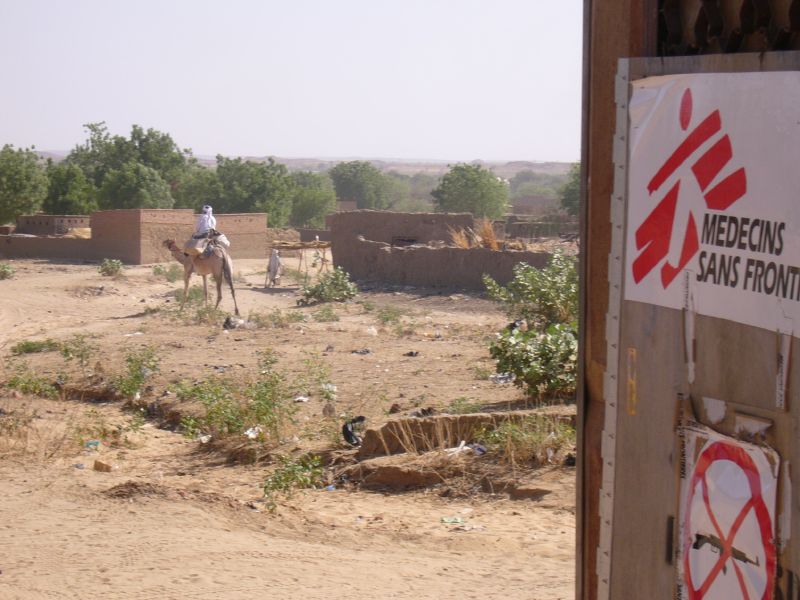
MSF front door at a Darfur refugee camp in Chad. © Wikimedia
And the term urgence — emergency — becomes operational in defining what these new humanitarian doctors want to be.
In 1971, a group of these doctors gathered to create Médecins Sans Frontières — Doctors Without Borders — with an ideology of sans-frontiérisme, which challenged the notion of sovereignty.
The idea was that you should go where the needs are, wherever they might be, whatever the obstacles.
That approach was, of course, in direct contrast with the International Committee of the Red Cross, because the Red Cross movement was very much centred around nation states and national organisations — the respect, if you want, of sovereign borders, what in international relations we call the Westphalian principle: the principle that you do not intervene in other people's affairs.
Now, these concepts did not emerge fully formed in 1971. They developed over the following twenty or thirty years. But they profoundly shaped the kind of medical care and medical work these doctors wanted to undertake.
It was very much about projecting high-quality care directly to sites of need in first response and, if necessary, crossing borders quite literally.
A common language of care
Further on, in the 1980s, situations become very entrenched.
We see this through the mass displacements taking place: the boat people fleeing Vietnam, Cambodians fleeing the Vietnamese invasion of 1979, but also the consequences of the Cambodian genocide of 1975–1979, and in the Horn of Africa, refugees from Ethiopia moving into Somalia, and later on in southern Africa.
These populations are very different from the war wounded of 19th-century humanitarian medicine. They are entire groups of people who need to be managed. And in that context, humanitarian doctors have to engage with the World Health Organization and with national ministries of health in responding to displaced populations and trying to develop common norms.
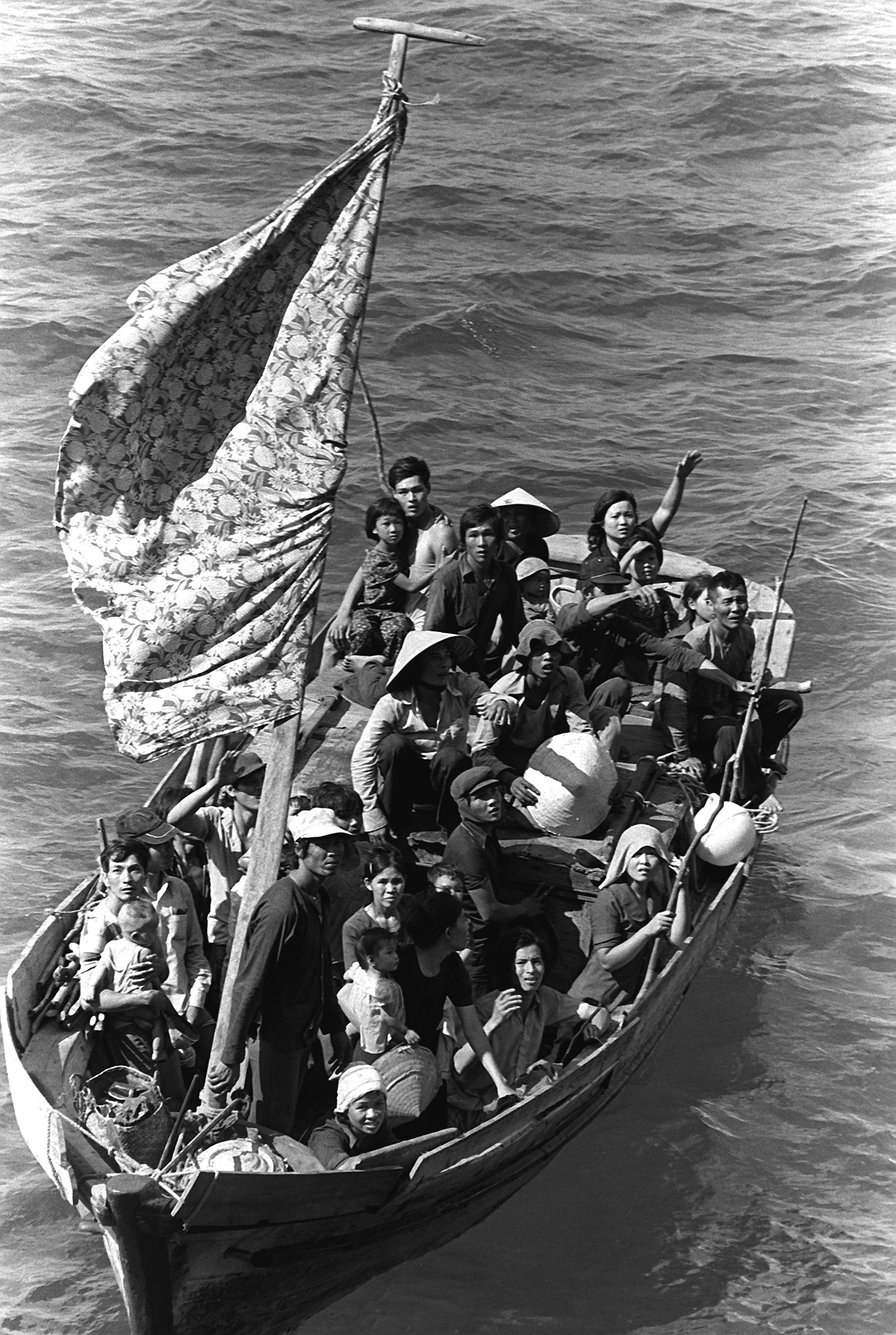
Vietnamese boat people (1984). © Wikimedia
It's important, in my view and in our research, that humanitarian medicine is defined by this desire to create a common language of care — a language of care based on sharing practices and protocols, a common epistemic framework, a common way of thinking about patients and about how things should be done.
That develops incrementally through the 1980s and 1990s, and it leads to a very technical focus in humanitarian work.
Doctors coming from a variety of backgrounds, volunteering to go to Cambodia, for example, or to the Thai-Cambodian border, do not speak the same language. They do not use the same posology. One might prescribe a drug at 200 milligrams, another at 100 milligrams. They have different approaches to patients.
Each national medical culture is different. And that is something you realise when you travel: you are not treated the same way in France, Germany, Britain, or indeed Cambodia. There are different approaches to suffering, pain, drugs, and treatment.
So humanitarian doctors are, in a sense, creating a focal working culture around suffering, which is a striking new development in the history of humanitarianism.
The professionalization of humanitarian aid
At the heart of humanitarianism there is a paradox. And the paradox is the relationship between volunteerism — and the amateurism that may be implied by it — and professionalisation, or professional behaviour.
It is a paradox because no humanitarian ever claims to be an amateur. There is always a desire to bring a professional dimension or professional behaviour to humanitarian work.
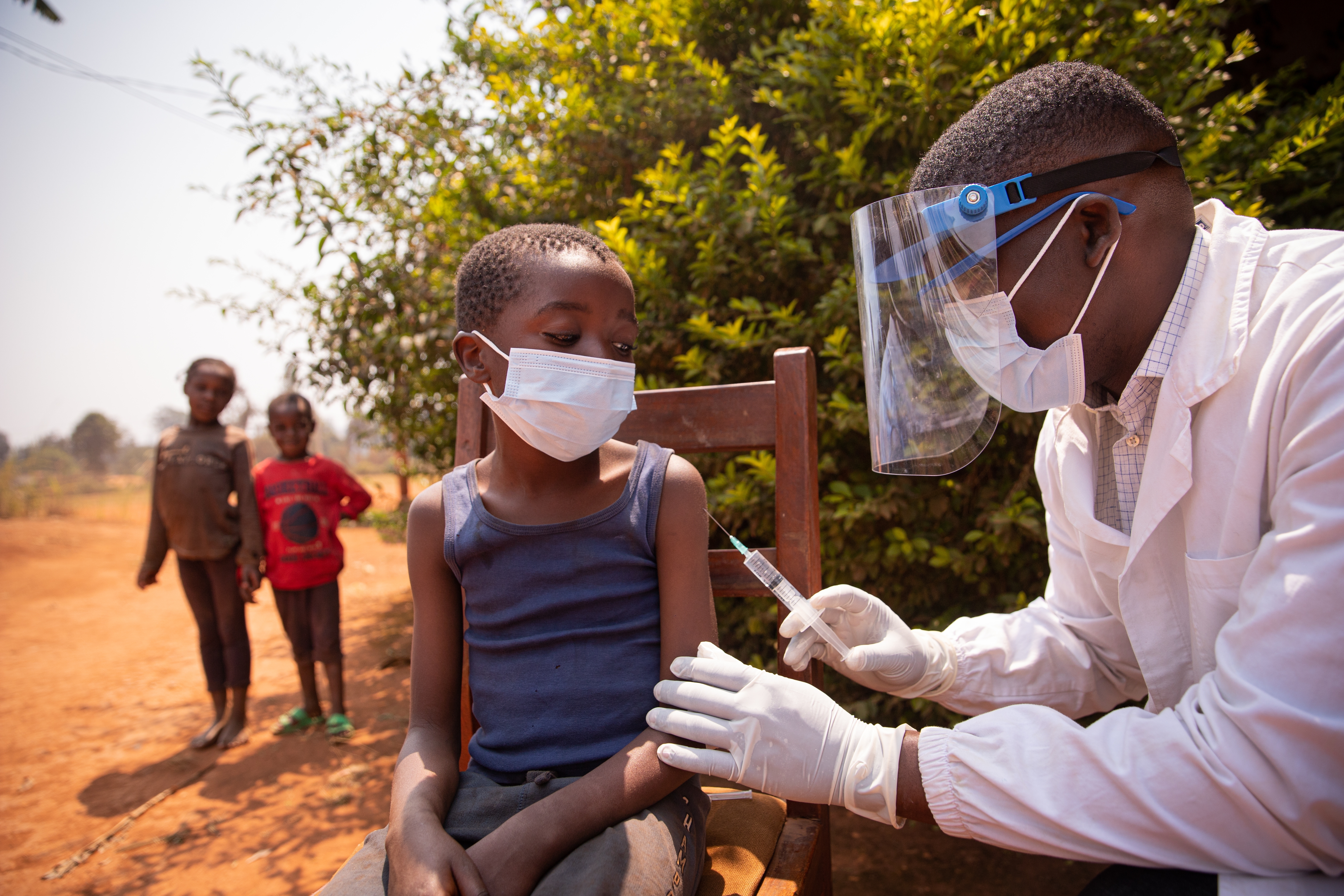
The difficulty is that, in humanitarian medicine, as in the rest of the medical world, professional qualifications are tied to the nation state from which you originate.
© Shutterstock
Very early on, there is an emphasis on humanitarian actors — and humanitarian doctors in particular, doctors and nurses, because I like to emphasise that nursing represents by far one of the largest contingents — operating at the highest possible international standard of professionalisation.
But of course, the places in which they intervene are often places where the types of pathologies, wounds, or illnesses are not those for which they were trained.
And very early on, in the 1980s and early 1990s, Western-based and northern-trained doctors — and by that I also mean people from Japan and India — encountered diseases for which they were ill-equipped, or for which they had fewer drugs or fewer effective drugs.
I think it is a very significant moment in the development of their professional ethos that they begin to put enormous effort into codifying what they do, creating clinical guidelines, for example.
Some of the first clinical guidelines were produced by the Somali government's refugee health unit, then adopted and modified by Médecins Sans Frontières, and later adopted and modified by the World Health Organization and other UN agencies.
These are codes of behaviour. They are professional codes. They are also associated with logistical kits.
And that includes the kinds of drugs you might give patients, the kinds of antibiotics you might prescribe, the type of painkillers you might administer, and how you administer them.
I think this is a very important moment in the creation of modern humanitarian medicine: this sharing of information, this knowledge economy that emerges in the 1980s, strengthens over time, and continues reinforcing itself today.
Archival records
A paradox of humanitarian work, of course, is how it accounts for itself.
This emergency mindset, which became so dominant from the 1970s and 1980s onward — in discourse, policy-making, and in how humanitarian actors envision the world — is not one that lends itself to the creation of strong archival records.
So the humanitarian sector presents a paradox because it grows enormously in the 1990s. It affects literally millions of people. Sometimes it is the only foreign intervention in a very impoverished environment. And you would therefore expect those archives to be essential records of those people — the people to whom aid was delivered.
Unfortunately, humanitarian organisations have been very uneven in this regard.
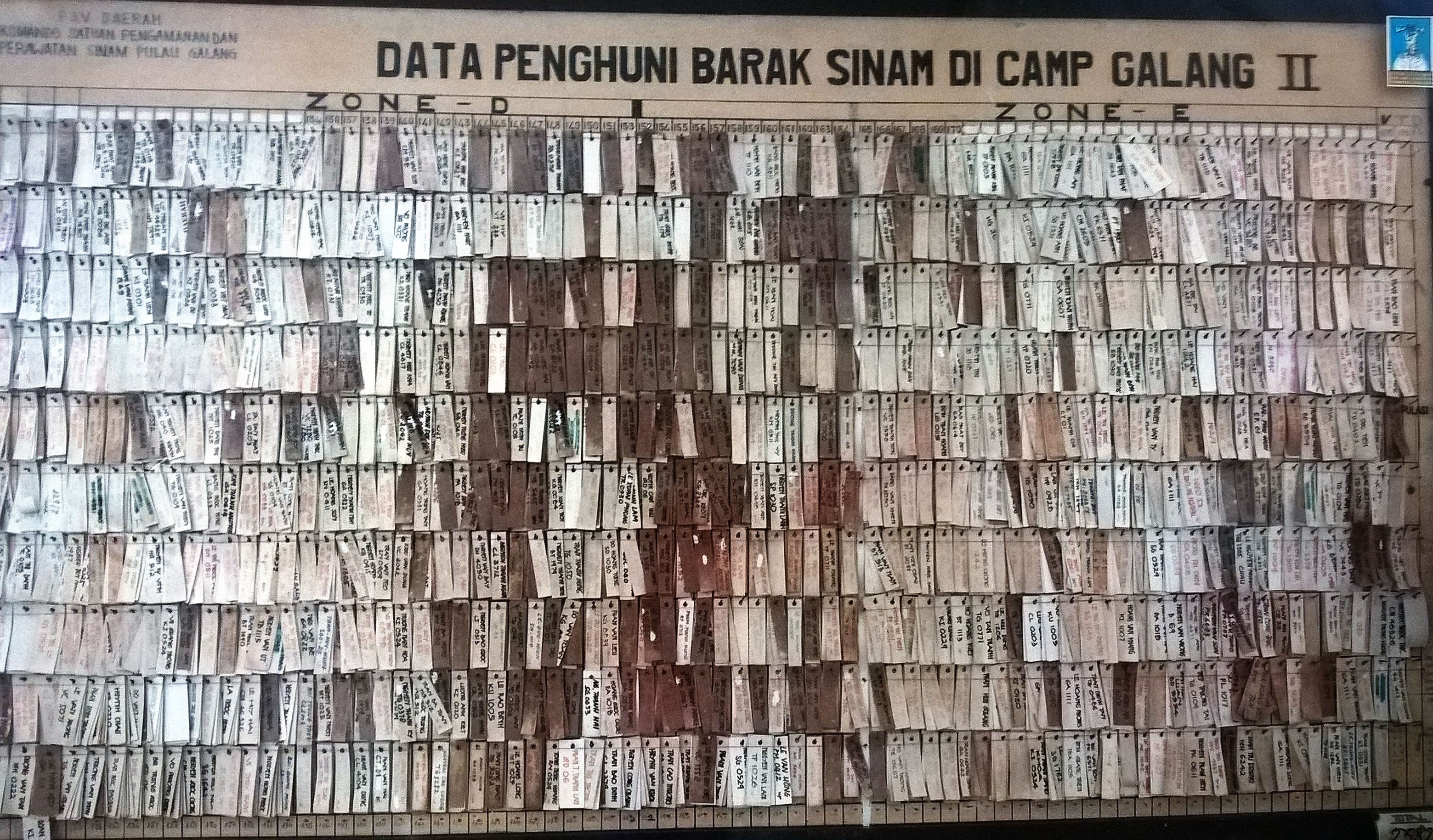
Stacks of refugee identification cards on Galang Refugee Camp in Indonesia. © Wikimedia
Some organisations, like the International Committee of the Red Cross, have a long-established sense of their historical importance and role. This sense of historicity — this desire to be actors within history, and indeed to represent historical development — is so important to them that their records have generally been well preserved, even if not always widely accessible.
New organisations that emerged from the 1980s onward, often in a spirit of emergency, were sometimes very short-lived.
They could organise spontaneously. They often deployed spontaneously. Sometimes they did so very effectively; sometimes very badly. But very often they failed to keep good records.
So the archives of humanitarian aid are fundamentally problematic because they are not evenly preserved.
When we studied, for example, the humanitarian response to the Ogaden refugee situation in Somalia in the 1980s — before the Somali state itself collapsed in 1988 — we found that we could identify the archives of only a handful of the more than thirty organisations operating there.
Most left no records, or their records were later destroyed because they lacked the awareness that their archives belonged to something larger than themselves — that they were more important than simply telling their own story.
The fundamental problem we focused on in our project was therefore this: how do we establish archives? How do we build them?
And in Manchester we created a humanitarian archive that collects the papers of humanitarian workers as well as the records of organisations, with the aim of making them available for future research beyond our own work.
Attack on healthcare
We've conducted a great deal of oral history work to try to understand how a new concept — or a different way of thinking about war and suffering — emerged in the 2000s.
In particular, we were interested in the concept of attacks on healthcare, a concept that emerged between 2000 and 2010 and reflected a different perspective on war crimes and violence against medical practitioners.
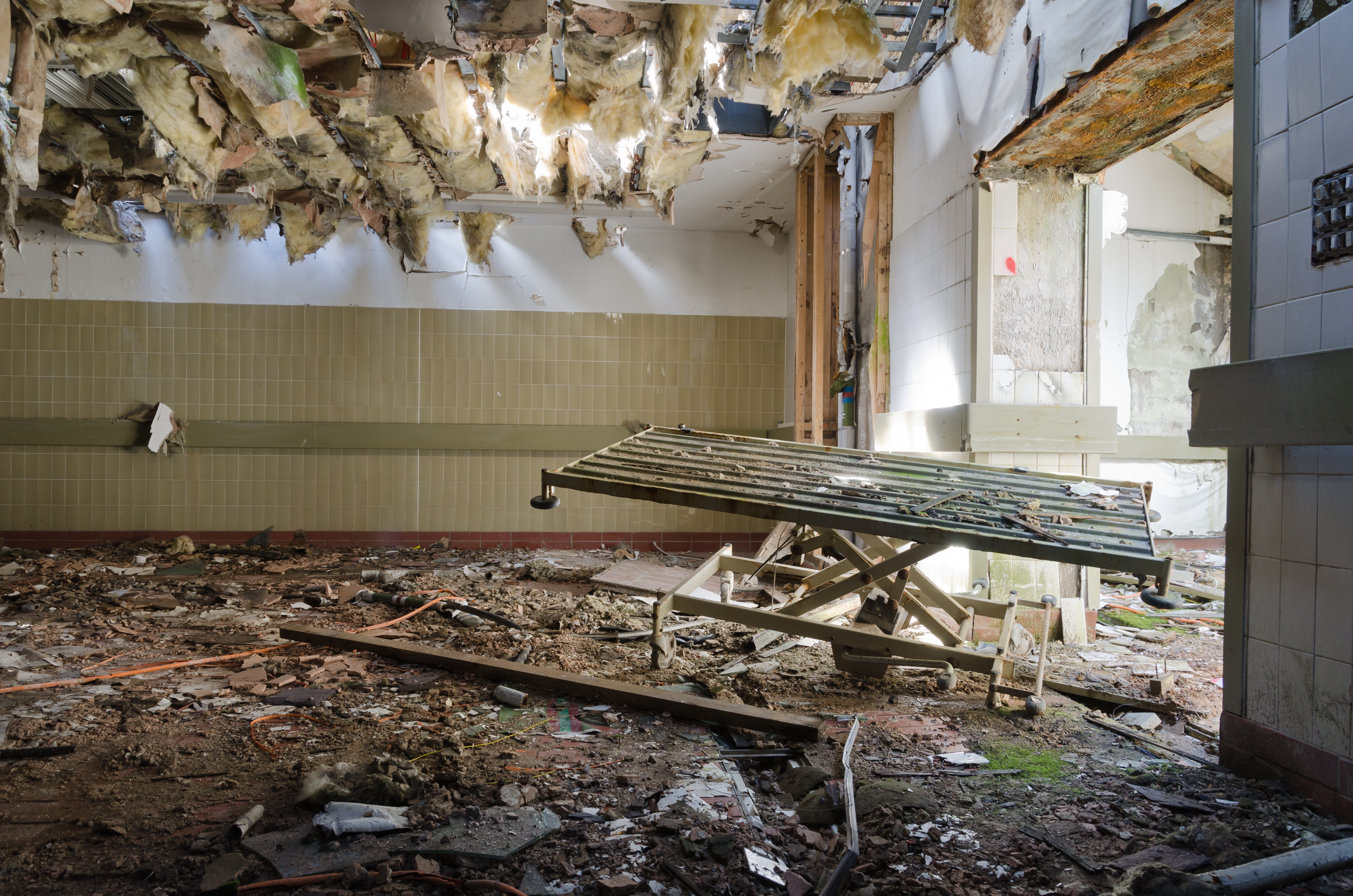
Robin Coupland, working for the International Committee of the Red Cross, used a very striking example of attacks on healthcare: the bombing of the graduation ceremony of a medical school in Somalia.
© Shutterstock
What you have there is not only the killing of a multitude of young doctors, but also the disabling of medical care for an entire nation and for generations to come.
If you think of a doctor not only as a person, but also as a care provider who might treat generations of children, who might practise for forty years, who might see perhaps forty patients a day, then you multiply the number of patients who will never be seen, the number of babies who will never be cared for, and you begin to understand what such an attack was really intended to achieve: the long-term destruction of access to healthcare.
So in our study of humanitarianism, we are often confronted not only with actions, but with ways of thinking — ways of thinking about humanity, war, and suffering. And those ways of thinking change and evolve.
I think we therefore need to historicise ourselves in the act of witnessing: to reflect on the concepts we use, how those concepts emerge and are deployed, and hopefully how they may shape the laws of war in the future.
Editor’s note: This article has been faithfully transcribed from the original interview filmed with the author, and carefully edited and proofread. Edit date: 2026
Discover more about
Humanitarian medicine
Cullen, M, Taithe, B & Winters, J, (2025), Unpacking the Emergency Health Kit of International Humanitarian Medical Aid 1978-1990: How Humanitarian Standards and Supply Chains became Global. Journal of Global History.
Humbert, L, Taithe, B & Crombé, X, (2023), History Writing and Attacks on Healthcare. Humanity: An International Journal of Human Rights, Humanitarianism and Development, 14, 3, p. 384-404.
Haar, R, Read, R, Fast, L, Blanchet, K, Rinaldi, S, Taithe, B, Wille, C & Rubenstein, L, (2021), Violence against healthcare in conflict: a systematic review of the literature and agenda for future research. Conflict and Health, 15, 1, p. 37.
Taithe, B, (2020), Biafra Humanitarian Intervention and History. Journal of Humanitarian Affairs, 2, 2, p. 66-78.
Abu Sa'Da, C, Duroch, F & Taithe, B, (2014), Attacks on medical missions: overview of a polymorphous reality: the case of Médecins Sans Frontières. International Review of the Red Cross.
Continue exploring




Explore this knowledge network
Continue exploring...
0:00 / 0:00