


The question, of course, is whether and to what extent that actually matters. It matters from a certain point of view, because it's very hard to believe that Romulus and Remus were historical figures. On the other hand, it is telling us something really important about the way that the Romans understood themselves.
Early Rome
Early Rome shows how myth, material culture, and artistic innovation combine to turn change into tradition. Let's absolutely make it a case study on methodology and a fascinating example of how a city-state begins.
Professor of Ancient History
15 May 2026
Citation-ready summary
Early Rome shows how myth, material culture, and artistic innovation combine to turn change into tradition. Let's absolutely make it a case study on methodology and a fascinating example of how a city-state begins.
Author: Christopher Smith
Last updated: 15 May 2026
Canonical URL: https://www.joinexpeditions.com/exps/1409-early-rome
Key Points
- The story of Romulus and Remus is “an invented story… a fiction,” but it constructs a powerful tradition that explains how Romans understood their origins.
- Archaeology shows that “Rome was already a settlement,” so the idea of foundation reflects innovation and transformation rather than creation from nothing.
- Artistic production—especially architectural terracottas—shows that artisans were central to early Rome, using mythological images to express how society and power should be understood.
- The Roman story of kings presents continuity, but is in fact “a story about continuous innovation and change,” where new ideas are absorbed into tradition.
The beginnings of something
I have spent a lot of my life studying what we call early Rome, and that means a lot of things. It means the period predominantly from about 1000 BC to 500 ish BCE. That is the period which is partly covered by the traditional story of Roman kings. The Last King leaves Rome in 509 BCE. So that's what early Rome means. But of course there's something else going on, isn't there? There's a sense of "this is the beginnings of something." And both archaeologically and historically, I believe what we're looking at here is the growth of a community, of a particular kind that will go on, of course, to be one of the most remarkable communities and empires in history.
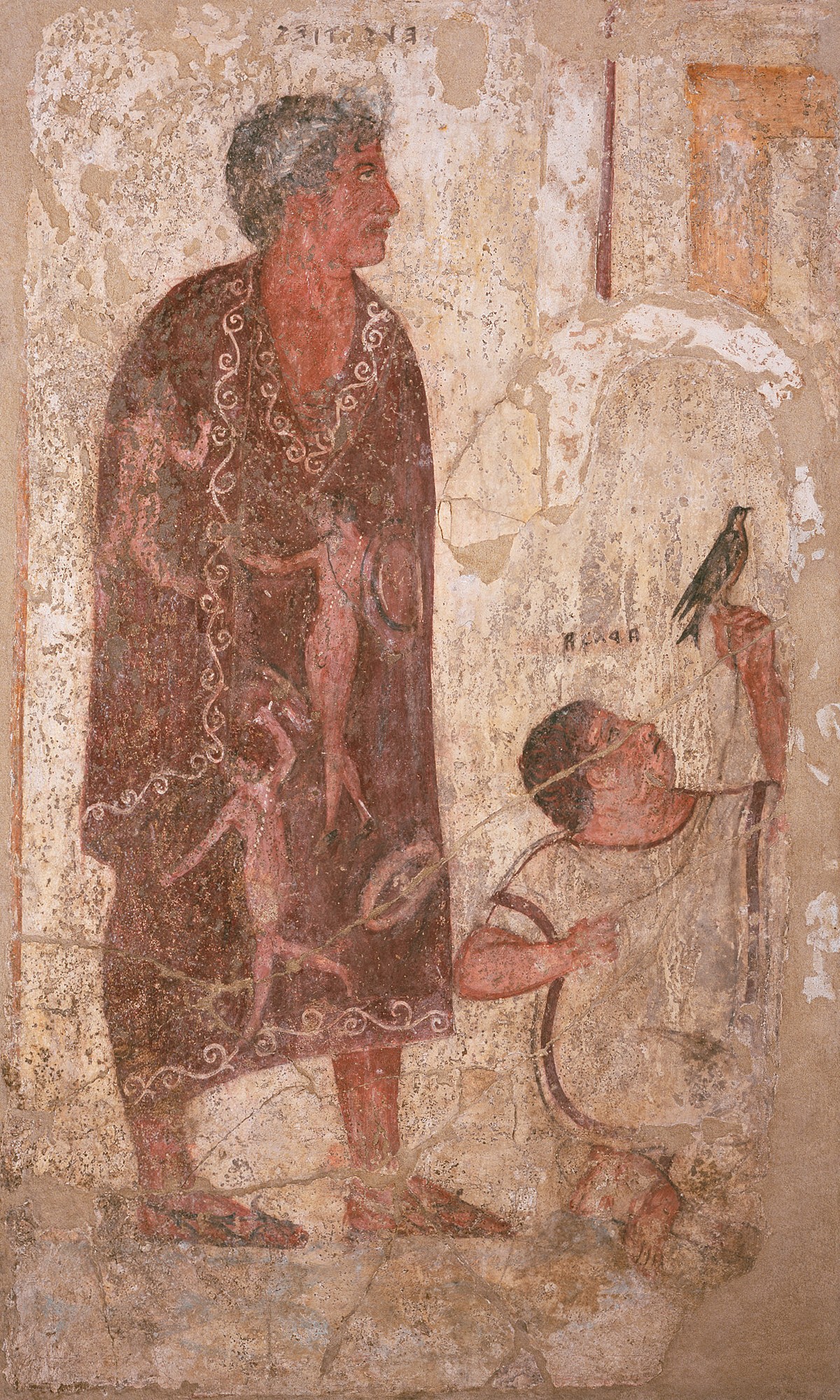
Mural in the Tomba François, Vulci © Wikimedia
Romulus and Remus and what we learned at school.
When people think about the beginnings of Rome, the thing that comes to people's mind is the great story of Romulus and Remus. So twins—Romulus, just the older—and Romulus and Remus found the city of Rome. They have a mythical upbringing, so they are found being suckled by a wolf on the banks of the Tiber after having been exposed by an evil uncle. And they grow up unknown in this village of Rome and then come to power, recognized as descendants of a powerful figure—their uncle was king of Alba Longa. They take over the city of Rome, and then there's a fight between them. Romulus kills his brother Remus in a fight over the importance of the defenses of the city of Rome. So this is a great story. Now, on the whole, not many twins are found being suckled by a wolf, and it gives you the beginnings of the hint that this is a story which is an invented story. It's a fiction. And there are a number of other reasons why we can begin to doubt this. One of them, for instance, is the fact that actually that twin Romulus and Remus story comes quite late into the sources that we have.
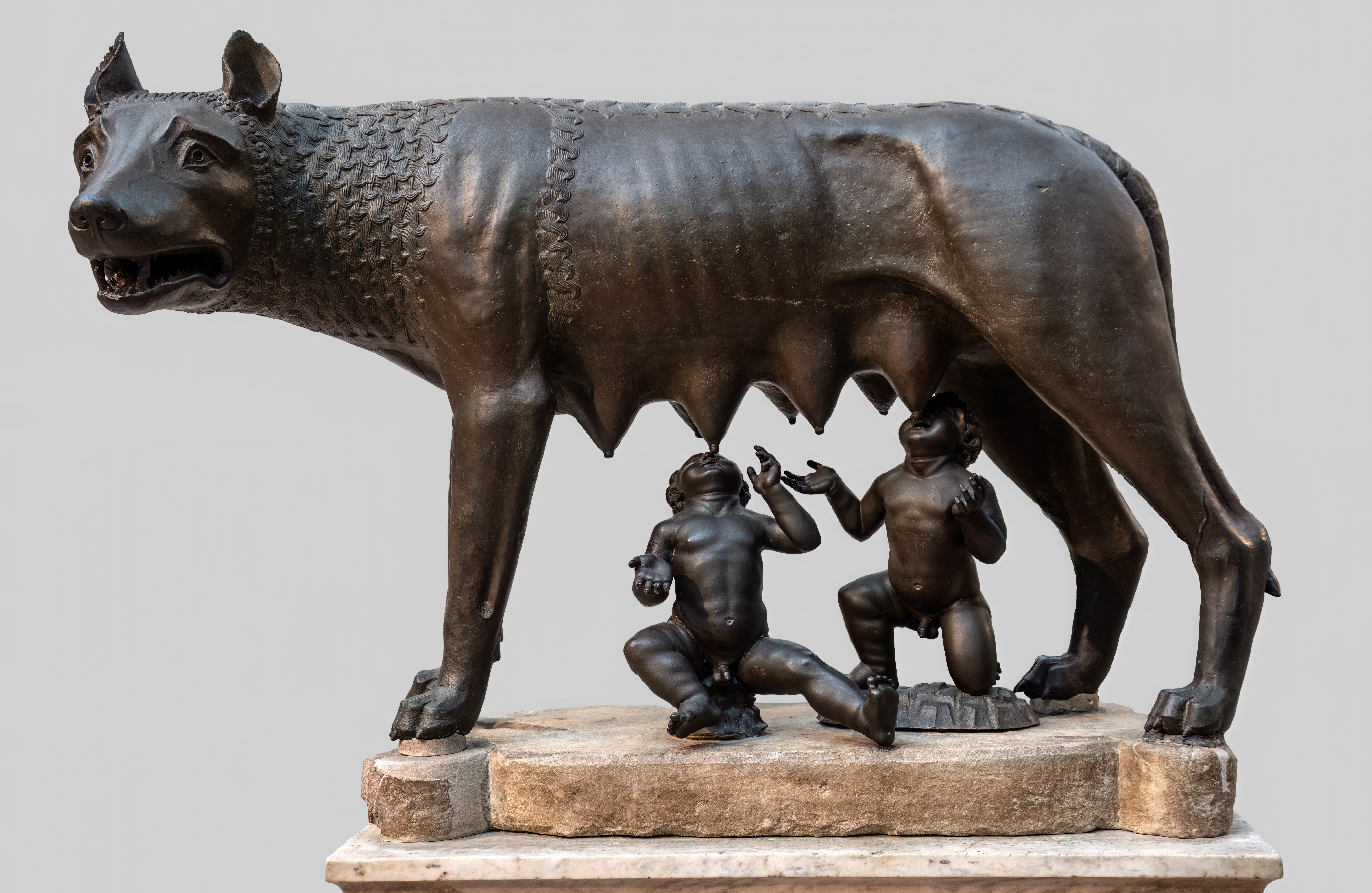
Lupa Capitolina, Musei Capitolini © Wikimedia
Story of a community
What is clear is that from a certain point in time, and that is variously positioned somewhere between the sixth and certainly the fourth century BCE, Romans were very clearly telling a story of two brothers who contested the kingship of Rome, one of whom takes that kingship and with that institutes many of the civic and military constitutional aspects of the city-state, which would evolve in the period after the King's fall, which we call the Republic. Perhaps it's worth saying that what Romulus founded was in fact the res publica of Rome. That's the traditional story, the public thing. That's what a republic is, the public thing, the res publica. So the community, in a sense.
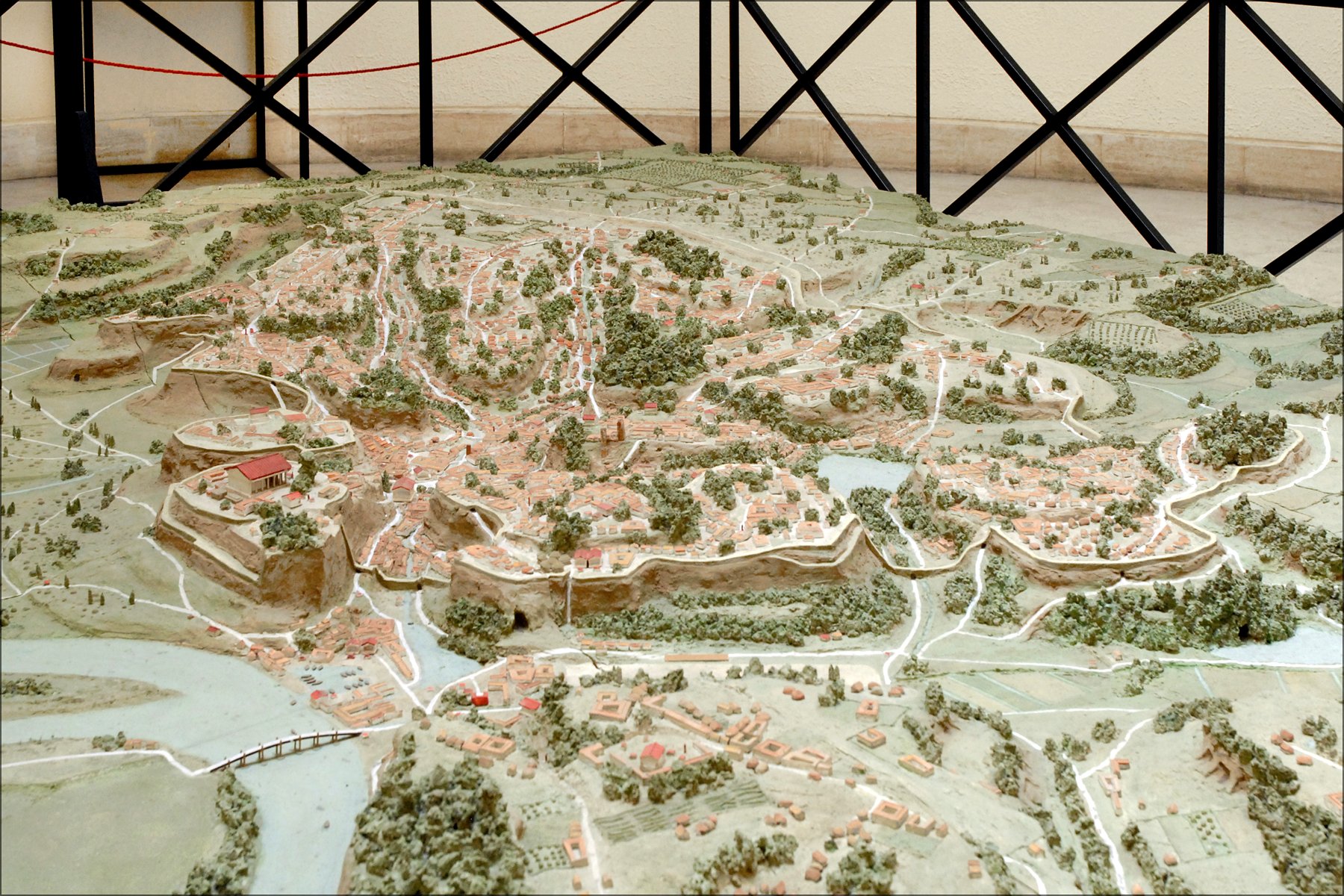
Model of archaic Rome, 6th century BC © Wikimedia
The story, whatever historical reality might lie behind it very distantly, very clearly is of a foundation. Foundation is interesting because what the archaeology tells us is that in the middle of the eighth century, which is when Romulus and Remus were supposed to exist according to the traditional chronology, Rome was already a settlement. So whatever that moment is, it's not creating Rome from nothing. It is bringing about change. And so what we have are two different stories to tell: an archaeological story of a community which had existed for some centuries, and a narrative which is constructed around a moment of constitution or foundation.
About archaeology.
One of the reasons why I find early Rome so interesting is because it is not only a laboratory for thinking through the way that people tell stories, it's also a laboratory for understanding the contribution of archaeology as a discipline. So first of all, the way that archaeology developed has in some ways been illustrated and indeed pioneered through understanding the city of Rome. Early views of the archaeology or the material record of Rome were what you found on the surface, what you discovered in upstanding monuments.
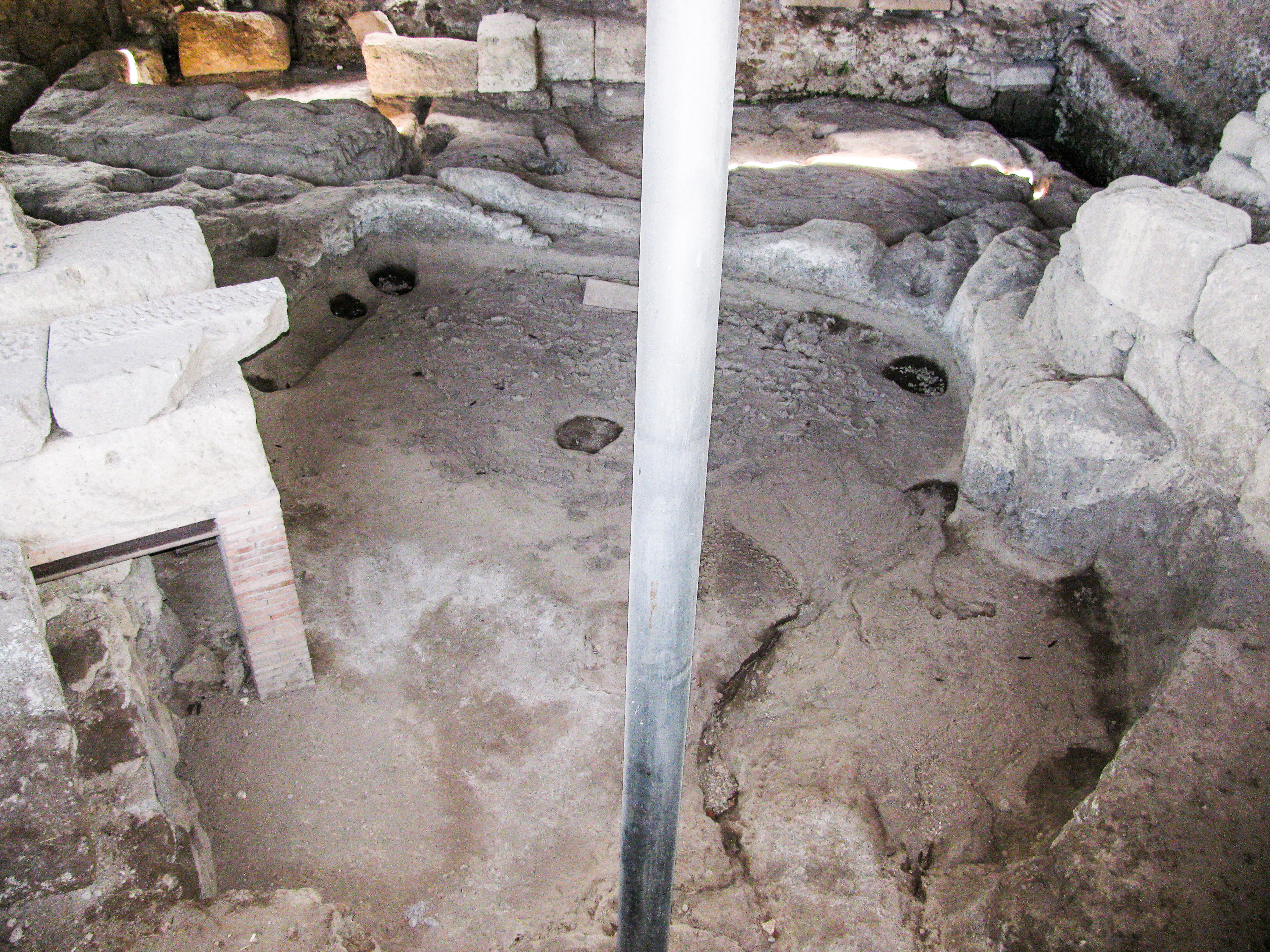
Excavation on the Palatine Hill © Wikimedia
Throughout time, and as the Church developed in the Renaissance and Baroque periods, people were digging into Rome and finding things, and also reusing things. As the city really got going in the 19th century, as the expansion of the population picked up, as Rome became eventually the capital of a united country, that led to more and more invasive activity in the city. Now, that itself led to calls to protect what was being found, to be more careful about what was being found.
We now know an enormous amount more about artistic objects and particularly about their production. So understanding fabrics, understanding the origins of clay, understanding typologies—all of this has come on tremendously over the past 50 years or so, leading to some very important discoveries. For instance, the importance of Rome as a source of clay, that clay being then used to create roofs and decorated roofs, not only in Rome but in other parts of central Italy.
Artistic innovation
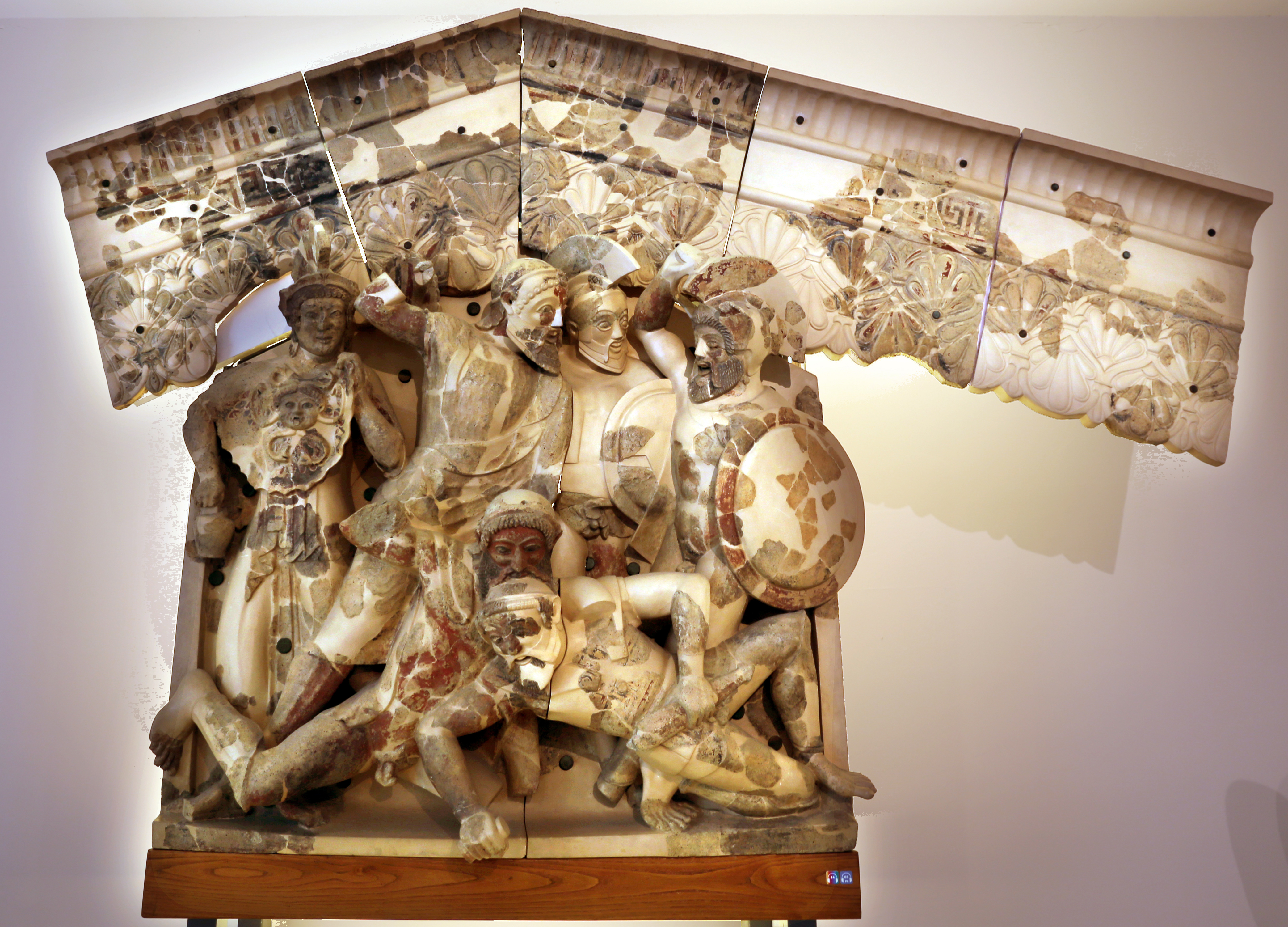
The introduction of stone-built building enables the possibility of high-quality roofing with decoration. In that decorative scheme, or the decorative schemes that we see, are encapsulated some stories about myths which are relevant to the way that Romans were perhaps thinking about their society.
The Pyrgi Relief. © Museo Nazionale Etrusco di Villa Giulia via Wikimedia
And that is one of the reasons why terracotta roofing is so important. It has a very interesting range of mythological subjects and representations which are sitting on the most important buildings in the city. So they're sitting on top of temples, the absolute focal places for community and citizens to worship, to think about gods, to think about community. There's a really exciting mix, I think. And what we can now tell is the very central importance of Rome, along with a few other centers, as centers not only of the clay but also potentially of the artistic innovation too. So there's a huge amount going on there, which is why I think architectural terracottas are genuinely fascinating and a brilliant example of innovation.
Story about kingship
Actually, the Roman story of their kings is of a series of innovators, people who keep on breaking the mold. So from Romulus, who founds the city, the next king is Numa Pompilius, who creates an entire religion for the Romans. Now, that's unlikely to be strictly true, but nevertheless, the Roman story is that they develop a religious tradition. They then claim that religious tradition doesn't change very much, although there are further stages in that development. So quite a lot of what's happening is that you have somebody who brings something in which then is the foundation for the continuity. The Romans tell very good stories about continuity, masking the fact that all the time things are changing.
Tarquinius Superbus © Wikimedia
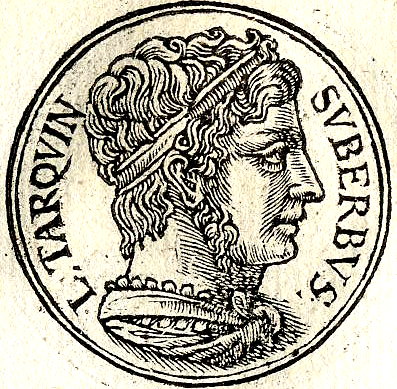
If one gets to the later kings of Rome, each one of them—Tarquinius Priscus, Servius Tullius and Tarquinius Superbus, or Tarquin the Proud—are portrayed as, in one way or another, changing society. Tarquin coming from outside the city, bringing new ways of doing politics and also new ways of constructing the city. Servius Tullius, a completely different figure who does all sorts of innovations around the army, around money, around land ownership and all sorts of things, the way that the community is constructed. Tarquin the Proud also associated with certain innovations in religion and other aspects.
Now, the point here is not whether these are historical figures and whether these are things which actually happened in the way they're described. The point is that what the archaeology is telling us is that Rome is in a process of rapid development. And oddly, this story about a monarchy that continues is, in fact, a story about continuous innovation and change.
Social imaginary
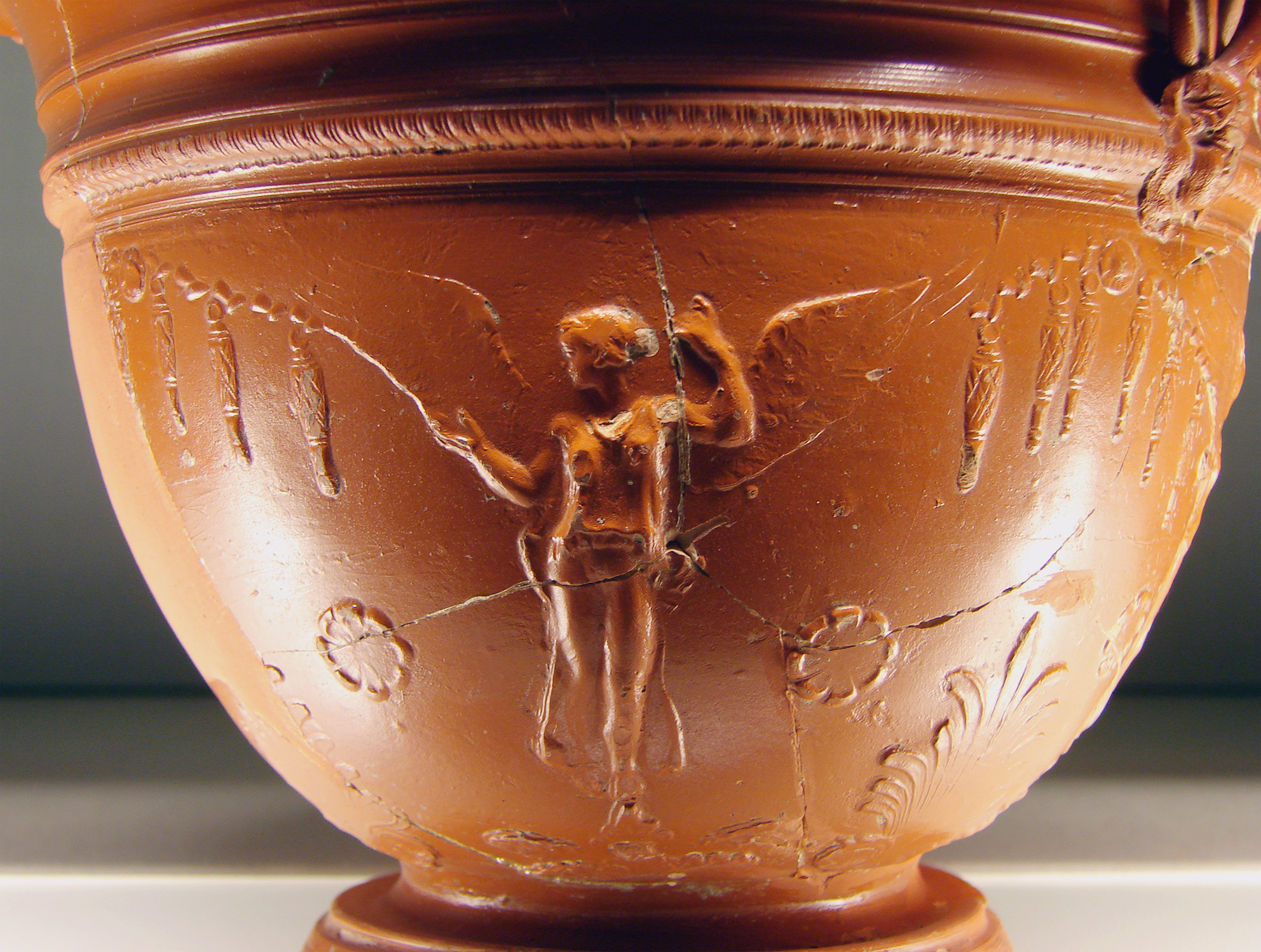
One of the very interesting concepts which theorists such as Cornelius Castoriadis and others have played with is the notion of the capacity to imagine yourself as other, the capacity to be able to think of change in society, and that notion of social imaginary, images that come up from society and allow for a process of transformation. So, for instance, the way that architectural terracottas portray power and the consequences of the extremities of power and anger—so hubris leading to nemesis, revenge, a pride before fall, etc.—these are all part of a story about the way that power should be constituted and what goes wrong if power is wrongly constituted.
Red gloss terra sigillata ware with relief decoration, Musée de la Cour d'Or, Metz © Wikimedia
The social imaginary forces us to think about not just the elite, but also the broader citizen body, how the citizen body thinks with religion. And it allows us to revert to my point about what the artisan's role is, the artist's role is, in imagining a different kind of society, offering different sorts of stories through which to construct the sort of society that wants to live in.
The touristic guides
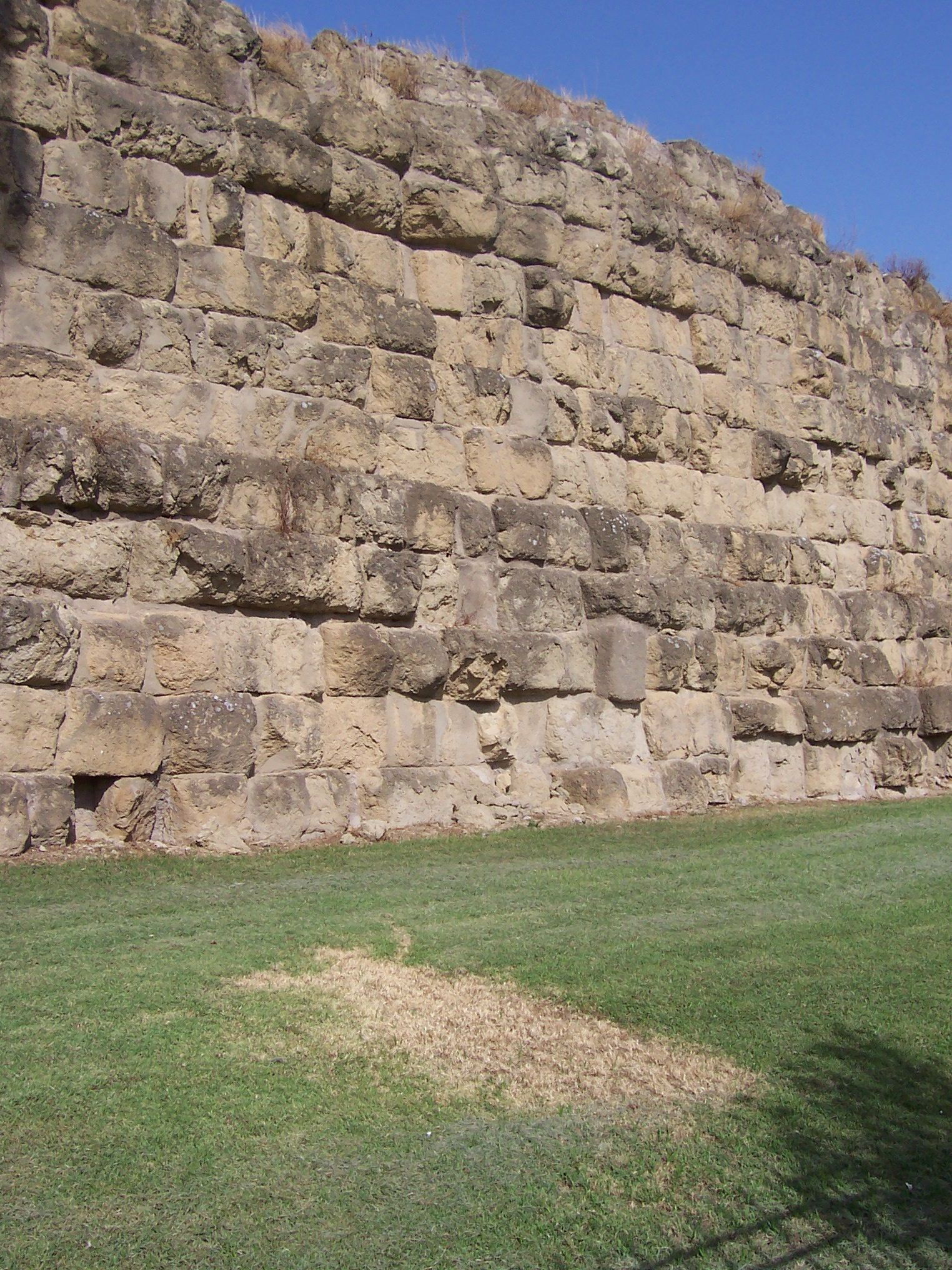
If a tourist wants to find out what early Rome might have looked like and to become a little bit more familiar with this, when they get off the train in Roma Termini Station and they walk out of that rather remarkable station as it is, the first thing that they will see is a very, very large piece of wall, some parts of which date back to the sixth century BC, right in the center of the city. And that's an indication of the fact that the early history of Rome survived even through the period of empire. And if they then wander up the Tiber River valley, as it were, up the Tiber River and find themselves in the Villa Giulia Museum, one of the greatest museums in the world, they will find an exhibition based on the Etruscans, the near neighbors of Rome, at exactly the time when Rome is growing and some part of Rome's own story of growth. So you'll get some of the material record to fill the background of that great piece of wall just outside Termini Station.
Servian Wall, Termini Station © Wikimedia
The one misconception I'd like to correct is let's not think we can't talk about early Rome. Let's absolutely make it a case study on methodology and a fascinating example of how a city-state begins.
Editor’s note: This article has been faithfully transcribed from the original interview filmed with the author, and carefully edited and proofread. Edit date: 2026
Discover more about
Early Rome
Smith, C J, (2019), Architectural Terracottas and the Historian. In Lulof, P, Manzini, I and Rescigno, C (eds), Deliciae Fictiles V.
Smith, C J, (2024), Rome before Rome. Ocnus | Quaderni della Scuola di Specializzazione in Beni Archeologici, vol. 31, pp. 145-78.
Smith, C, (2026), A historical early Republic: the limits of evidence. In Bellelli, V & Arizza, M (eds), Cerveteri Roma e Tarquinia. Edizioni Quasar, pp. 39-51.
Continue exploring




Explore this knowledge network
Continue exploring...
0:00 / 0:00