Our use of the word science tends to exclude arts and humanities. When people say science, they tend to think that that's about medicine or physics, and that's a failure of the way that our language works. If one was anywhere in Europe, when one talks about science, it's a much more generous view, and I hold to that more generous view. And this is why, first of all, the notion of hermetically sealed disciplines is one that is the product of a certain kind of 20th century specialization with roots in the 19th century. It's basically relatively recent. And it was also first an administrative idea more than anything else. It was a way of organizing knowledge, but it was never thought to be something that excludes the aim. Right the way back to the Romans and onwards was that you needed to study it all. You needed to have some notion of everything in order to be able to make a contribution, and we lose that at our peril, because what we see is that in any kind of application of science, that is to say, the move from discovery into application in society, an understanding of historical depth and of social consequence are absolutely key.
Arts and humanities for public good
Professor of Ancient History
We're at a key moment in the transformation of our knowledge economy. Arts and humanities help ensure that science and innovation remain human-centered, responsible, and beneficial to society as a whole. Innovation and tradition are utterly inseparable parts of the human spirit. That is the basis of our creativity and our future.
- Arts and humanities are essential to science because they provide “an understanding of historical depth and of social consequence,” which is key to applying knowledge in society.
- The most important “critical technologies” are not just tools like AI, but the capacity to question, think critically, and adapt, rooted in humanities and education.
- We are at a turning point in the “knowledge economy,” where institutions like libraries show that knowledge is a public good that must be shared “not for a few, but for everyone.”
- Innovation and tradition are not opposites: “every innovation becomes a tradition for the future” so responsible innovation requires understanding where we come from.
Human issues with human consequences
We live in a world where it is very widely accepted that investment in science, in research is a vital way to drive our economic growth and our social well-being.

© Shutterstock
The way one actually imagines the kind of problems to which science can offer the solutions tends to come from the social and human sciences, because it's our understanding of our society that drives the description of the problem that you need to solve. If one thinks about what we're trying to do, at best, with the revolution in information that is represented by generative AI, we're trying to revolutionize the ordering of information and the management of work. Now those are human issues with human consequences and social consequences. So we need to be implicating and integrating arts and humanities and social sciences at the very core of our scientific activity.
Ways of thinking
The phrase critical technologies has become quite important in science discourse. And it's a fascinating one because I think what sort of underlies that is that these are technologies that are in some ways critical to something like economic growth or to sovereign capability in a contested world.
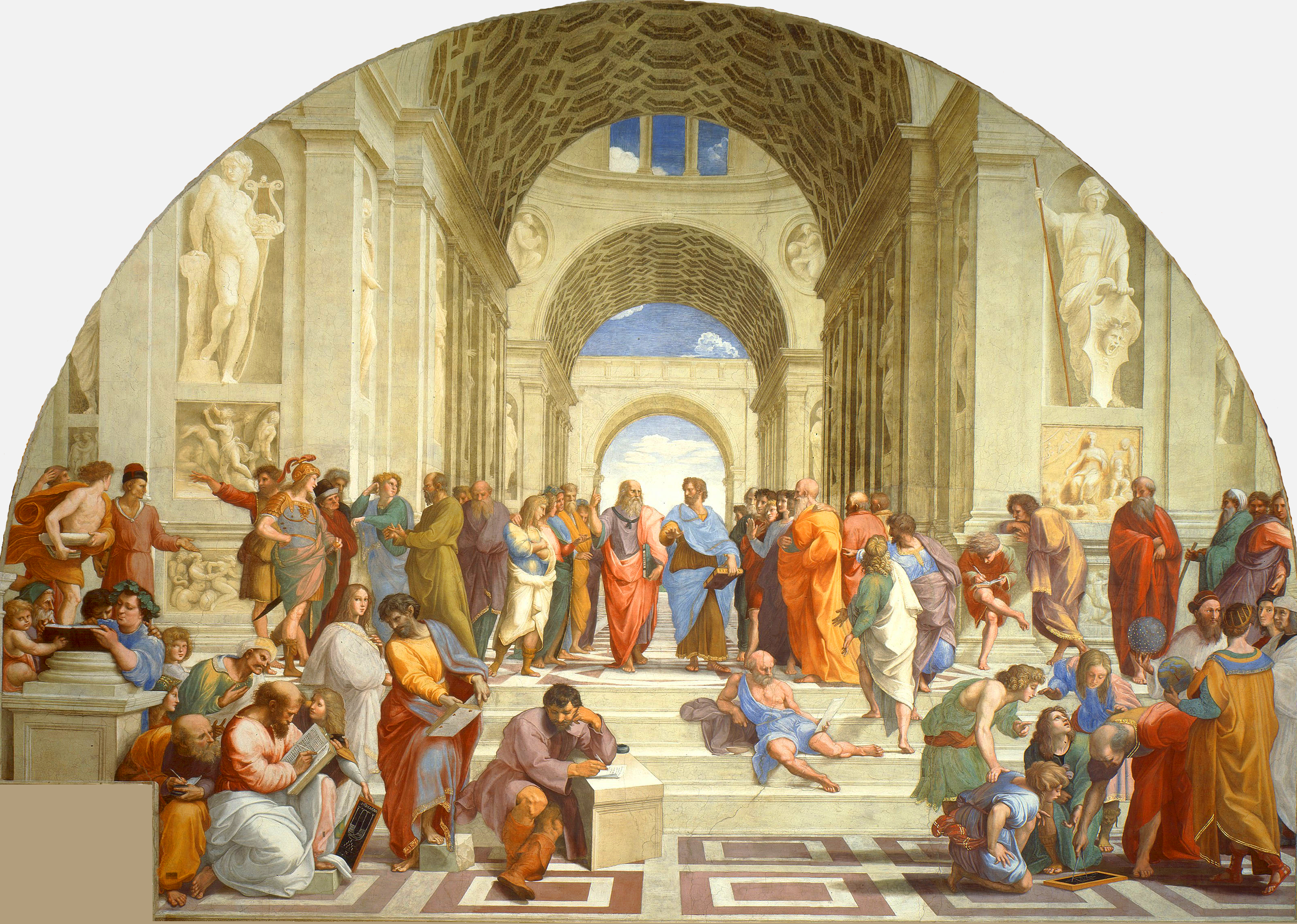
Scuola di Atene, Raffaello, Musei di Vaticani © Wikimedia
One is technologies that are embedded in a process of constructive criticism. In other words, the capacity to be self-critical and to question, and therefore to drive forward. Now, those critical technologies, the technology of criticizing, if you like, that is fundamentally rooted in pedagogical aspects, pedagogical approaches. For instance, the easy one to pick on is Socratic questioning. The whole principle of philosophy, where you take something which appears to be given and you break it down through criticism to understand what actually is underpinning that, which may be at some distance from one's perception. So in order to actually use a technology in a critical way, one needs to be able to think ethically, morally, historically, in terms of social context. There's another aspect, I think, of that critical technologies notion, which is something about what is the key sovereign capability that one needs. One needs, really deep down, underpinning our ability to drive science, is it an application and often AI, quantum, semiconductors, life sciences, those are technologies that are applicable applications, or is it our capacity as a society to adapt, adopt, diffuse and innovate.
If one thinks about the two great moments of intellectual change in the Western world, the Renaissance and the Enlightenment, in both instances societies were able to accept change and were resilient through change. Now, for me, therefore, the critical technologies are those which are self-questioning and those which are preparatory to the ability to change, and those are not applications of technology. They're applications of ways of thinking.
Knowledge for everyone
We're therefore at a crux, a key moment in the transformation of our knowledge economy. Those sorts of moments come around rarely. When they do, they are transformational. An example, for instance, to go back to a Roman example, is that when Rome began to dominate the country of Egypt, it moved into a world of papyrus. Papyrus is mass produced, relatively easy to write on. You can create a lot of copies with a slave-based economy. Suddenly, the Roman capacity to produce more material that was written and then distributed grew very significantly. That's a very important moment that coincides with a lot of other social, political and intellectual changes at Rome.
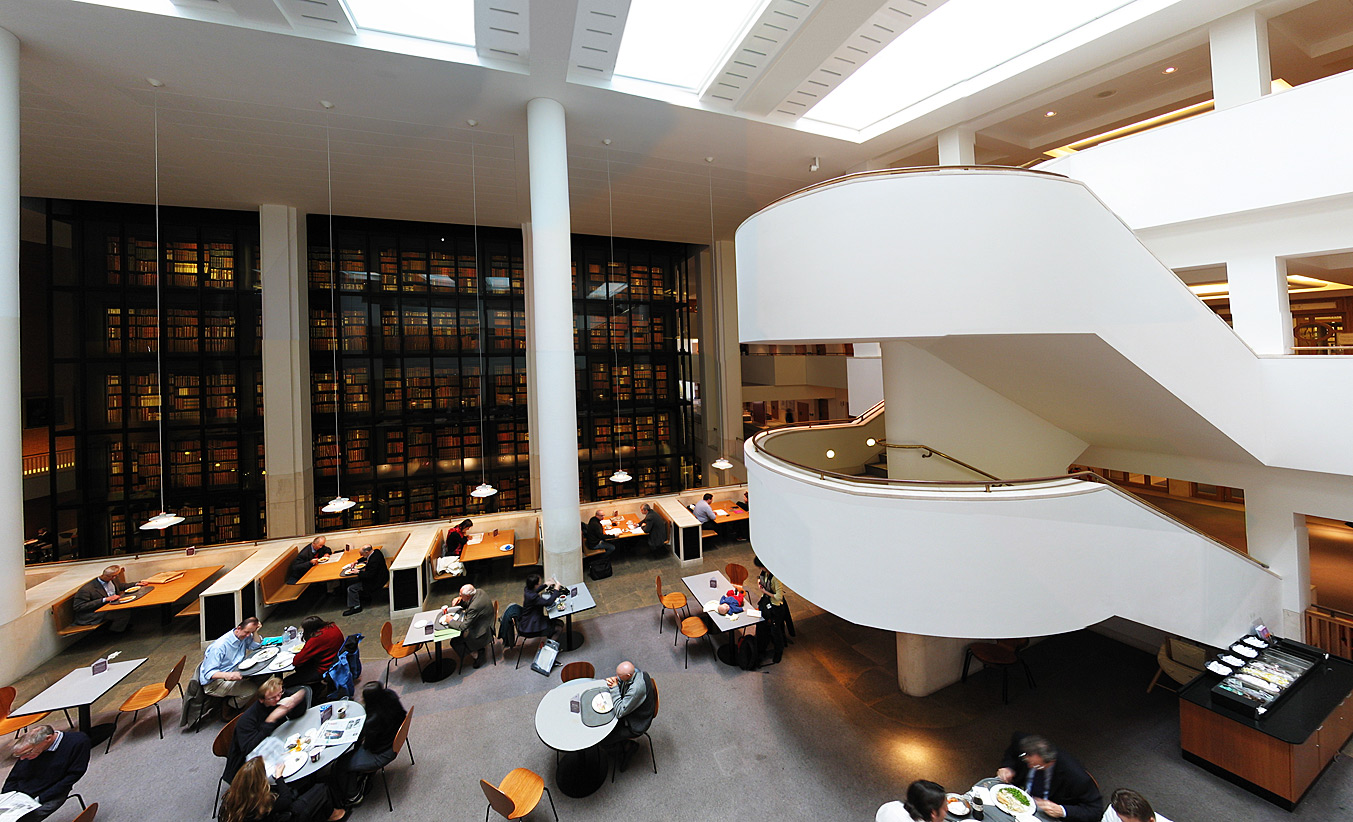
The British Library © Wikimedia
So these moments of knowledge change are key moments for society. And we're going into one right now. And the library is probably the greatest laboratory in which you actually see that. It's also critically a place where the very concept of what knowledge is is best understood and best argued about, because it's also part of the public domain. This takes us back to the res publica, if you like, the public thing. A library is part of the public thing, the public good. So that's the place we need to think most intently about what knowledge should be for a community, not for a few, but for everyone.
Creative societies
You can judge creativity, I think, in two different kinds of ways. One is that you can do it through traditional economic valuations. So you can look at the production of creative information goods and services, and you can count their economic impact.
I think there's another way of thinking about this. Again, it goes back to resilience, creative societies, societies which allow themselves to think afresh and think differently, to allow the play of the imagination or material, to think differently and to think anew using what we've always known and transforming it.
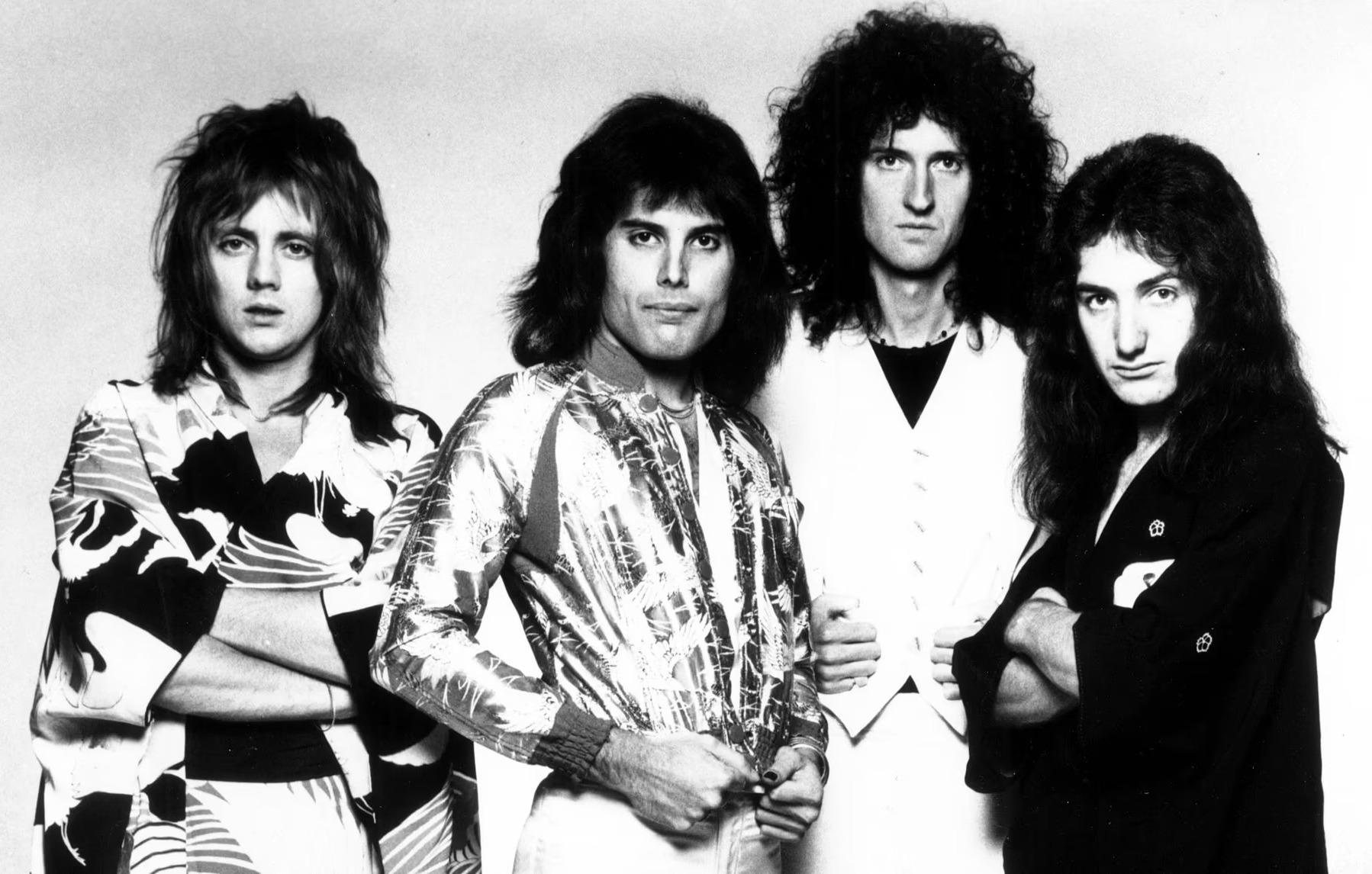
Queen, A Night at the Opera © Wikimedia
That process of creativity lends itself to resilience in society. And if you think about societies which are closed or which try to repress, those societies are also ultimately brittle and they fail. When you think about societies which are open and which are tolerant and which are encouraging creativity across every field, they tend to be more resilient to change. Now we are going to go through some tremendous changes over the coming years. We have climate change in front of us. Undoubtedly, we have changes in the nature of work. We have political and geopolitical uncertainty, shortages of critical materials, etc., etc., all sorts of issues. And the one thing that societies will need more than anything else is to be resilient. Creativity can help with that because it allows people to think imaginatively on how to move forward.
Tragedy of contemporary science.
For me, the tragedy of contemporary science would be if we thought that the answer was more important than the process. Because if we cannot give full weight to the process of thinking, of bringing people along with that process, the answers that we get will be poorer, shorter term, and less effective. We will end up with a world in which what we are looking for is effects and not wisdom. And the notion of just fixing it rather than rethinking it is going to fail on the test of whether it creates a regenerative, resilient, long-term society. So for me, the tragedy of contemporary science would be if we forget that critical capacity of growing our ability to keep thinking and keep moving forward.
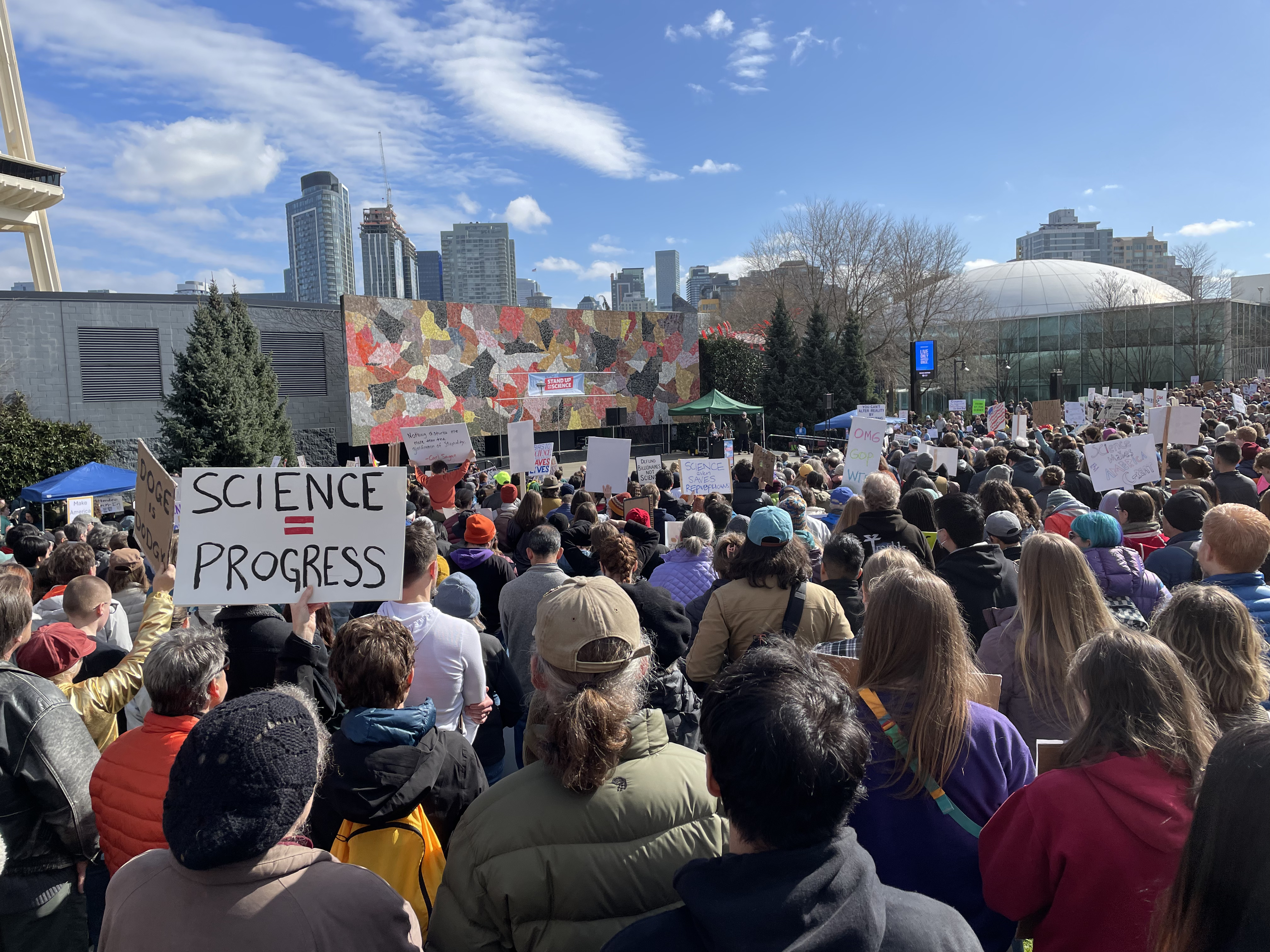
Stand Up for Science © Wikimedia
What kind of future do we want?
So clearly the problem of thinking about long-term science, the process of science, the depth of education, the depth of resource that's needed is that that rests on a social contract, that science is important not only for economic return, but also on the long-term resilience and stability of a society, on individual and communal well-being. That social contract about education, about research is fragile.
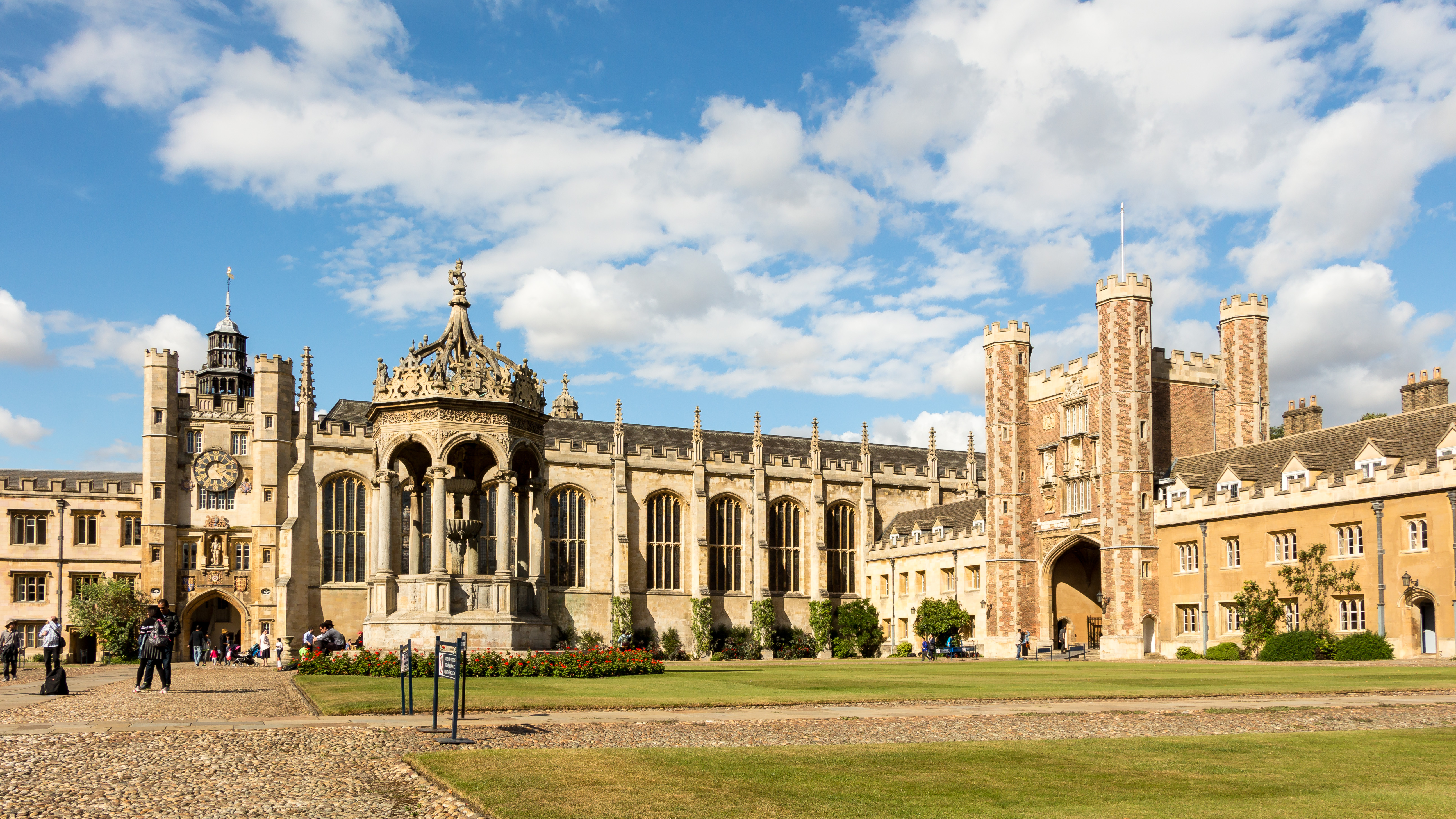
Trinity College, Cambridge © Wikimedia
It comes from a belief in the amelioration of society through science. And it comes from a belief that that amelioration should be for everybody in society, not just for a few. Almost every part of that equation—the university, the notion of human disciplines and their interaction, the value of science for society and for everybody in society—is under question or threat at the moment. If we lose that social contract, then we lose the reason for investing for public good through science. What humanities will tell us is that if you head back to previous times, you will end up with less good for fewer people. And that's bad all round. But there's also a way of flipping it into imagining a future. What kind of future do we want? How do we take the advances of science and make sure that everybody is lifted, not only our own generations, but how do we become good ancestors for those who come after us?
If we look at history, one of the things which I find gripping is those moments where you see people who have set out our societies, that have set out to create a good ancestry for what comes after, and that those are totally admirable figures and moments in our history. Surely we should aspire to be good ancestors, not to reduce the power of a social contract and science. And that is where arts and humanities at the heart of science is so vital.
Innovation and tradition
Sometimes people think that innovation and tradition are in opposition to each other, that tradition is the thing that stops you innovating. What I would want to say is that it is only when one first understands where one comes from, and secondly realizes the immense burden of responsibility—that every innovation becomes a tradition for the future—that one can innovate responsibly. So for me, innovation and tradition aren't opposites. They're utterly inseparable parts of the human spirit. That is the basis of our creativity and our future.
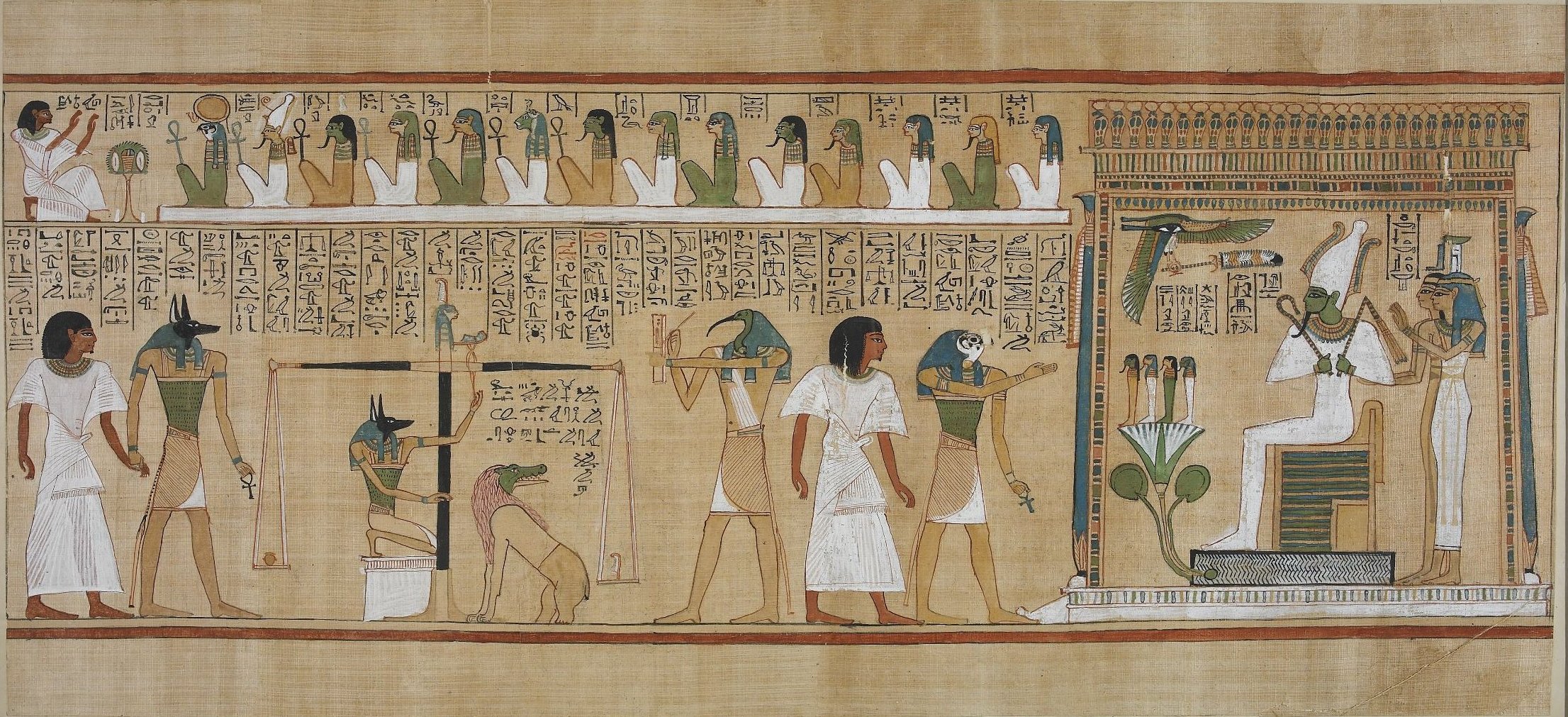
Book of the Dead of Hunefer, British Museum © Wikimedia
Editor’s note: This article has been faithfully transcribed from the original interview filmed with the author, and carefully edited and proofread. Edit date: 2026
Discover more about
Arts and humanities for public good
Smith, C J, (2025), Critical technologies. Blog: Anatomies of Power.
Smith, C J, (2025), Gold Standard Science. Blog: Anatomies of Power.
Smith, C J, (2025), Credo: Why arts and humanities needs national strategic funding. Blog: Anatomies of Power.